
Lives · Enabling Purpose-Driven Work and Sustainable Careers
Meaningful Employment
At MAS, meaningful employment is woven into how we design work, develop our people, and create long-term value. Our actions stem from a longstanding belief that employment should connect individuals to a sense of purpose, while enabling meaningful contributions to MAS' broader organisational goals through initiatives that enhance processes, innovation, and impact. In doing so, we strive to foster growth with confidence while supporting sustainable livelihoods. In the context of our diverse global workforce, our approach extends beyond roles and remuneration. We focus on access, capability, fairness and wellbeing, creating inclusive environments where individuals can realise their full potential. We adopt a deliberate and systematic approach to meaningful employment. Our goal is to create an environment where our people can access opportunities, grow and thrive throughout their entire employment journey.
Key Areas Shaping Meaningful Employment
Our efforts are guided by a series of interconnected priorities that collectively shape the employee experience throughout their journey.
Building strong talent pipelines and positioning MAS as an employer of choice through purpose-led engagement.
Enabling continuous capability building through structured programmes and experiential learning.
Creating environments that support physical, mental and social wellbeing.
Ensuring fair, equitable and competitive remuneration aligned with performance and market benchmarks.
Strengthening accountability and growth through structured performance evaluation and feedback mechanisms.
Embedding inclusive practices and equal opportunity across all stages of the employee lifecycle.
Attracting and Retaining Talent
Building on last year's momentum, we strengthened MAS' value proposition for both current and prospective employees through targeted and authentic engagement. Our approach centres on connecting individuals to purpose by positioning MAS as a workplace where they can meaningfully contribute and develop their skills.
As an equal opportunity employer, we ensure recruitment remains merit-based with inclusivity woven into our policies, practices, and candidate interactions. This commitment is consistently reflected across all recruitment channels and processes.
Our workforce levels remained broadly stable throughout the year. This was due to a period of operational consolidation and hiring closely aligned with attrition and selective expansion in key markets. Consequently, there was no significant net change in overall headcount.

97,989
Total Average Employees

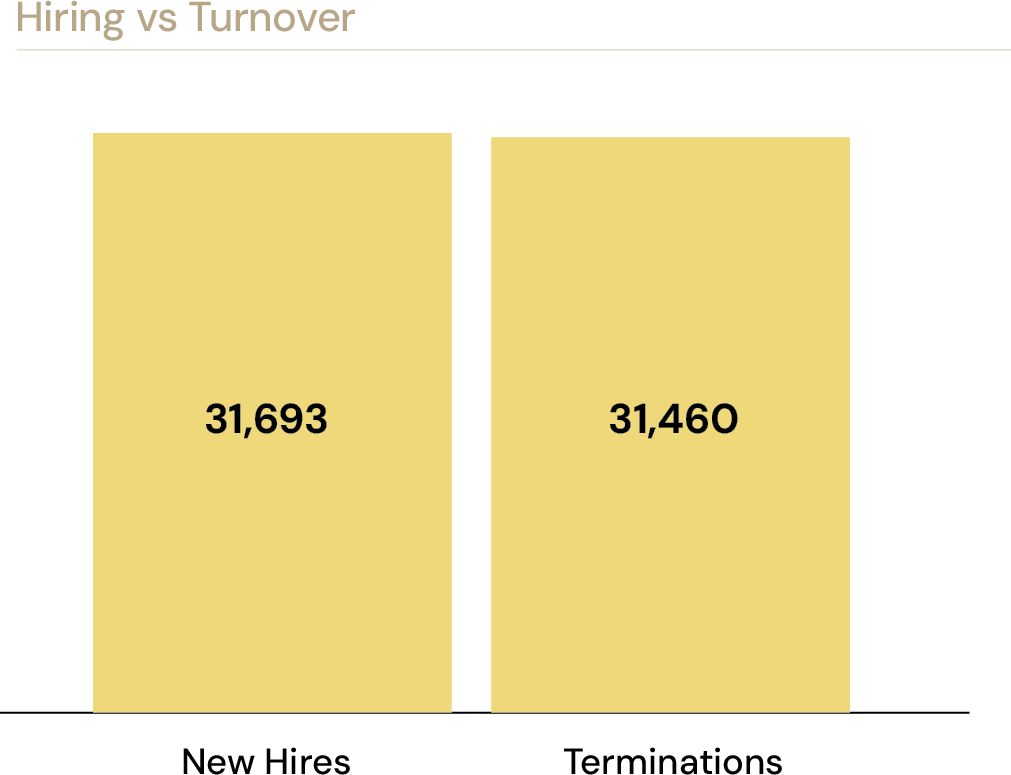
31,693
Total new hires

32.34%
Rate of new hires

31,460
Total terminations

32.11%
Rate of turnover

7,323
Male Hires

24,730
Female Hires
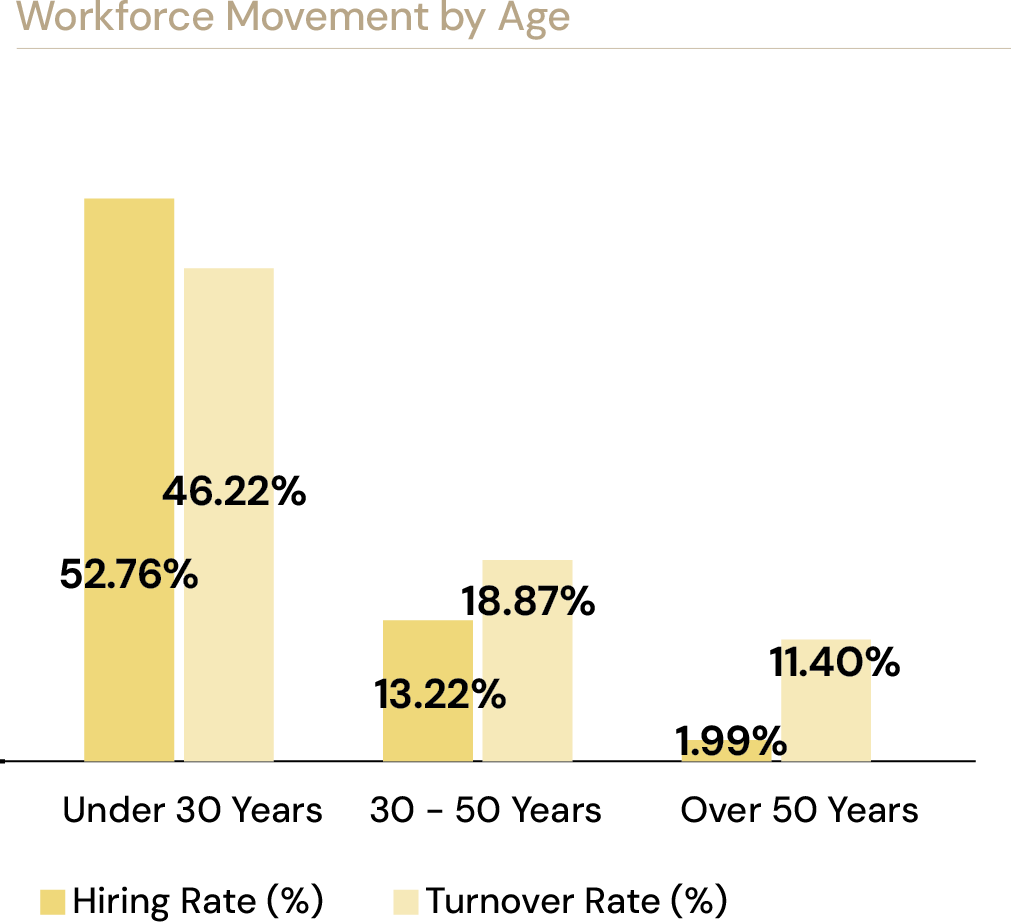
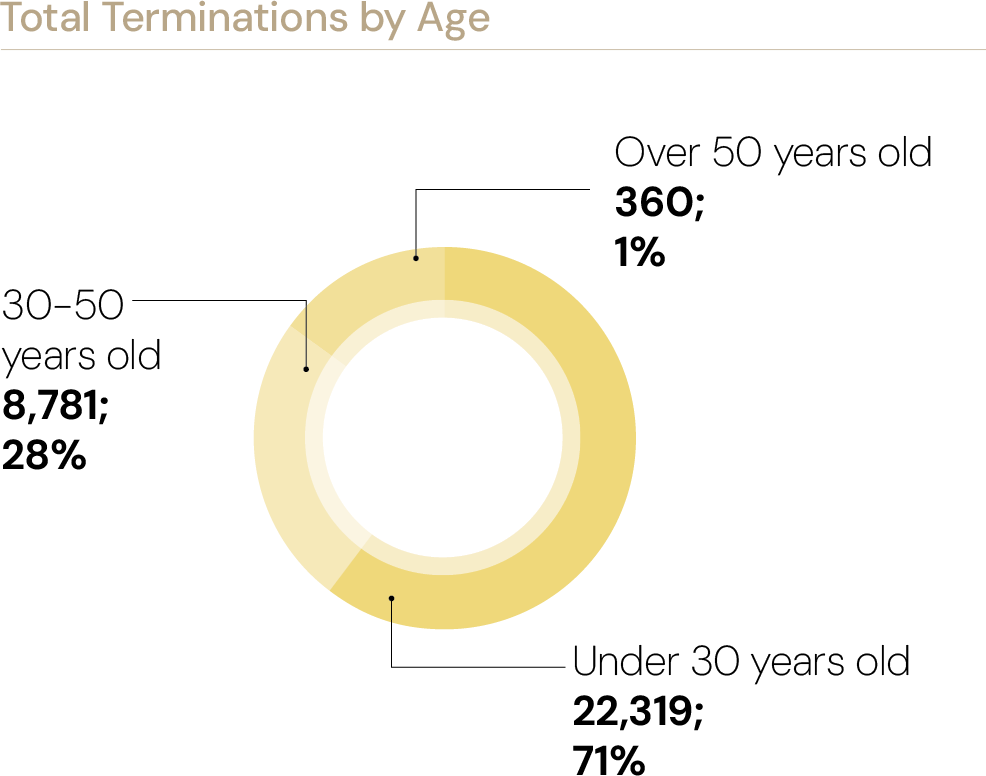
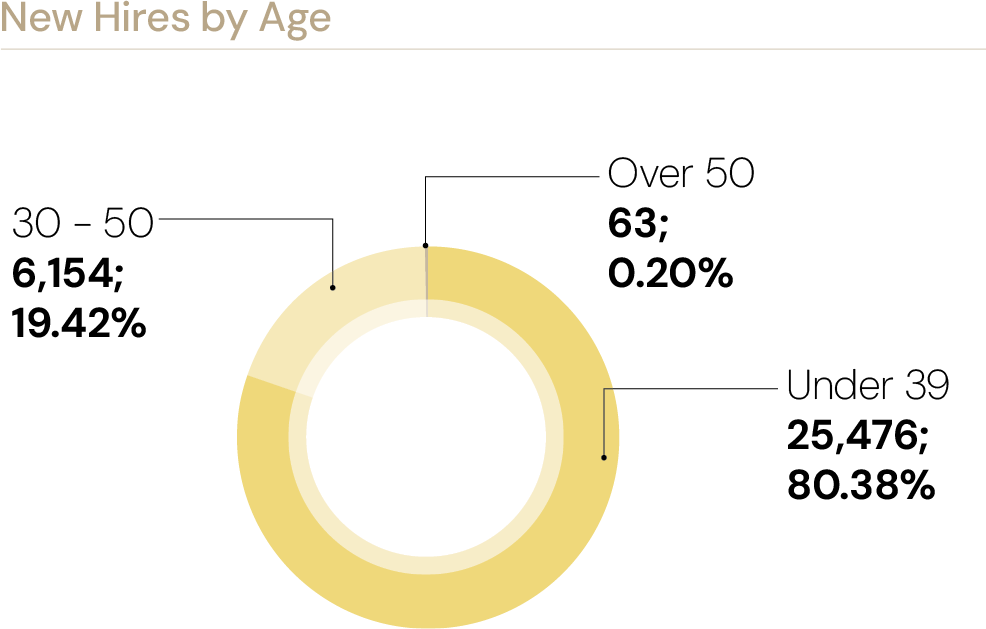
Workforce movement is highest among employees under 30, reflecting early-career mobility and pipeline dynamics.
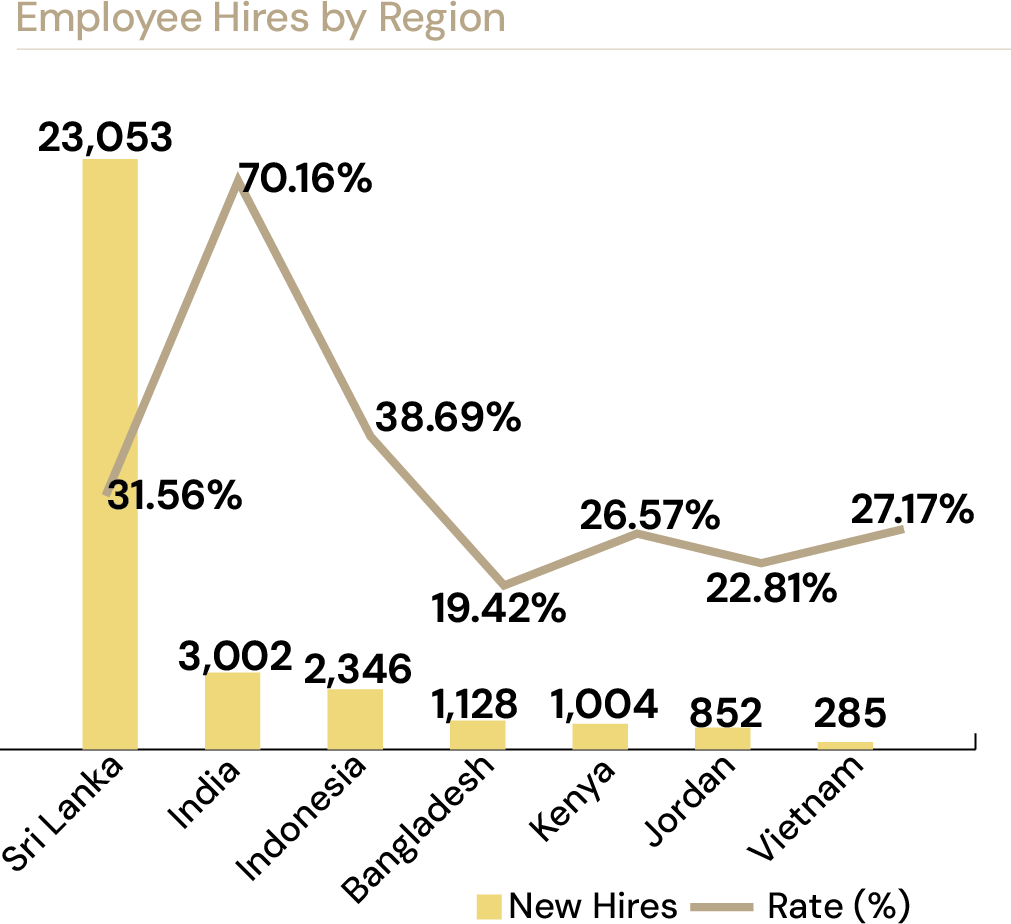
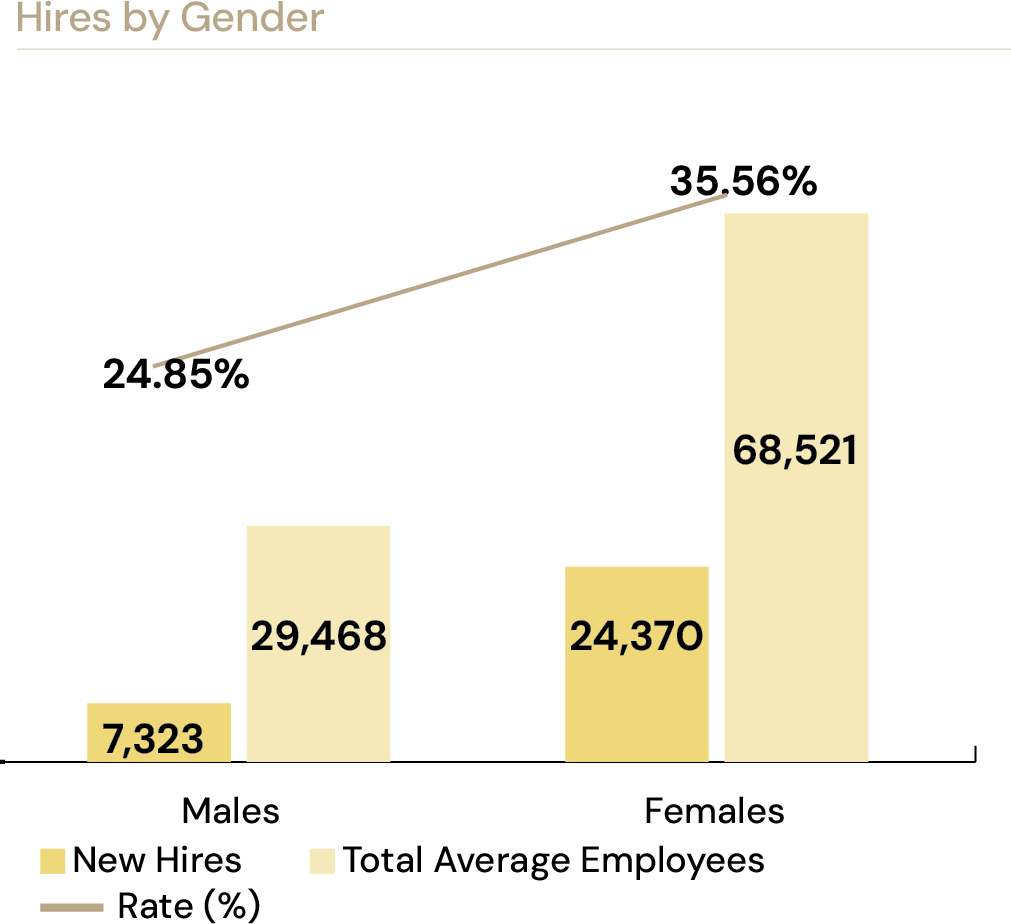
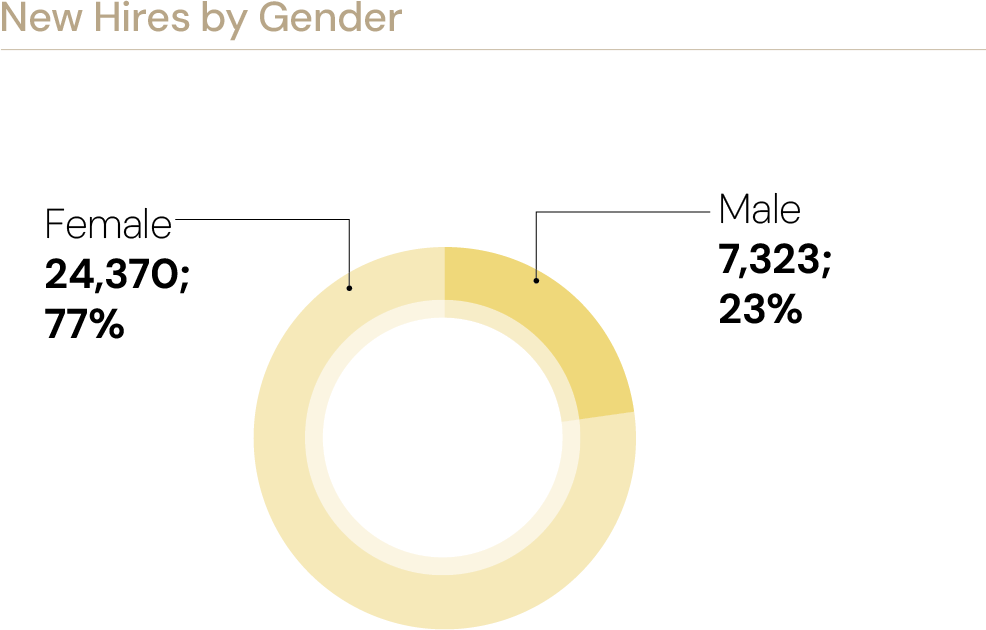
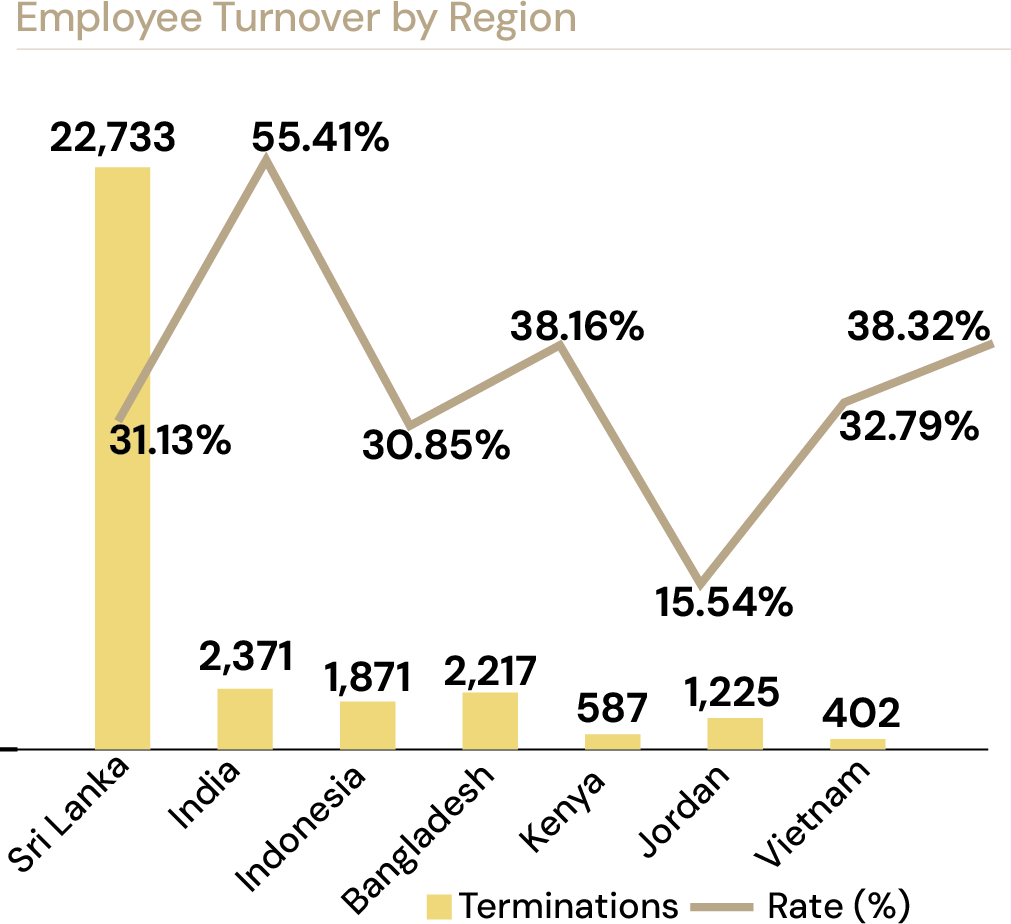
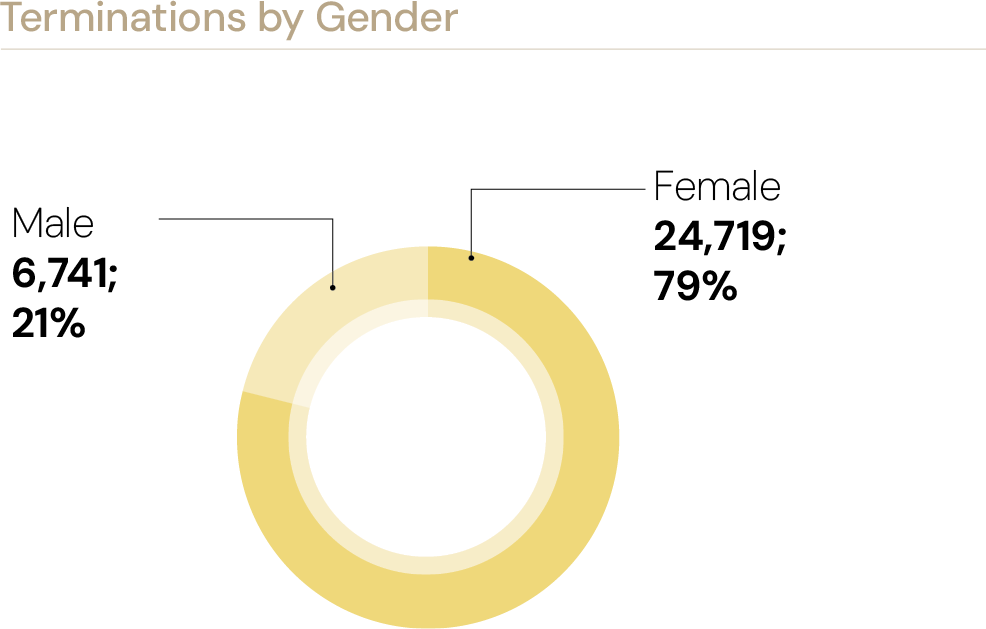
Hiring activity focussed on key operating markets, mirroring the workforce scale and targeted expansion. Turnover trends varied regionally, influenced by local labour-market dynamics and operational factors.
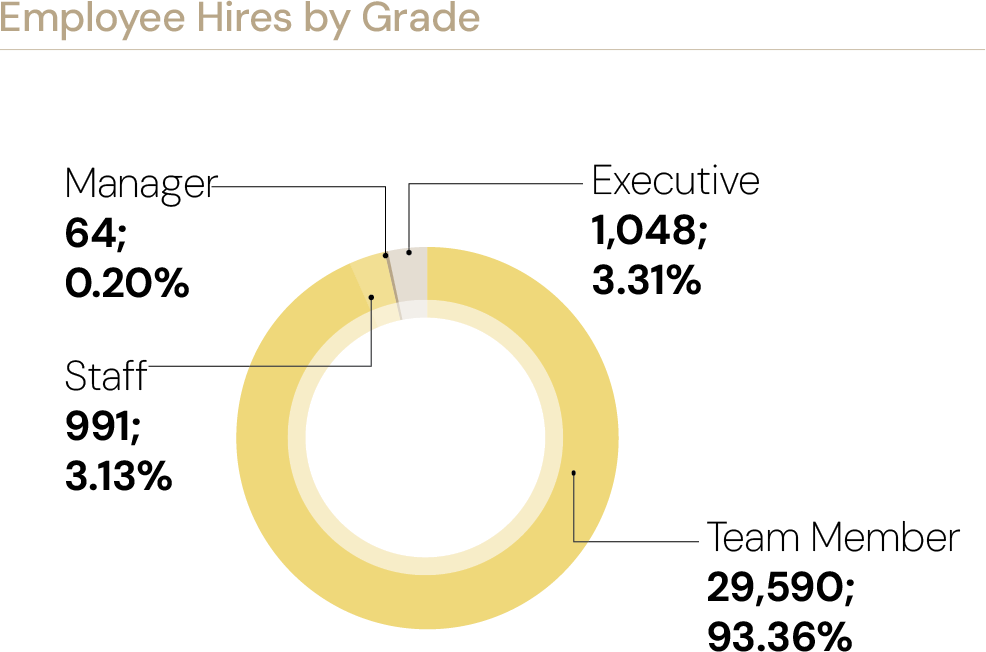
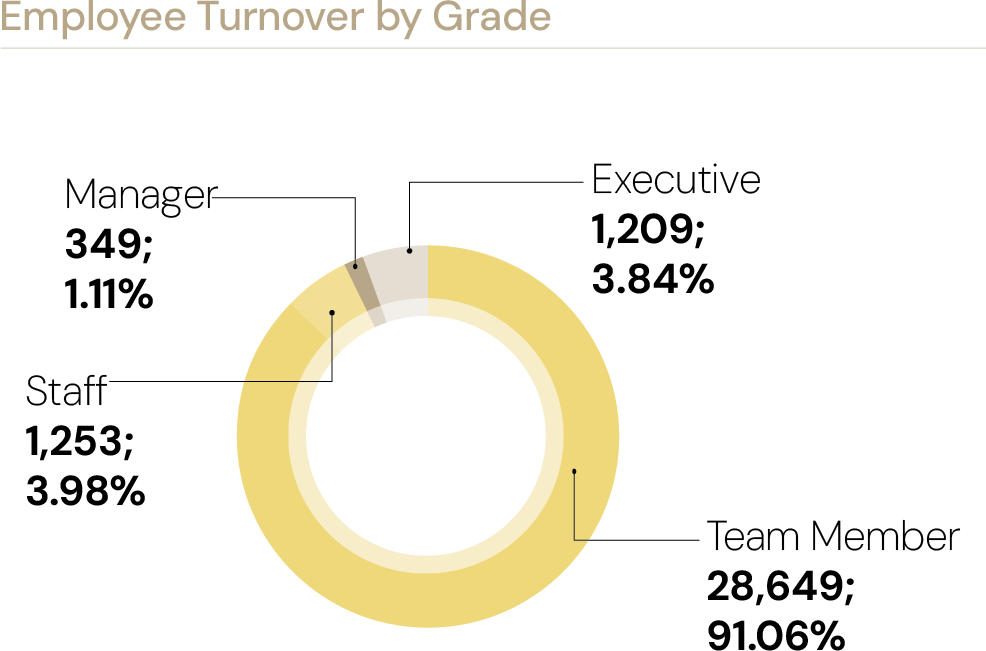
Employee hiring patterns by grade are heavily skewed towards team member roles. This reflects the operational nature of the workforce and ongoing capacity expansion at the frontline. Similarly turnover trends by grade also follow a similar distribution. The majority of exits occur within team member categories, which broadly aligns with workforce composition and role dynamics across the organisation.
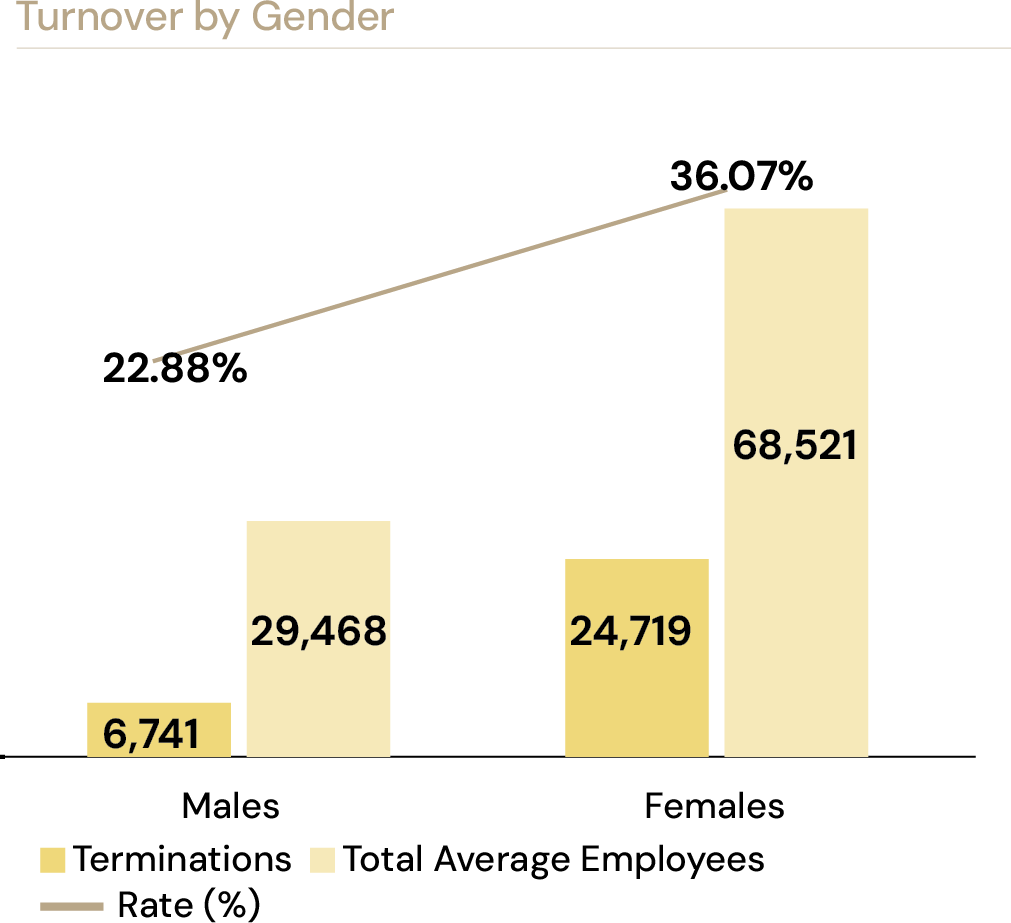
Hiring patterns broadly reflect the current workforce composition across operational roles, while turnover patterns by gender are aligned with workforce composition and role distribution.
Progress in 2025
In 2025, we continued to strengthen our talent attraction and retention strategy. This involved targeted outreach capability-building initiatives and structured talent management practices. Our priority remained building robust talent pipelines and fostering an environment that enables growth and sustained long-term careers.
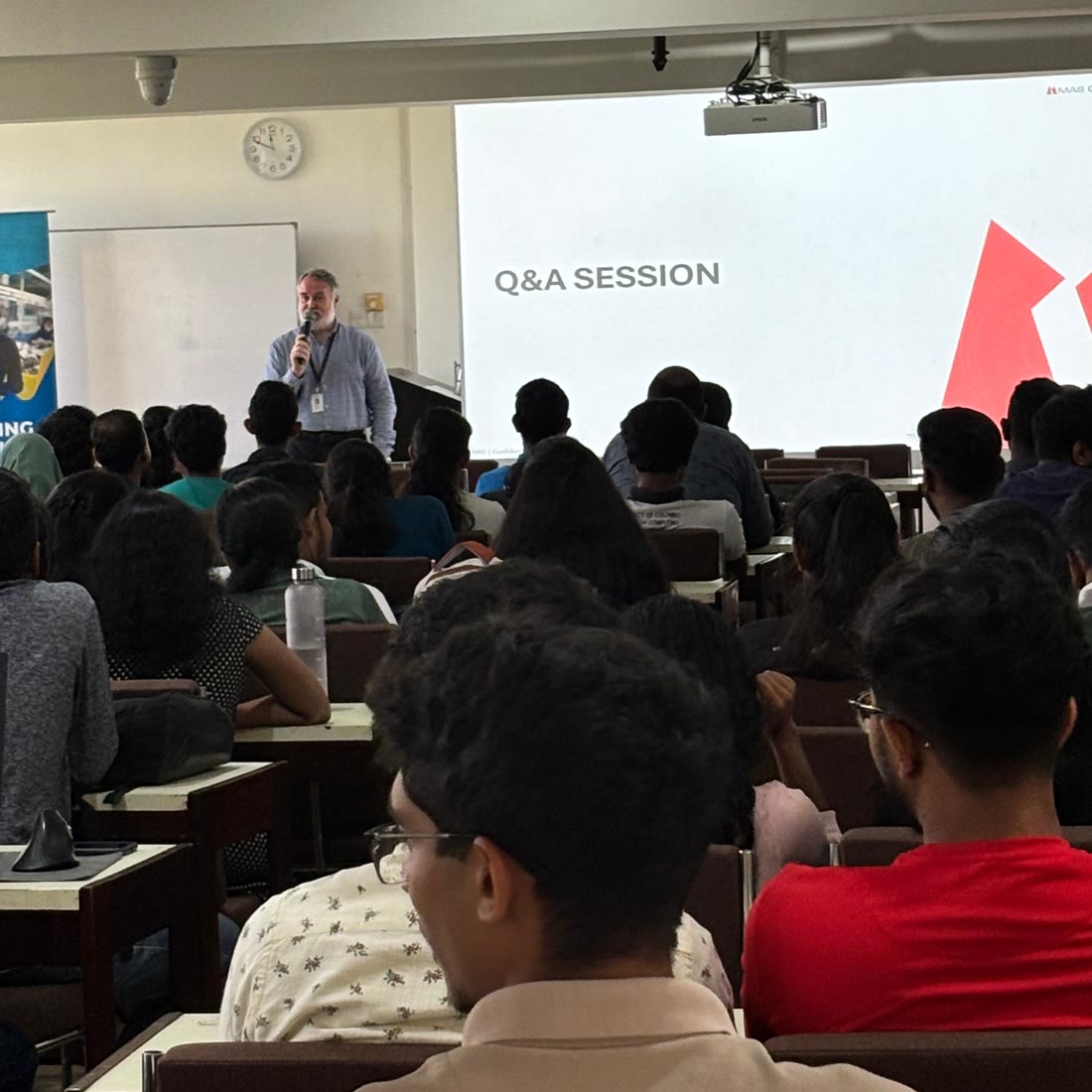
MAS maintained a strong connection with universities through a variety of initiatives including career fairs targeted recruitment and outreach programmes. These efforts extend beyond recruitment, focusing on building employability and supporting Sri Lanka's future workforce.
During the year, we participated in 47 career fairs across Sri Lanka's private and state universities and hosted dedicated Open Days to engage high-calibre graduates. We also extended our outreach to school students through awareness and upskilling sessions, supporting their transition into higher education.
Our talent attraction strategy was further reinforced through partnerships with universities, professional bodies, and institutes, enabling deeper engagement with both early-career and mid-career professionals.
Beyond recruitment events, MAS invested significantly in capability building through 51 employer branding initiatives, including workshops, guest lectures, and interactive sessions aimed at enhancing student skills and future readiness. These initiatives underscored our commitment to developing the next generation of Sri Lankan talent.
47
career fairs conducted
7
MAS Open Days hosted
51
employer-branding initiatives delivered
The Skills for Work programme effectively bridged the gap between academic learning and industry demands. In collaboration with state universities, it emphasises practical, work-ready capabilities through formalised learning programmes and hands-on experience.
4
state universities engaged
5
faculties covered
8
week programme
380+
students upskilled
MAS Global Internship Programme
The MAS Global Internship Programme, conducted in partnership with the University of Oregon, entered its third year in 2025. Designed for postgraduate students, the programme provides structured, project-based exposure to MAS operations, combining technical learning with practical, real-world experience.
Participants engage with cross-functional teams and senior leadership, gaining insights into manufacturing innovation and broader business operations. The programme also offers exposure to MAS' global footprint, enabling participants to develop a more holistic understanding of the industry while broadening their perspectives.
MAS–Dialog–Hemas Summer Internship Programme
This flagship programme continued into its 20th consecutive year in 2025, providing cross-industry exposure for a cohort of 15 interns over a six-week programme. Participants experienced various organisational environments and working styles at MAS, Dialog and Hemas.
Interns undertook project-based assignments supported by mentorship and guided learning sessions. They also interacted with industry leaders and subject matter experts, gaining practical insights into business operations and decision-making.
The cross-company format fostered a broader understanding of different sectors and helped participants develop transferable skills and professional networks.
In 2025, MAS advanced its employer branding efforts through the rollout of its Employer Value Proposition (EVP). This strengthened alignment between internal culture and external positioning, ensuring a more consistent and authentic representation of MAS across markets.
The EVP helped bring greater clarity to how MAS communicates its purpose, values, and employee experience—enhancing engagement across recruitment platforms and supporting more targeted outreach to potential talent. It also enabled stronger consistency across markets, reinforcing MAS' positioning as an employer of choice in an increasingly competitive talent landscape.
Enterprise Talent Reviews and Succession Planning
We conduct enterprise-wide talent reviews to identify critical and high potential talent. This process is supported by a Talent Board with Group-level representation, enabling consistent evaluation, succession planning, and targeted development of key individuals.
Proactive Talent Monitoring
The organisation continues to strengthen its ability to proactively identify and manage retention risks. This enables earlier intervention and more targeted retention strategies, particularly in a competitive and evolving talent landscape.
Responding to Talent Mobility and Evolving Expectations
Retention strategies are shaped by broader workforce trends, including increased talent mobility, migration, and changing employee expectations. MAS has responded by enhancing flexibility and exploring alternative engagement models to maintain connections with talent over time.
Flexible Engagement Approaches
In selected cases, MAS has introduced flexible engagement models enabling individuals pursuing further studies or global exposure to remain connected through part-time or project-based contributions.

Extending Talent Relationships Beyond Employment
MAS continues to maintain connections with former employees through its Alumni Network, recognising that talent relationships extend beyond tenure. The platform enables ongoing engagement through knowledge sharing, referrals, and potential re-entry opportunities, supporting a broader and more connected talent ecosystem.
79
active alumni
Learning and Development
At MAS, learning and development is centred on building capability at scale, with a continued focus on strengthening both technical and leadership competencies to support evolving business needs.
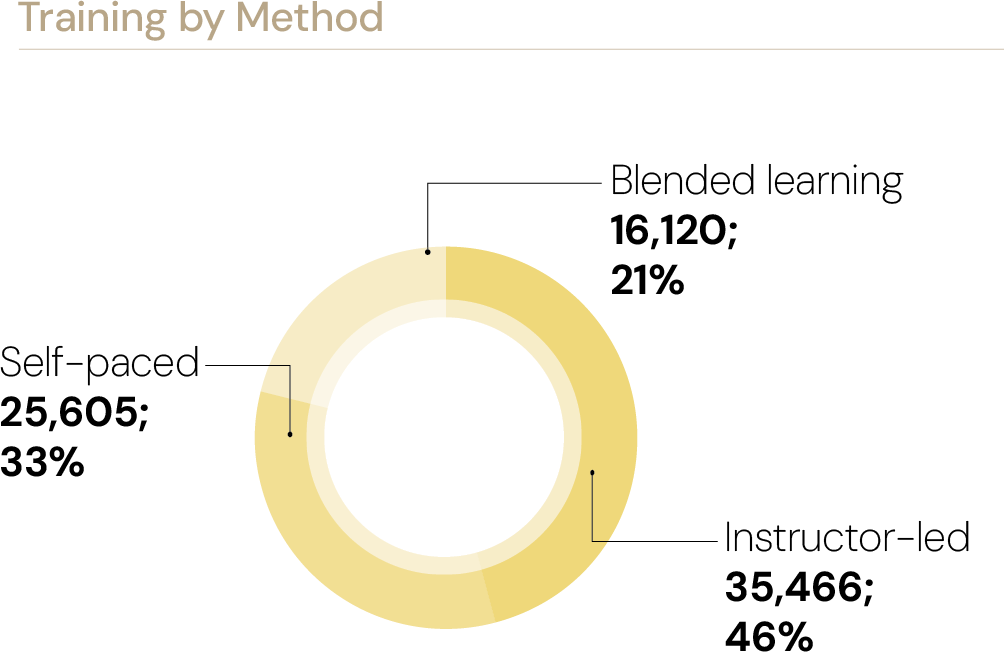
Our approach is based on the 70:20:10 learning framework, combining experiential, social and formal learning. Employees primarily develop through on-the-job experience supported by coaching and mentoring, while structured programmes are delivered in physical, virtual and hybrid formats.
Guided by a competency-based framework, employees are assessed against defined technical and leadership competencies. These assessments inform Individual Development Plans (IDPs) ensuring development aligns with both personal growth and organisational priorities.

0%
On-the-job learning
0%
Coaching and mentoring
0%
Structured programmes
11,910
employees trained
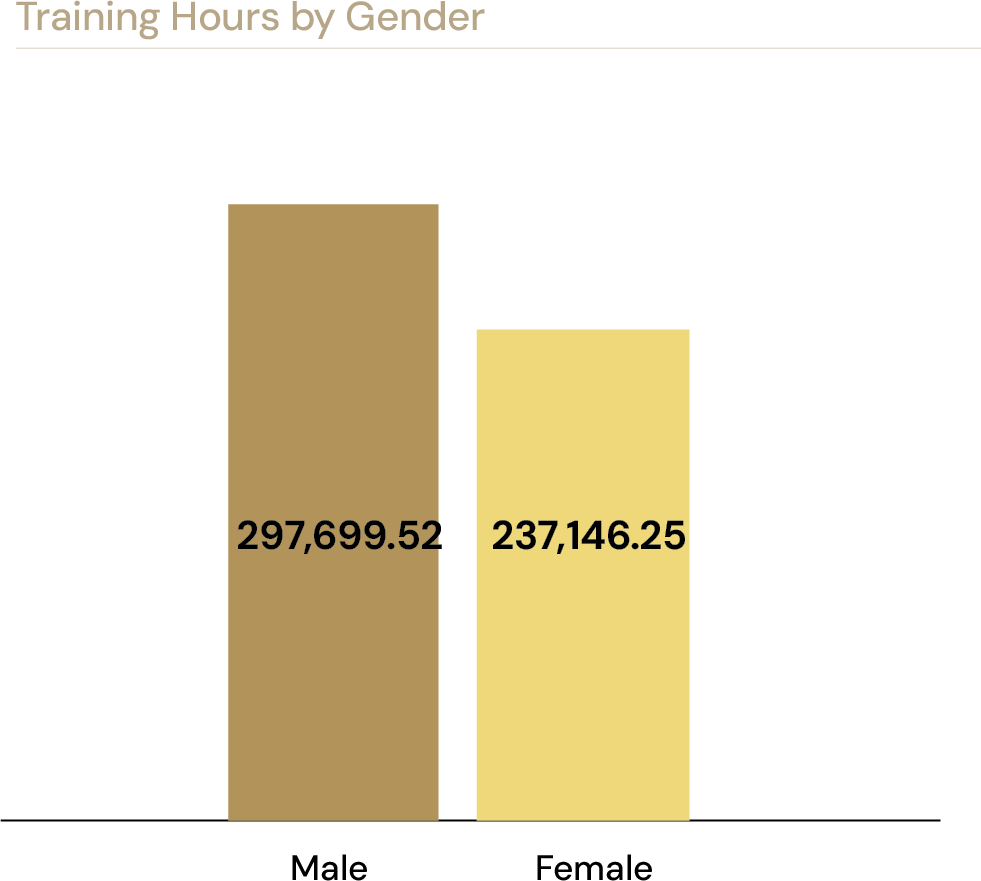
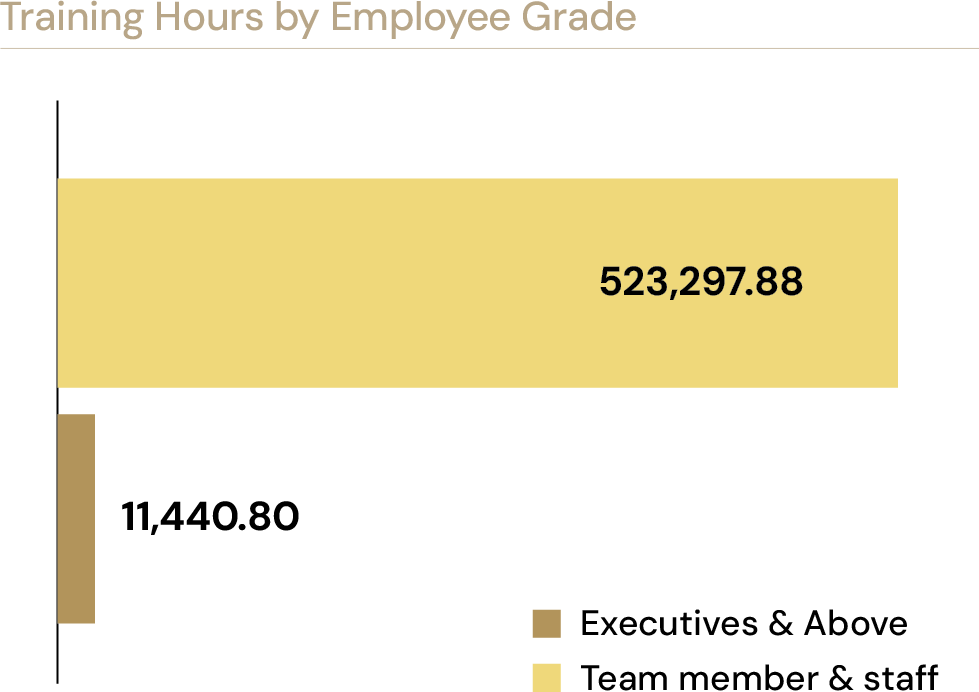
534,845.77
total training hours
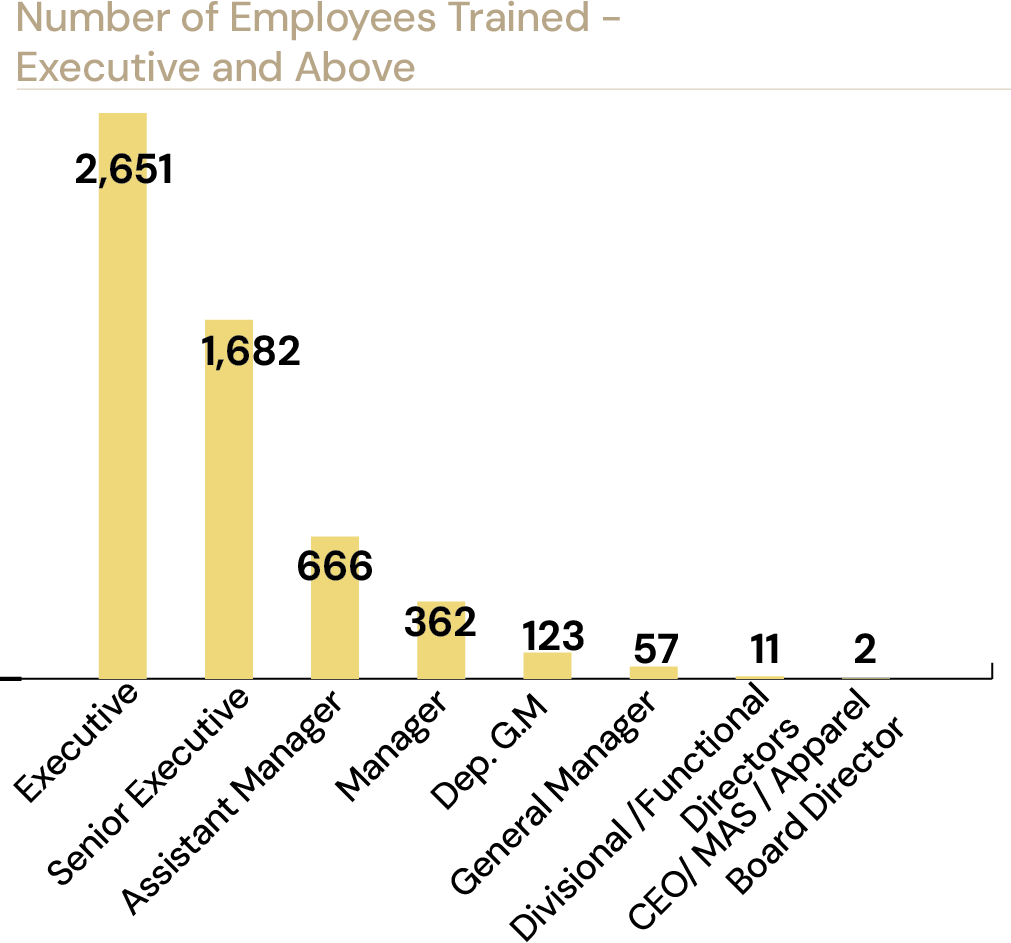
523,297.88
training hours (executive and above)
44.91
training hours per head across all grades
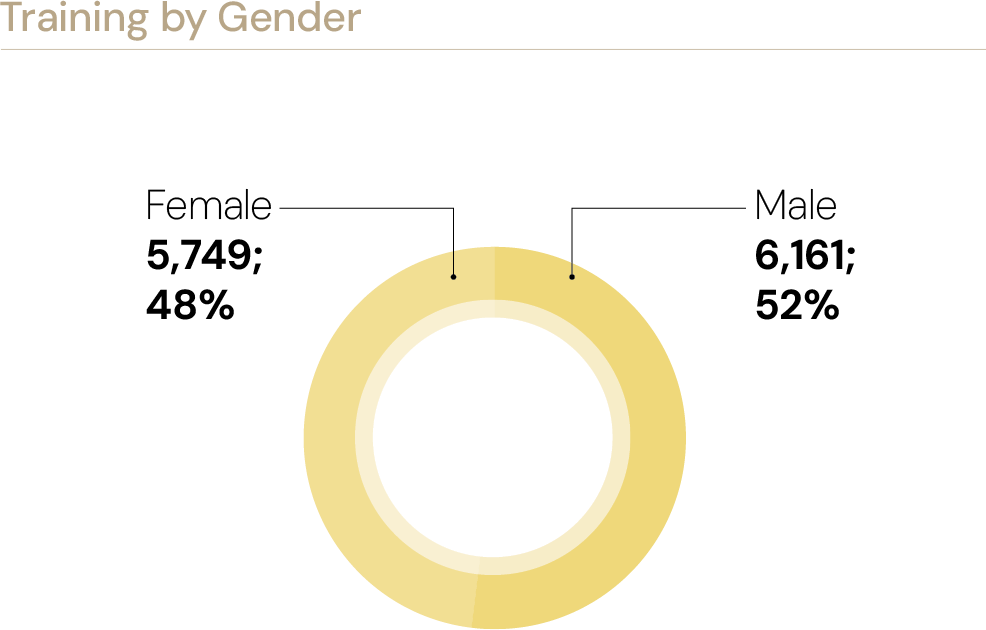
6,161
Male employees trained
5,749
Female employees trained
48.32
Average training hours (Male)
41.25
Average training hours (Female)
Strengthening Capability Through Structured Learning
MAS follows a clearly defined learning cycle starting with competency assessment, followed by development planning, programme delivery and finally, evaluation. This ensures targeted, measurable, and continuously improved learning interventions.
In 2025 a key focus was advancing course-to-competency mapping, which reached close to 90% completion. This in turn strengthened alignment between identified capability gaps and learning interventions.
Other focus areas included strengthening leadership capability, enhancing team effectiveness and feedback culture and enabling cross-functional learning across the organisation.
Competency Assessment
Employees are assessed against defined technical and leadership competencies.
Development Planning
Individual Development Plans (IDPs) are created to address identified gaps.
Evaluation and Feedback
Programme effectiveness is reviewed and feedback integrated for continuous improvement.
Learning and Delivery
Targeted interventions delivered through 70:20:10 learning approaches.

Core Frameworks
- Competency-based learning framework
- Individual Development Plans (IDPs)
- Succession Development Plans (SDPs)
Leadership and Technical Development
- Leadership development programmes
- Technical Skills Development Programme (NVQ-aligned)
Mobility and Career Progression
- Cross-functional learning and job rotations
- Talent Conversations and internal mobility pathways
- Global Talent Mobility Programme
Learning Delivery and Support
- Coaching, mentoring and feedback mechanisms
- Digital and self-directed learning platforms
Nurturing the Talent Pipeline
Our talent pipelines are nurtured through a deliberate, forward-looking approach to training and development. This supports individual growth while also strengthening business continuity and succession planning.
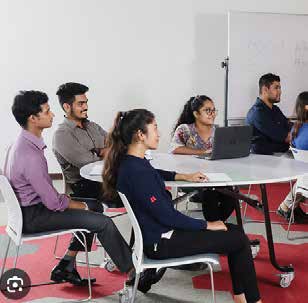
MAS strengthens its talent pipeline through a structured succession planning approach. Talent is identified during the Talent Review process and then developed into Succession Development Plans (SDPs) for critical roles.
Each SDP is guided by MAS' 70:20:10 learning approach, and are customised to address specific capability gaps and readiness timelines, ensuring alignment with future role requirements. Periodic reviews ensure these plans remain relevant, particularly as business needs change.
Talent Conversations enable meaningful movement across roles, functions, and geographies, supporting targeted development opportunities.
This approach ensures alignment between individual aspirations and organisational needs, while providing employees with broader exposure and career progression pathways.
Accountability for developing talent is embedded within leadership teams, reinforcing ownership of capability building across the organisation. This supports the development of a diverse, future-ready talent pool and strengthens succession pipelines to ensure long-term business continuity.
MAS continues to use global mobility as a key tool for developing capabilities and planning for succession. This programme supports both short-term and long-term international assignments, helping businesses meet their needs like scaling operations deploying critical expertise and strengthening leadership oversight across markets.
Furthermore, global mobility acts as a targeted development intervention, with international exposure incorporated into Succession Development Plans (SDPs) to build leadership readiness and enhance organisational capability.
106
Employees on international assignments
25
Short-term
81
Long-term

40
Intimates
40
KREEDA
13
Silueta
41
Jordan
28
Kenya
15
India
31
Senior Executive
23
Executive
18
Staff
Technical Skill Development at the Shop Floor
Building Technical Capability at Scale
MAS' Technical Skills Development Programme is an ongoing programme designed to strengthen shop-floor capability for Team and Group Leaders in the textile and apparel sector. It builds industry-relevant technical skills and professional confidence supporting career progression and developing a pipeline of technically and managerially skilled talent aligned with Sri Lanka's evolving industrial needs.
Introduced in 2017, the programme offers Certificate and Diploma levels for progressive capability development as employees move into more complex technical and supervisory roles.
Structured and Industry-aligned Learning
This programme seamlessly integrates technical and behavioural development, combining core manufacturing competencies with essential soft skills like communication and professional conduct. Internal subject matter experts and external institutions support delivery ensuring practical relevance and industry alignment.
Accreditation under the National Vocational Qualification (NVQ) framework further reinforces the programme's credibility, with certification at NVQ Level 4 and Level 5. MAS stands out as one of the first in the industry to achieve NVQ Level 5 accreditation in Textile and Apparel Technology.
Standardising Capability Across the Group
Shop-floor training programmes have commenced standardisation across the Group from mid-2025 onwards to ensure consistent capability development. Starting in 2026, training delivery will be decentralised to business units while governance and certification will remain centrally managed to maintain quality and alignment.
Programme Structure

Certificate Level
NVQ Level 4 | 6 months
Focus on core technical and supervisory skills

Diploma Level
NVQ Level 5 | 24 months
Advanced technical and industry-focused learning
What the Programme Builds
- Technical capability across apparel-manufacturing processes
- Supervisory and production-management skills
- Professional conduct and communication
- Industry-recognised qualifications supporting career progression
TSI Certifications Completed
2023: 23 | 2024: 22 | 2025: 0
Certificate Level Graduates (NVQ Level 4)
2023: 28 | 2024: 42 | 2025: 0
Diploma Level Graduates (NVQ Level 5)
2024: 27 | 2025: 33
(2025 figures ongoing — certification expected in 2026)
Employee Wellbeing and Work-life Balance
A Holistic Approach to Employee Wellbeing
At MAS, employee wellbeing is viewed as an integrated system supporting individuals across various life and work dimensions. This year, it was operationalised through four interconnected components: Mental, Physical, Financial and Emotional Wellbeing. Each addresses distinct yet overlapping workforce needs.
Rather than a one-size-fits-all approach, initiatives are decentralised and context-specific. This allows business units to respond to local workforce dynamics while aligning with Group-wide principles. Collectively, these programmes facilitated over 1,000 knowledge-sharing sessions reaching more than 97,000 employees globally. This demonstrates MAS' commitment to building a resilient engaged and supported workforce.

Mental Wellbeing

Physical Wellbeing

Financial Wellbeing

Emotional Wellbeing
97,000+
employees reached through wellbeing initiatives
70,000+
employees covered by the MAS mental-health helpline (Sri Lanka)
1,000+
knowledge-sharing sessions conducted globally
53 SBUs
with access to trained counsellors
In 2025 among the many initiatives practiced, some of the notable initiatives conducted at MAS are outlined below:
In Asia, mental health, drug prevention, domestic violence and suicide prevention are crucial for overall wellbeing and workplace productivity. Our commitment to advancing mental health and creating an inclusive compassionate and supportive environment for all employees goes beyond traditional commercial objectives.
| Initiative | Description | Impact Focus |
|---|---|---|
| Sri Lanka Sumithrayo MAS Hotline | Dedicated multilingual mental-health hotline serving 70,000+ employees, available six days a week with access to trained professionals and in-person consultations across 10+ centres. | Access to professional mental-health support supported by early intervention |
| MindCare Programme | Builds counselling capabilities among middle managers, equipping them to act as “barefoot counsellors” supporting team wellbeing and conflict resolution. | Embedding peer-level psychological support within teams |
| Art Therapy Sessions | Creative sessions enabling employees to express emotions non-verbally, reduce stress and improve self-awareness and emotional regulation. | Stress reduction and emotional processing |
| Happy Hour Sessions | Engagement platforms fostering informal interaction, collaboration and a sense of community across teams. | Social connection and workplace morale |
At MAS, ensuring our workforce's physical health and wellbeing is of paramount importance. We promote healthy lifestyles and preventive healthcare through various initiatives and programmes, creating a culture of wellbeing and vitality.
| Initiative | Description | Impact Focus |
|---|---|---|
| Outbound Training Programmes | High-energy, team-based physical challenges designed to build resilience, collaboration and leadership through experiential learning. | Physical fitness, teamwork and resilience |
| Medical Camps | Preventive healthcare initiatives including screenings (BMI, blood pressure) and awareness sessions conducted with local health authorities. | Early detection and health awareness |
| Chat with Doc | Interactive sessions with medical professionals allowing employees to engage directly on key health concerns. | Accessible health education |
| Cancer Awareness Programmes | Education-led initiatives on early detection and prevention, supported by qualified medical practitioners and follow-up care pathways. | Preventive healthcare and risk awareness |
Sri Lanka's rising cost of living has continued to place financial pressure on many households even as the economy recovers post-crisis in 2025. To address this, the company has launched a series of initiatives to enhance employees' personal financial management skills and help them manage ongoing economic challenges. These efforts demonstrate our ongoing commitment to supporting our workforce's financial wellbeing and resilience in an ever-changing environment.
| Initiative | Description | Impact Focus |
|---|---|---|
| Seasonal Promotional Campaigns | Financial support through discounts, instalment schemes and festive benefits to ease short-term financial pressures. | Household financial relief and inclusion |
| Apeksha Entrepreneurship Programme | End-to-end support for employees to develop business ventures, including training, mentorship and practical skill-building. | Income diversification and financial independence |
| Magnate+ Programme | An entrepreneurship-development initiative for employees engaged in or exploring small-scale businesses. | Strengthening long-term economic resilience |
Emotional wellbeing is fundamental to a healthy thriving workplace. At MAS, we prioritise our employees' mental health and emotional resilience through targeted programmes and initiatives. By encouraging open dialogue, offering support and promoting self-care we create a work culture that values emotional wellbeing and ultimately boosts employee satisfaction and success. A respectful and supportive workplace is essential.
| Initiative | Description | Impact Focus |
|---|---|---|
| Drug Awareness & Psychological Health Programme | Awareness sessions addressing substance use, behavioural risks and pathways to counselling and support. | Early awareness and behavioural intervention |
| Children's Day Celebrations | Family-inclusive initiatives fostering stronger emotional connections between employees, their families and the organisation. | Family engagement and belonging |
| Blessing Programme for Expectant Mothers | Combines medical guidance with emotional and cultural support, creating a reassuring environment for employees during pregnancy. | Emotional security and maternal wellbeing |
| Leadership Development Programme | Builds confidence, communication and leadership capabilities, supporting personal growth and emotional resilience. | Personal development and self-efficacy |
Beyond Wellbeing: Enabling Support Systems
MAS extends its wellbeing approach beyond core pillars through additional employee support mechanisms, including legal guidance and workplace childcare facilities such as crèches and daycare services.
These provisions further strengthen the organisation's ability to support employees across different life stages and needs.
Sustainable Compensation
We adopt a structured and forward-looking approach to compensation, designed to ensure fairness, equity, and competitiveness across our global workforce. Remuneration frameworks are anchored in clearly defined salary structures, performance-linked incentives, and consistent governance oversight, ensuring alignment with both individual contribution and broader organisational performance.
All employees are compensated above statutory minimum thresholds, with a strict commitment to non-discriminatory practices, including equal pay for equivalent roles regardless of gender or background. Compensation benchmarks are informed by market data, global salary insights, and location-specific studies, ensuring relevance across diverse operating contexts.
The compensation ratio between the entity's highest and lowest paid employees is confidential.
MAS provides employees with benefits such as medical, illness, and accident insurance, communication and transport allowances, and support for professional development and wellbeing. These benefits are delivered equitably, while also considering specific job roles and designations.
In 2025, MAS further strengthened standardisation across SBUs and enhanced governance through Compensation Committee oversight, reinforcing transparency, consistency, and alignment with long-term talent attraction, retention, and business sustainability objectives.

Purpose:
Ensuring fair, equitable and competitive remuneration aligned with performance and market benchmarks

Key Elements:
- Market-aligned pay structures
- Performance-linked incentives
- Equal pay and non-discrimination
- Compensation Committee oversight
Performance Management
MAS' performance management framework is designed to drive accountability, continuous development, and alignment between individual performance and organisational goals. The system integrates structured goal setting, periodic reviews, and year-end evaluations, supported by ongoing performance conversations across all levels of the organisation.
Performance assessments are tailored by employee category, with formal annual evaluations for executive levels and above, while assessments for Staff and Team Members are aligned to role-specific requirements and skill levels. This ensures relevance, fairness, and clarity in performance expectations across a diverse workforce.
In 2025, MAS refined its framework by ensuring that values assessments no longer contribute to overall performance ratings and instead directly impact performance-related pay (PRP), where applicable. This strengthens the link between behaviours and reward, reinforcing a performance culture that values both outcomes and alignment with organisational values.
Purpose:
Strengthening accountability and growth through structured performance evaluation and continuous feedback
Key Elements:
- Goal setting and periodic reviews
- Values linked to performance-related pay
- Continuous performance dialogue
Performance Review Coverage by Employee Category and Gender
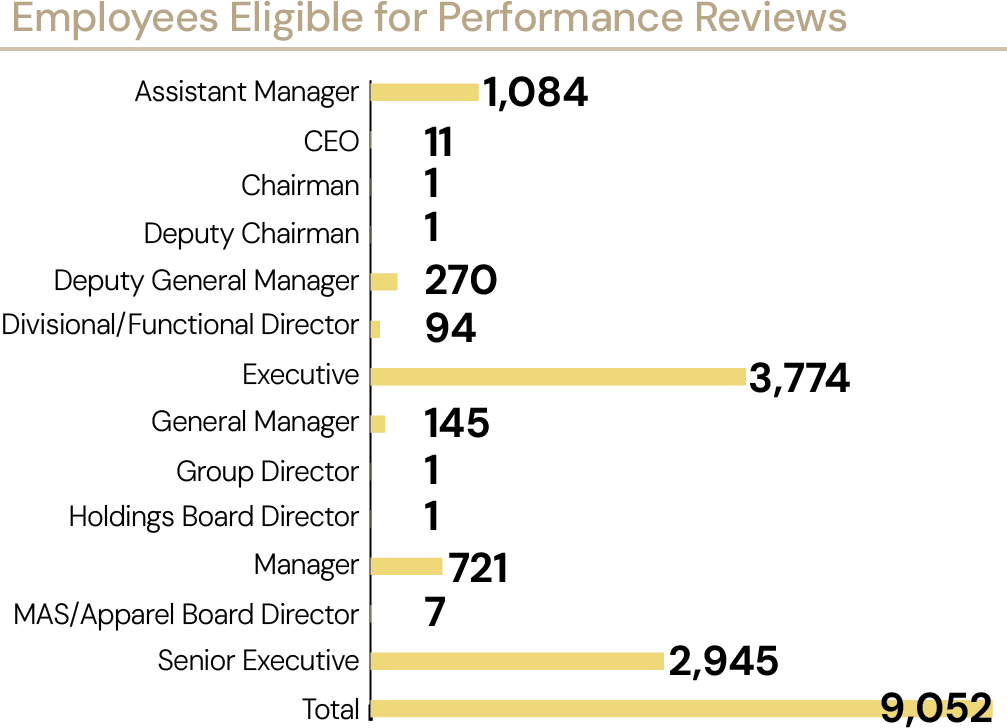
Performance reviews are conducted across defined employee categories, with 9.24% of the total workforce covered under formal appraisal processes in 2025. A total of 9,052 employees were eligible for performance reviews, reflecting a formal and targeted approach focused on executive and management levels.
| Employee Category | Male (no.) | Male (%) | Female (no.) | Female (%) |
|---|---|---|---|---|
| Assistant Manager | 766 | 70.7% | 318 | 29.3% |
| CEO | 11 | 100% | 0 | 0.0% |
| Chairman | 1 | 100% | 0 | 0.0% |
| Deputy Chairman | 1 | 100% | 0 | 0.0% |
| Deputy General Manager | 205 | 75.9% | 65 | 24.1% |
| Divisional/Functional Manager | 73 | 77.7% | 21 | 22.3% |
| Executive | 2,150 | 57.0% | 1,621 | 43.0% |
| General Manager | 118 | 81.4% | 27 | 18.6% |
| Group Director | 1 | 100% | 0 | 0.0% |
| Holdings Board Director | 1 | 100% | 0 | 0.0% |
| Manager | 556 | 77.1% | 165 | 22.9% |
| MAS/Apparel Board Director | 5 | 71.4% | 2 | 28.6% |
| Senior Executive | 1,920 | 65.2% | 1,025 | 34.8% |
| Total | 5,808 | 64.2% | 3,244 | 35.8% |
Diversity, Equity & Inclusion
MAS adopts a rights-based approach to diversity, equity and inclusion (DEI), ensuring all employees are treated with dignity, fairness and respect. Our focus spans gender equity, the inclusion of persons with disabilities and the inclusion of individuals of diverse Sexual Orientations, Gender Identities, Expressions and Sex Characteristics (SOGIESCs).
Gender equity efforts related to women's empowerment and advocacy are advanced through the Women Go Beyond (WGB) programme (refer pages 86-94), while broader inclusion is embedded through policies, systems, and workplace practices. This is supported by the Equal Opportunity and Anti-Harassment policy and MAS DNA (Code of Conduct), ensuring non-discrimination and accountability across all employment practices.
Progress is monitored through gender-disaggregated data across hiring, succession, and promotion pipelines, strengthening accountability and enabling more targeted interventions to address representation gaps over time.
In 2025, MAS continued to strengthen broader DEI efforts across the organisation:
- Strengthened internal trainer capability through a refined and quality-focused trainer model
- Updated gender-transition support guidelines, with structured protocols and access to trained counsellors
- Continued awareness-building on individuals of diverse SOGIESCs, grounded in science-based, locally contextualised approaches
MAS is striving to ensure equal remuneration for men and women for work of equal value, supported by structured compensation and benefits frameworks. Compensation structures are aligned to role, performance and market benchmarks, and are applied consistently across the organisation.
- Patron of UNGC Network Sri Lanka — Diversity & Inclusion Working Group
- National-level engagement through panels, podcasts and public dialogue
- Featured in platforms such as The Inclusion Equation podcast, advancing conversations on inclusive innovation and workplace practices
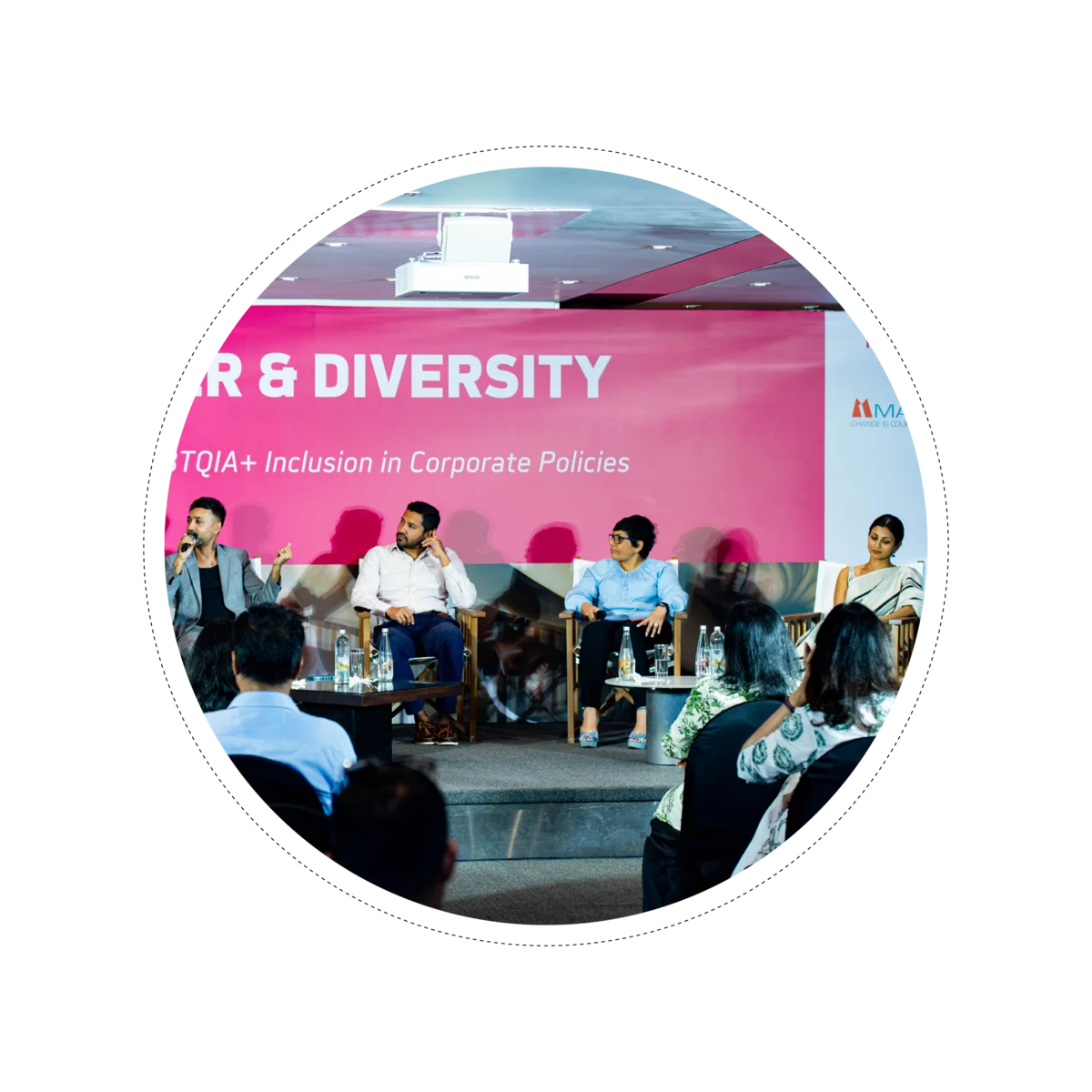
- Leading conversations on LGBTQIA+ inclusion in workplace policies
Awareness on Diverse SOGIESCs
In 2025, MAS continued to build organisation-wide awareness of inclusion for individuals with diverse SOGIESCs. This ensured consistent and structured sensitisation across all business units. These locally contextualised and science-based sessions helped employees understand inclusion within Sri Lankan culture. Furthermore, business units reinforced key messages through ongoing communication, translating awareness into everyday workplace behaviours.
Strengthening Internal Capability for Inclusive Workplaces
Throughout the year, we strengthened our internal trainer ecosystem to ensure consistent and high-quality inclusion initiatives across the organisation. Prioritising depth and effectiveness over sheer scale, we refined and supported our trainer pool through targeted capability-building interventions. These included targeted mock sessions to evaluate delivery approaches identify gaps and better understand on-ground realities. We also provided refresher training programmes to enhance facilitation skills.
This approach led to a more aligned and context-sensitive delivery of sensitisation programmes. This improved the overall quality and consistency of inclusion-related engagement across all business units.
Enabling Support for Gender Transition
In 2025, we took tangible steps to strengthen how we support employees undergoing gender transition. This was achieved by updating internal guidelines and formalising support mechanisms across the organisation, and was implemented via the introduction of defined protocols, access to trained counsellors, and the designation of resource personnel to guide employees through the process.
Developed in collaboration with expert organisations, these guidelines are designed to ensure that support is delivered in a manner that is informed, respectful, and grounded in lived realities.
Enabling Inclusive Work Environments
We continue to strengthen workplace systems that support diverse employee needs and enhance overall wellbeing. These efforts focus on creating enabling environments that promote accessibility, flexibility, and inclusion across the employee lifecycle.
Key enablers include flexible work arrangements, employer-supported childcare, inclusive infrastructure such as lactation rooms and prayer spaces, and access to counselling and mental health support. Altogether, these systems guarantee that employees receive assistance not only in their professional duties but also in their broader life contexts, thereby promoting ongoing involvement, commitment, and development.
14,600+
employees reached
620
programmes conducted
69
Pool of internal trainers strengthened
13
Mock training sessions conducted
50
trainers further upskilled
Diversity of Governance Bodies and Employees
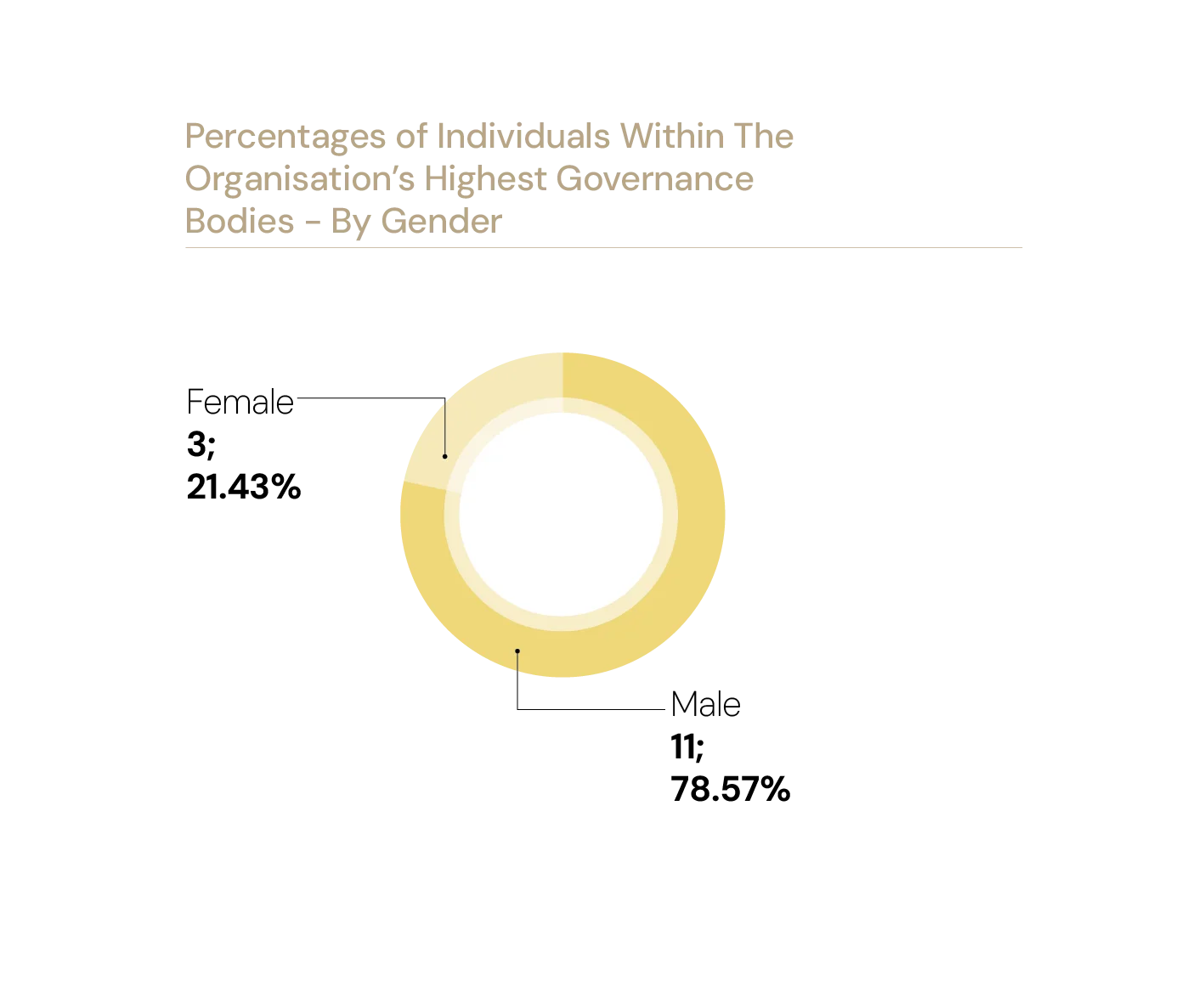
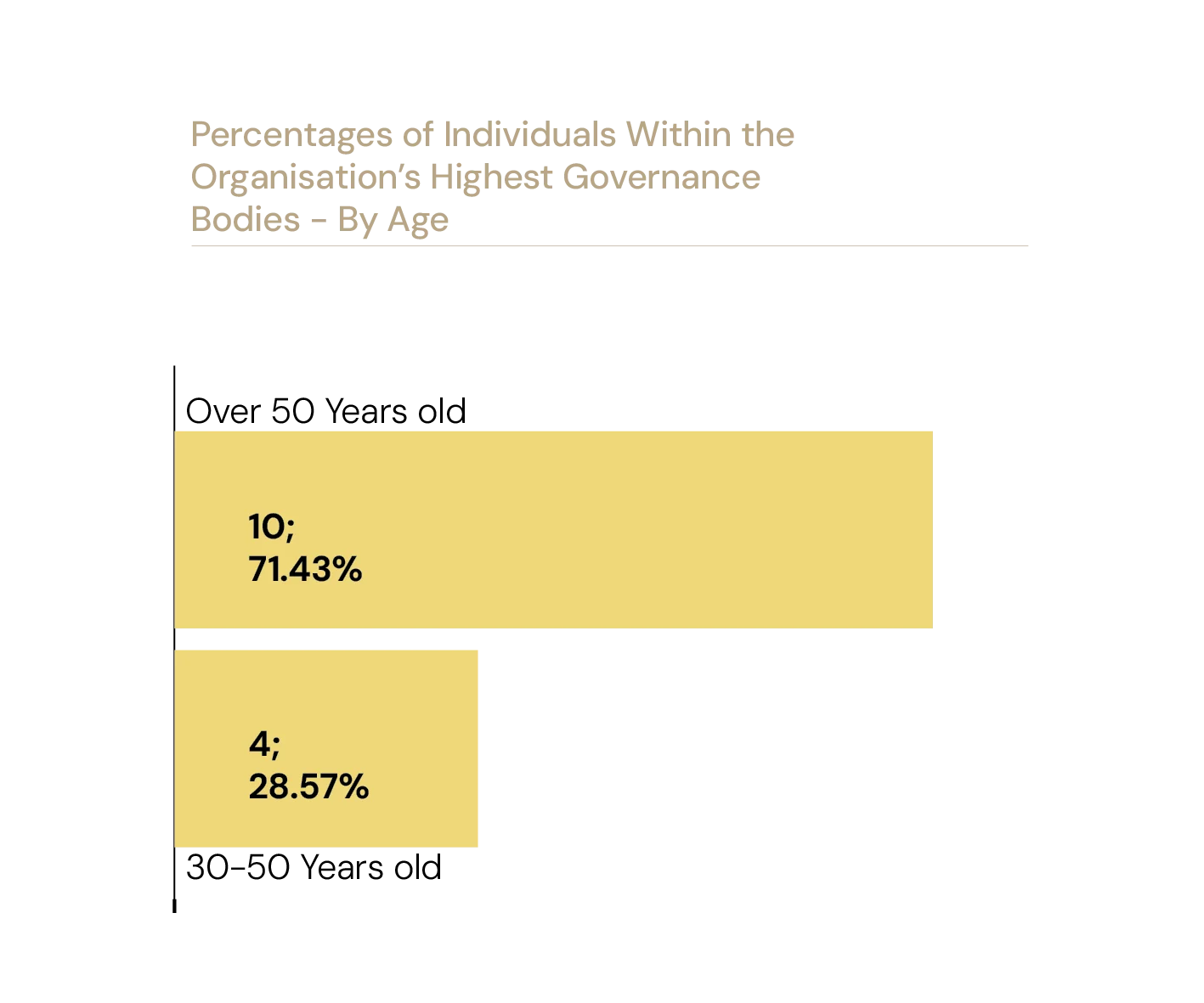
The organisation's highest governance bodies comprise the Boards of MAS Capital and MAS Holdings.
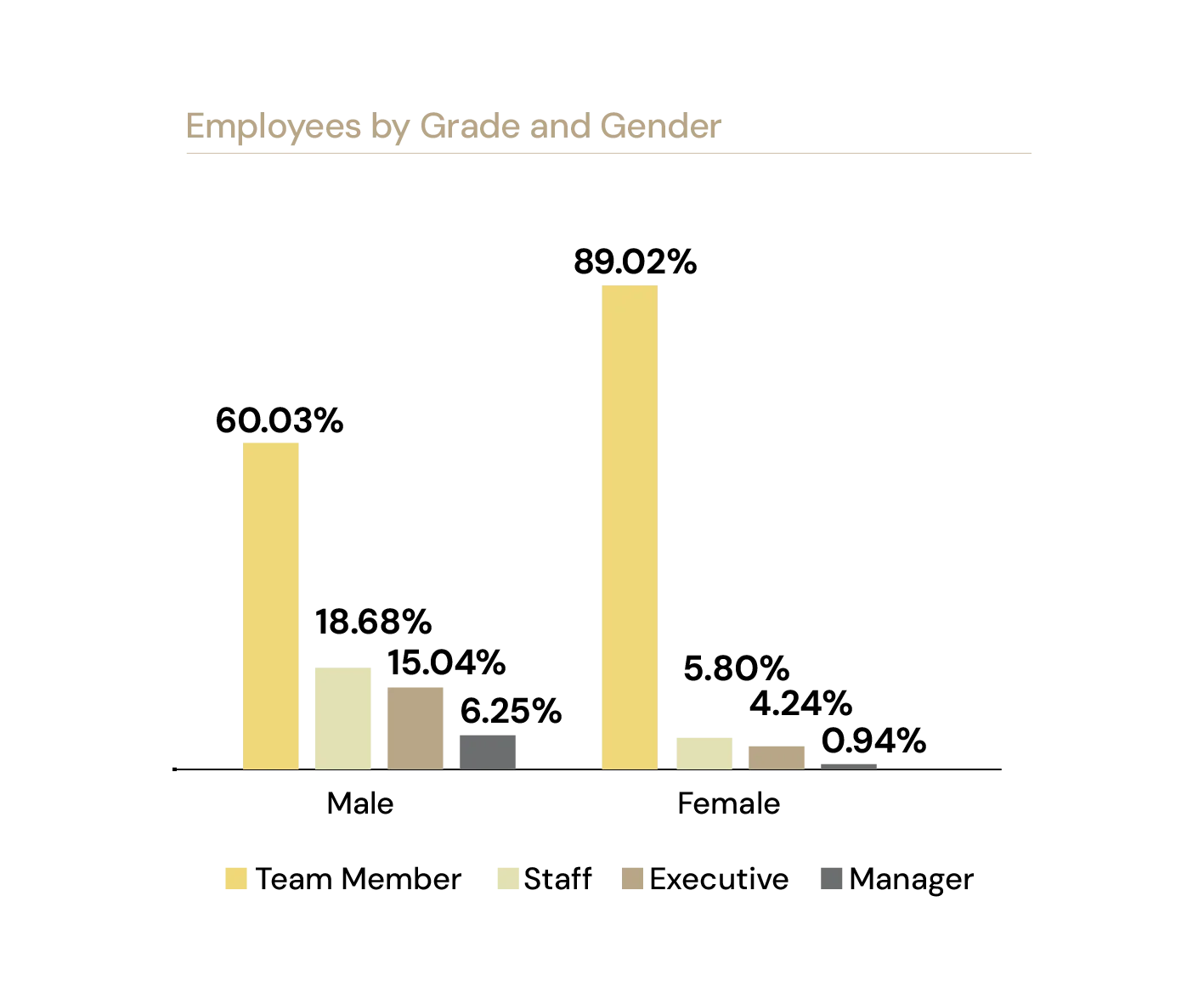
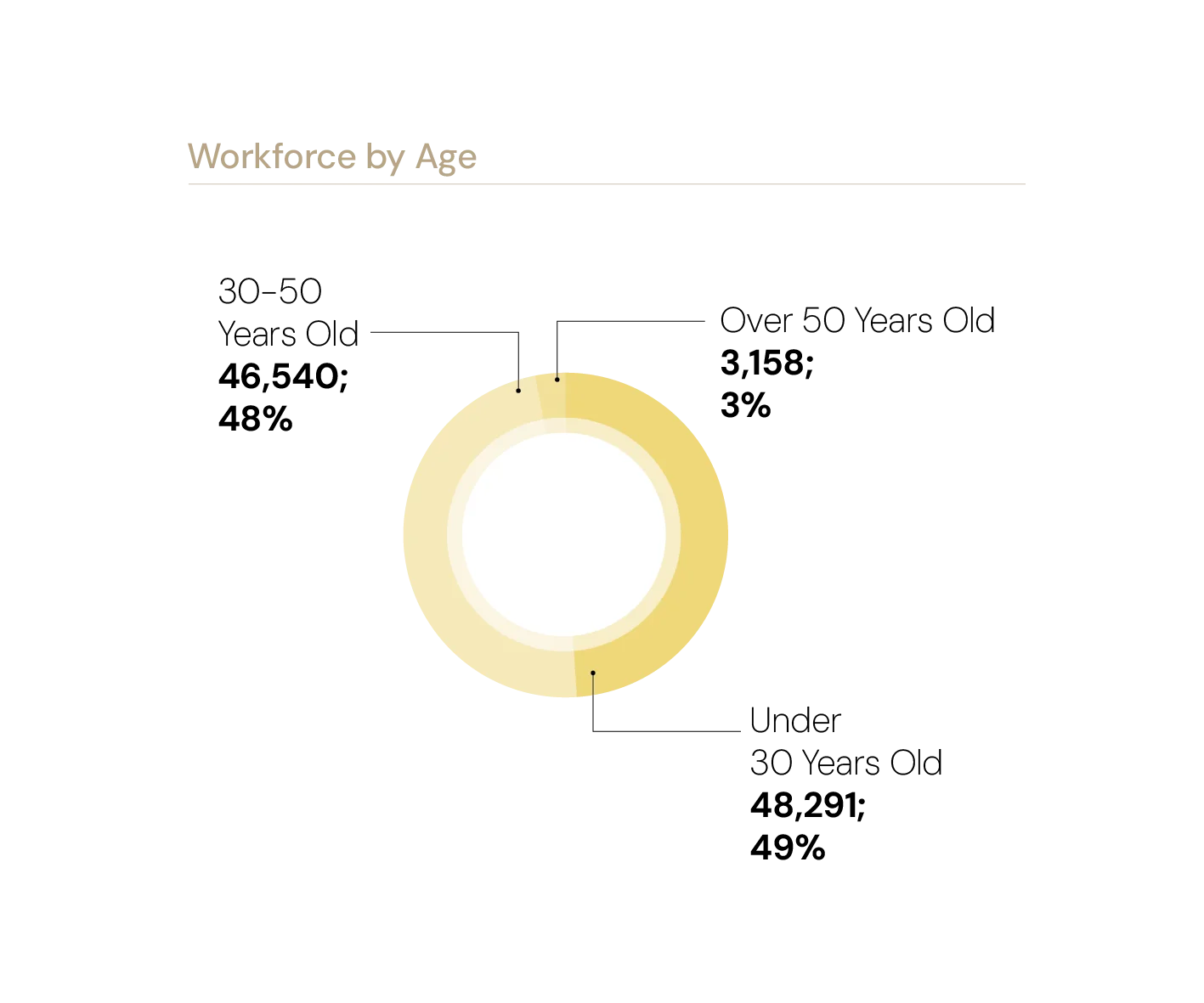
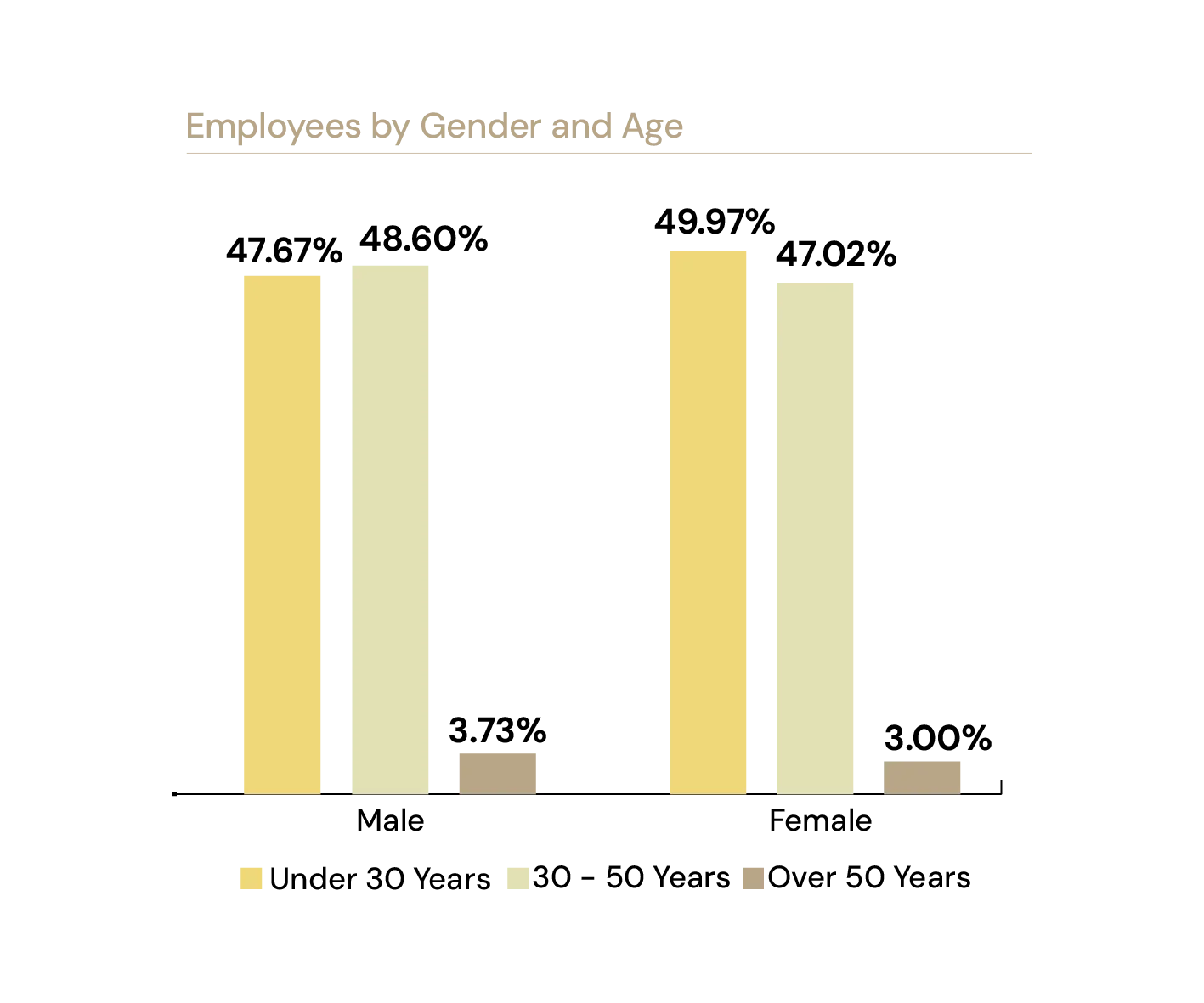
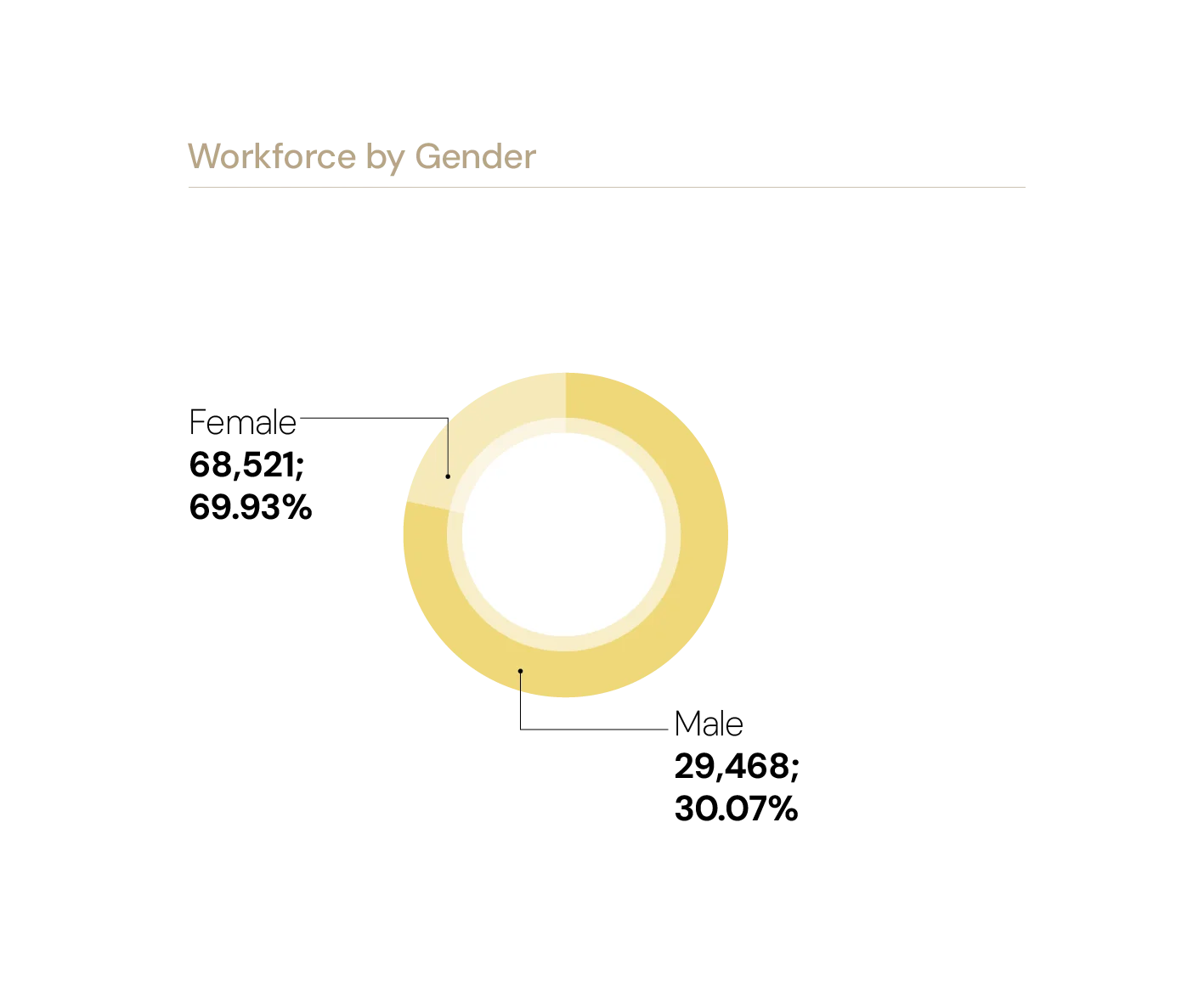
The above graphs show the overall gender-wise percentage distribution of employees across different grade levels and age groups, highlighting the total workforce composition and demographic structure within the organisation.
Empowering Persons with Disabilities
A structured approach to meaningful, inclusive employment.
MAS' disability inclusion approach is anchored in a four-pillar model (Employ, Enable, Engage, Empower), designed to support access, participation, and long-term growth for persons with disabilities across the organisation.

Persons with Disabilities 2025
436
Total Employees
303
Persons with speech and hearing impairments
123
Persons with physical impairments
20
Persons with vision impairments
7
Persons with cognitive/intellectual impairments
Focused on creating accessible and supportive workplace environments with access to the resources they need:
34
buddy systems supporting workplace integration
28
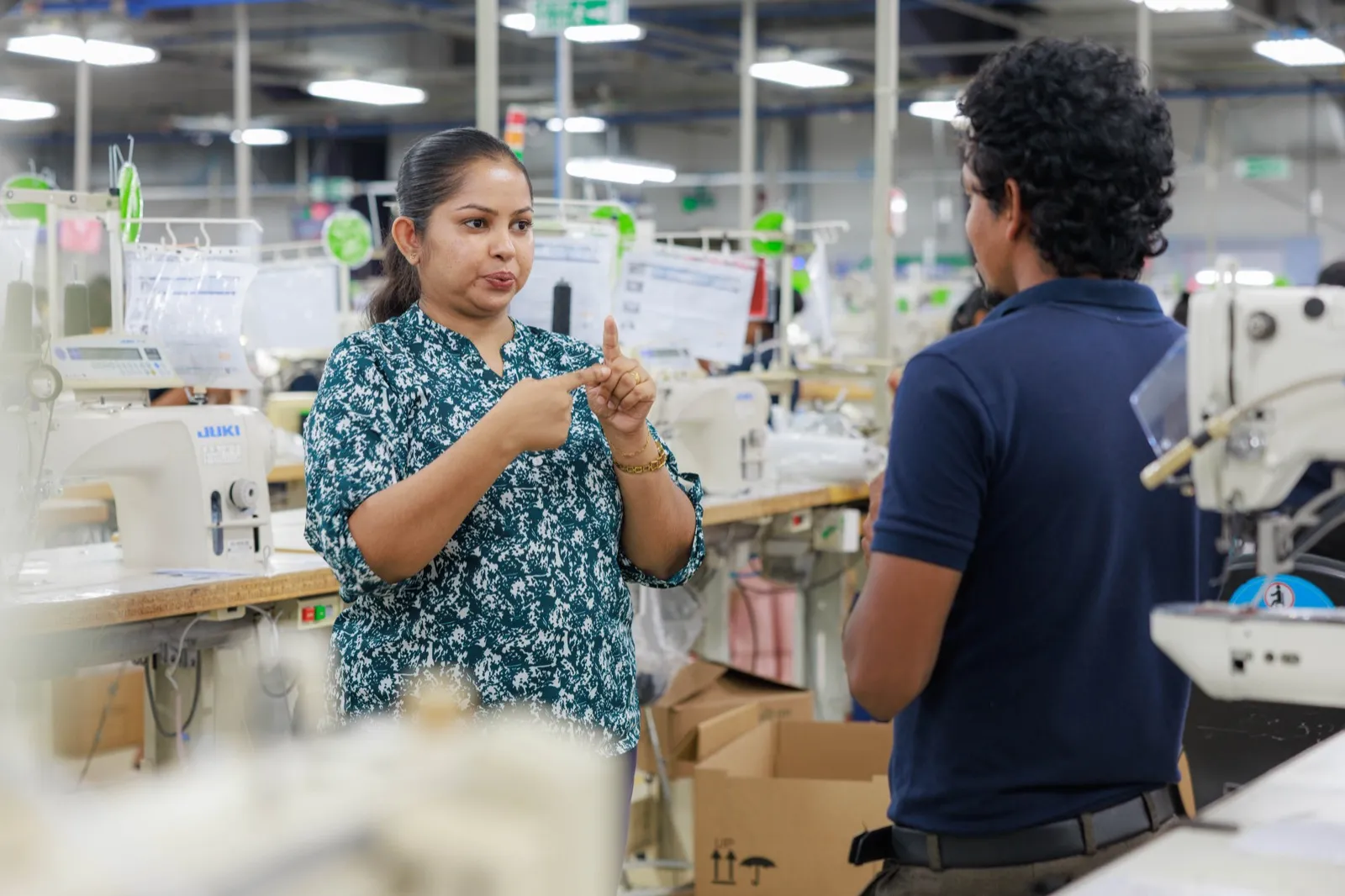
sign-language training programmes
34
accessible workplace interventions across locations
2
assistive tools and technologies provided
Strengthening communication, inclusion and connection:
35
Supported Employment processes in place
33
annual engagement events
23
sign-language and emergency training sessions for buddies and families
29
JCC communications to PWDs
13
partnerships with disability networks
These efforts foster a workplace culture where employees with disabilities feel valued, respected and included in company culture.
Supporting long-term development and career mobility:
34
specialised counselling, mentoring or coaching interventions
28
leadership and soft-skill development programmes
13
new job opportunities and cross-functional roles
Through these initiatives, employees are supported to build confidence, develop capabilities and progress within their careers.
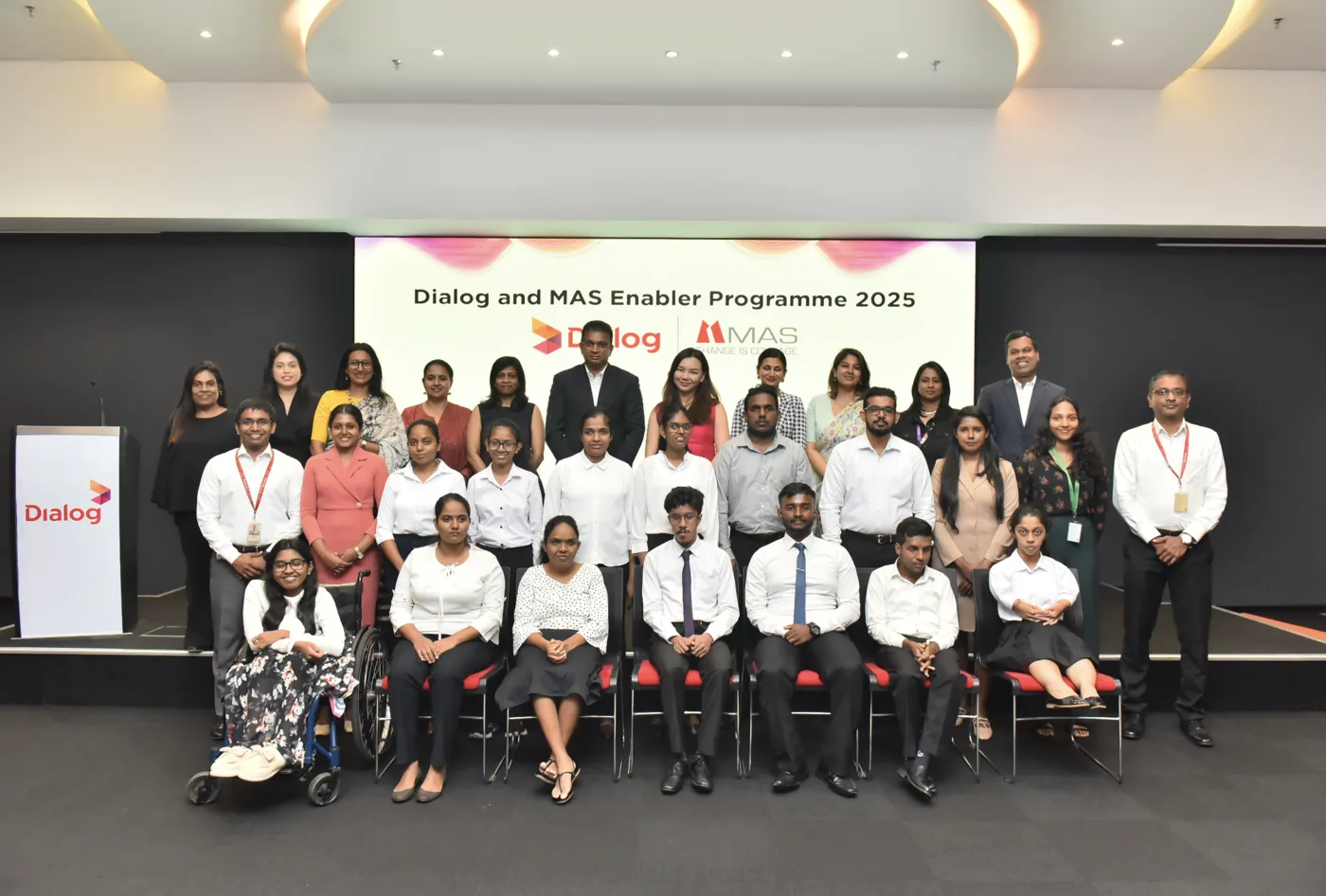
Dialog–MAS Enabler Programme 2025
Held from 23 June to 7 July, the two-week programme brought together selected undergraduates and graduates with disabilities, offering them immersive experiences across Dialog and MAS operations. Participants were placed within corporate offices, customer-facing service centres, and large-scale manufacturing facilities, where they received guided briefings on organisational culture while gaining hands-on exposure to day-to-day business operations.
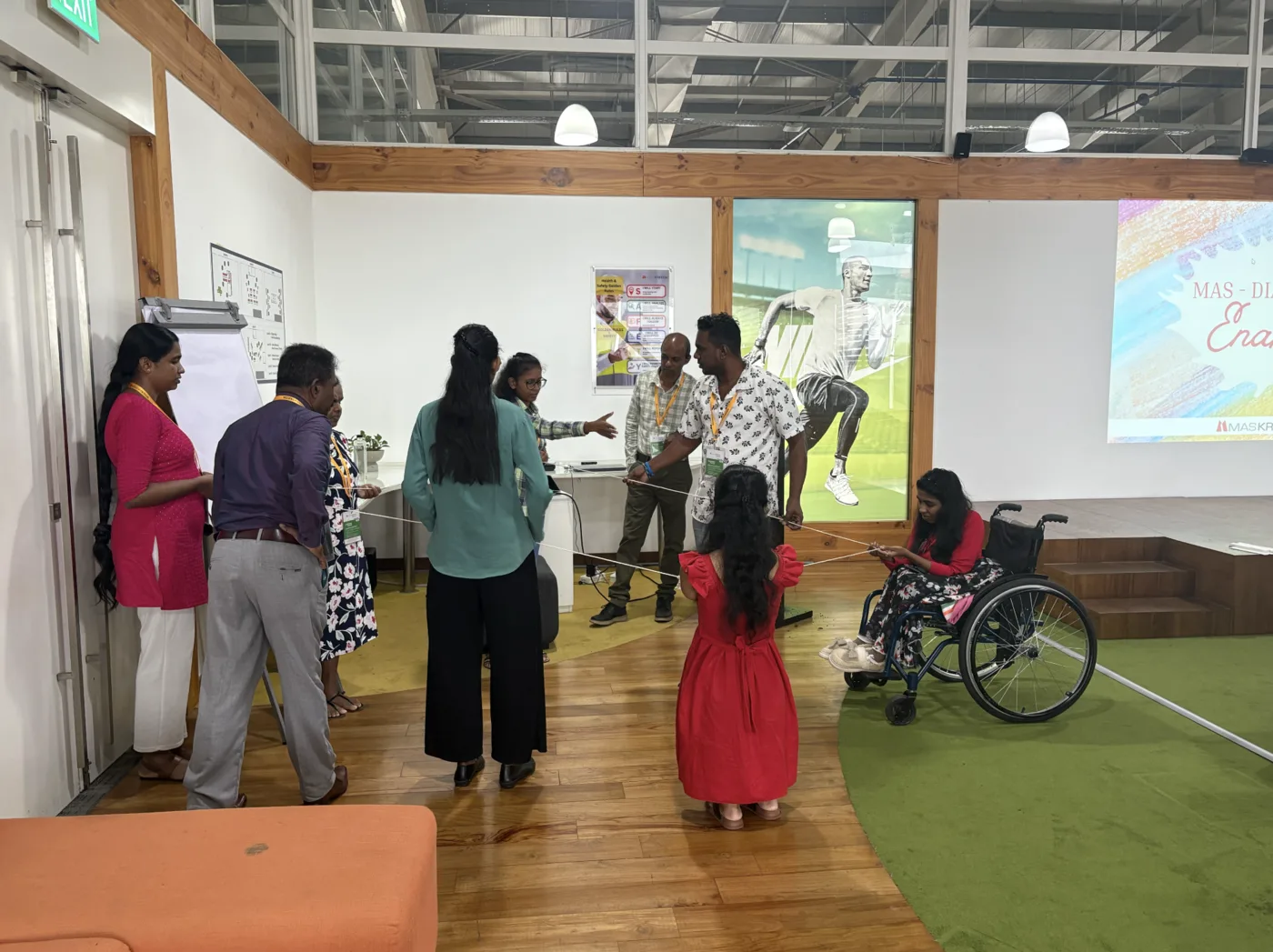
The programme blended theoretical learning with practical experience, covering key aspects of employability such as workplace etiquette, recruitment and hiring processes, interview preparation, career development, and department-specific forums facilitated by industry experts. Alongside technical and operational knowledge, strong emphasis was placed on soft skill development, including communication, teamwork, leadership, time management, and self-confidence — critical competencies for sustained career growth and effective integration into dynamic work environments.
As part of their MAS exposure, participants spent a full working day at MAS Capital, Battaramulla, gaining first-hand insight into the organisation's work culture and its central leadership role. They were introduced to “Plan for Change,” MAS Holdings' sustainability strategy, and engaged in conversations with senior leaders who shared their leadership journeys and personal experiences. Visits to the Legato Techno Hub further highlighted MAS' advanced use of technology and innovation within the apparel industry.
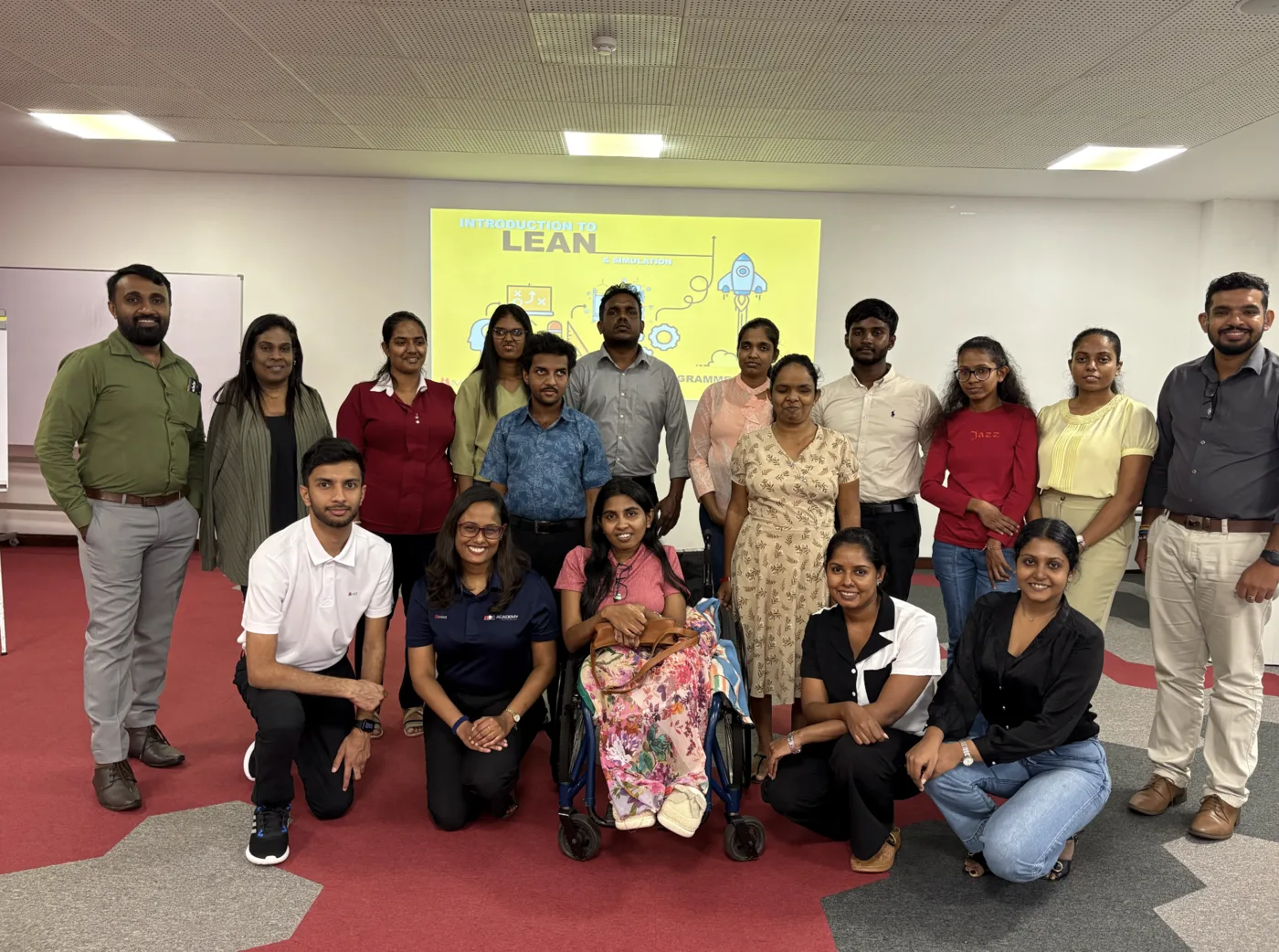
Participants also undertook a dedicated one-day programme at MOS Academy, where they learned Lean Manufacturing concepts including 5S and the 7 wastes and applied these principles to everyday activities. Manufacturing facility visits to MAS Linea Intimo, Unichela Panadura, MAS Silueta, and MAS Kreeda provided deep insight into garment manufacturing processes, organisational structures, HR functions, and inclusive workplace practices.
Throughout the programme, participants engaged in team-building and confidence-building activities, employability skills development, and professional CV-building sessions.
Reflecting on their learning, participants emphasised areas of personal growth and self-development, noting gains in self-belief, overcoming fear, balancing personal and professional life, and managing time effectively. Many highlighted improvements in teamwork, communication, and leadership, including learning to collaborate effectively and navigate challenging workplace dynamics. From an operational perspective, key learnings included Lean concepts, factory operations, and inclusive HR practices.
Importantly, participants provided constructive feedback on how MAS can further adapt workplaces and processes to enhance employability for persons with disabilities. They also reflected on the skills and competencies they need to strengthen as they prepare to enter the workforce.
Through the Dialog MAS Enabler Programme, MAS Holdings and Dialog Axiata PLC continue to demonstrate their commitment to fostering inclusive talent pipelines and bridging education and employment, while creating meaningful opportunities for persons with disabilities to thrive in professional environments.