
Sustainable Products · Source Sustainably
Sourcing Sustainably
Sourcing in Action
- Higg FEM onboarding increased to 83.57% of suppliers, with growing SBTi adoption
- Vendor Code of Conduct implemented across 100% of suppliers, with majority sign-up
- Fabric production established in Egypt to strengthen regional supply resilience
- Supplier training, calibration, and quality-alignment initiatives across key sourcing markets
- Raw-material mapping completed to capture sustainability data across key inputs
- Traceability pilots advanced with key customers and Tier 2 suppliers
Building a Responsible and Future-Ready Supply Chain
Sourcing at MAS enables the business to operate across a complex, multi-country supply chain — ensuring continuity, responsiveness, and alignment with evolving business needs.
Our sourcing approach is designed to build a resilient and future-ready supply chain by strengthening supplier ecosystems, enabling more sustainable material pathways, and improving transparency across the value chain to support long-term business and sustainability goals.
Key Priorities
Our sourcing efforts centre around three primary focus areas, balancing operational efficiency with capability building and long-term sustainability.
Ensuring continuity across a dynamic and evolving supply network.
- Managing raw-material price volatility and pricing pressures
- Adapting to tariff-driven shifts in production allocation
- Balancing capacity across manufacturing locations
- Maintaining supply continuity while driving cost discipline
Building capability to support evolving product and market needs.
- Developing supplier capability for sustainable and complex materials
- Strengthening local and regional supply-chain presence
- Improving production reliability and delivery performance
- Enabling faster translation of requirements into production
Strengthening sustainability alignment and data transparency across the supply chain.
- Aligning suppliers to recognised sustainability platforms and standards
- Strengthening environmental and social compliance across the supply base
- Improving availability and quality of raw-material sustainability data
- Expanding end-to-end traceability across customer and internal supply chains
Sustainable Sourcing at MAS
Sourcing connects suppliers, manufacturing operations, and customers — enabling coordination across the value chain to support continuity and responsiveness.
The global apparel supply chain is highly interconnected, making responsible sourcing critical to managing environmental and social impacts at scale.
This empowers stronger alignment, improved visibility, and more effective integration of sustainable materials across the supply chain.
Our supply chain was built with a strong focus on cost efficiency, driven by the need to manage raw material costs, which account for approximately 60% of total cost. Efforts were centred on securing supply, maintaining consistency, and optimising pricing across a multi-country network.
Sustainability adoption across the supply base remained limited and largely voluntary, with low initial onboarding to environmental and social platforms.
How We Have Evolved…





Our approach has shifted from a primary focus on cost efficiency and supply continuity to one that integrates sustainability into how the supply chain is managed.
In 2025, this meant navigating pricing pressures, raw material volatility, and tariff changes, while strengthening supplier alignment to sustainability platforms and advancing traceability—embedding environmental and social considerations into sourcing decisions.
Our Response to Changing Dynamics
Managing Cost and Network Complexity
The sourcing environment in 2025 was shaped by cotton price volatility, customer-driven pricing pressures, and tariff-related shifts across manufacturing locations. Operating across seven countries, these dynamics required continuous reallocation of production volumes, resulting in uneven capacity utilisation across the network. Amid these dynamics, we maintained cost discipline and ensured supply continuity through active supplier allocation and procurement management.
Operational Impact
- Continuous production rebalancing across countries
- Strained vs underutilised capacity across locations
- Margin pressure from cotton price fluctuations
- Increased coordination across sourcing and manufacturing
Strengthening Supply Chain Capabilities
We continued to strengthen supplier capability to support more sustainable and technically demanding materials, including recycled nylon and alternative inputs requiring higher process control.
These efforts improved responsiveness, consistency, and operational performance across the supply chain.
Capability Development
- Local supplier base strengthened
- Reduced dependency on external sourcing markets
- Fabric production initiated in Egypt
- Supplier training, calibration, and quality alignment
Advancing Sustainability and Transparency
MAS expanded the integration of Environmentally Preferred Materials (EPMs), while strengthening traceability and certification processes.
These initiatives were implemented amid navigating wide-ranging considerations, including cost pressures, climate risks, regulatory changes, and market readiness.
Sustainable Materials
- Organic & regenerative cotton
- Recycled polyester
- Man-made cellulosic fibres
- Preparation of textile-to-textile recycled polyester
- Alternatives to conventional synthetics
Supply-chain ESG compliance & due diligence
From compliance to capability and continuous improvement
MAS has established a structured ESG framework across its supply chain — combining clear standards, consistent monitoring, and active supplier engagement. This approach moves beyond baseline compliance to strengthen capability, improve transparency, and enable long-term alignment with sustainability priorities.
Governance and Standards
The MAS Vendor Code of Conduct (VCC) forms the foundation of supplier engagement, setting expectations across ethical, environmental, and social dimensions. The VCC covers aspects including ethical business practices, environmental compliance, labour standards, including human rights and anti-bribery, as well as product stewardship. It is a mandatory requirement for all newly onboarded suppliers.
80%
of suppliers by spend signed onto the VCC
100%
of new supplier spend covered through mandatory onboarding
Environmental Monitoring and Compliance
Environmental performance is monitored through globally recognised platforms, with oversight extending to Tier 2 suppliers and subcontractors. Together, these measures support stronger environmental oversight across the supply chain and alignment with SLFRS S2 value-chain transparency expectations.
- Higg Facility Environmental Module (FEM): assesses environmental management
- ZDHC Gateway (InCheck reports): used for chemical tracking
- ZDHC MRSL: defines restricted substances for manufacturing inputs, supporting safer chemical management
- ZDHC WWG 2.0: utilised to monitor wastewater discharge against defined compliance thresholds
- Third-party validation: supporting accountability and verification of performance
- Higg FEM Onboarding83.6%
of suppliers by spend onboarded
- Third-Party Validation78.9%
of suppliers with verified FEM data
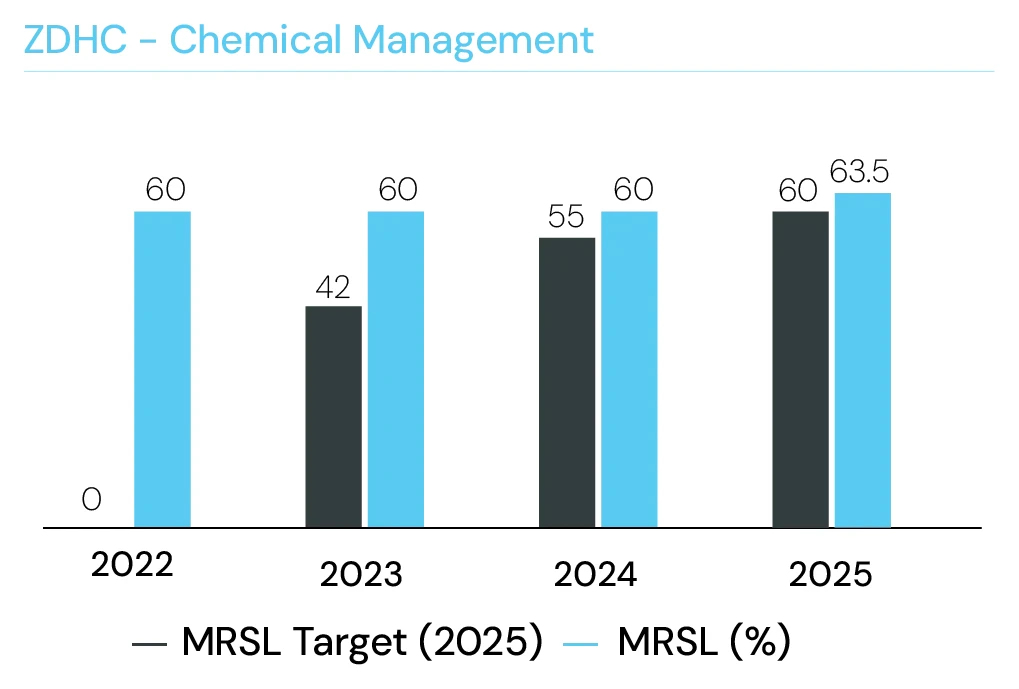
- ZDHC MRSL Compliance63.5%
of suppliers achieving the ≥80% MRSL compliance threshold
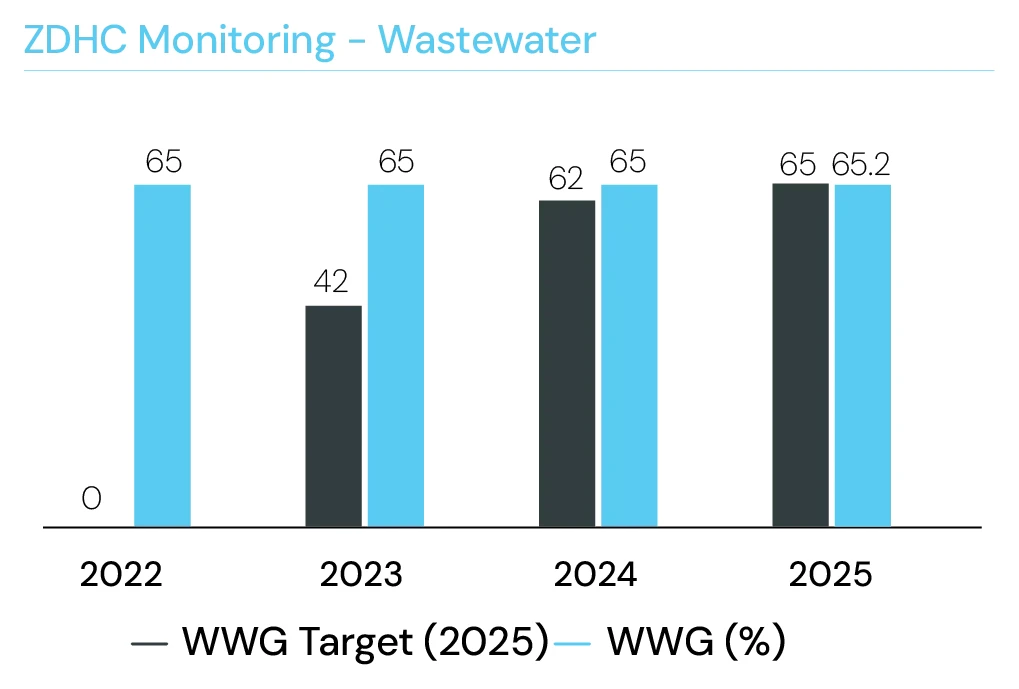
- ZDHC Wastewater Compliance (WWG 2.0)65.2%
of suppliers fully compliant with ZDHC guidelines
- 90%
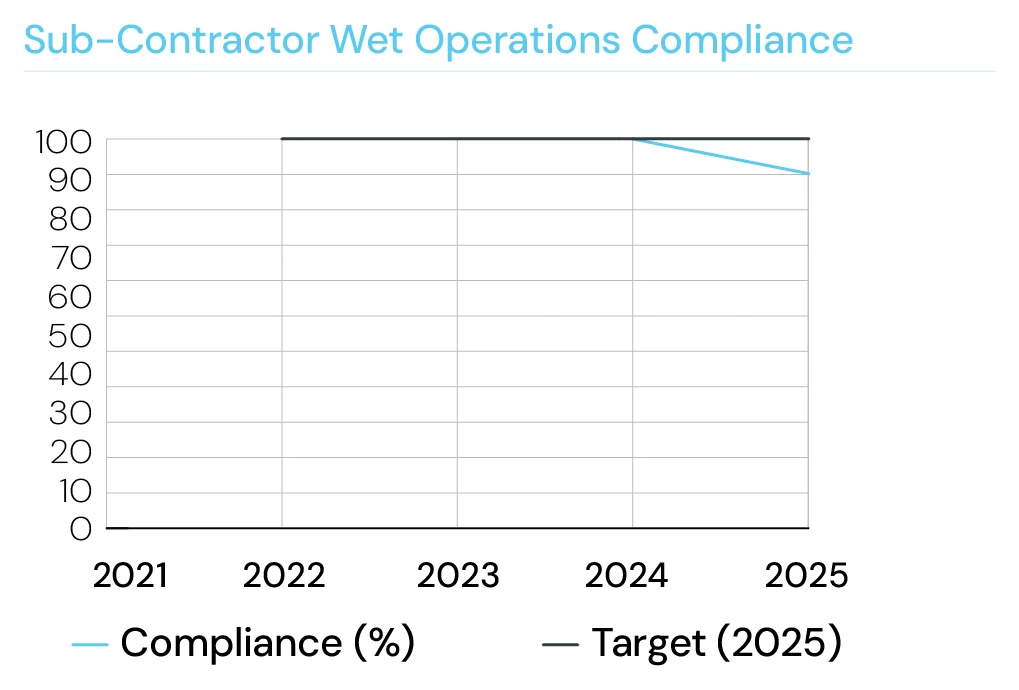
of wet subcontractors recorded full compliance
Social and Labour Practices
We strengthen labour and human-rights standards through a combination of standardised tools and independent verification. MAS encourages adoption of Higg FSLM, aligned to the SLCP framework, while MAS divisions conduct internal audits to validate subcontractor practices. Focus areas include the prevention of child and forced labour, alongside ethical sourcing and responsible purchasing practices.
Outcome
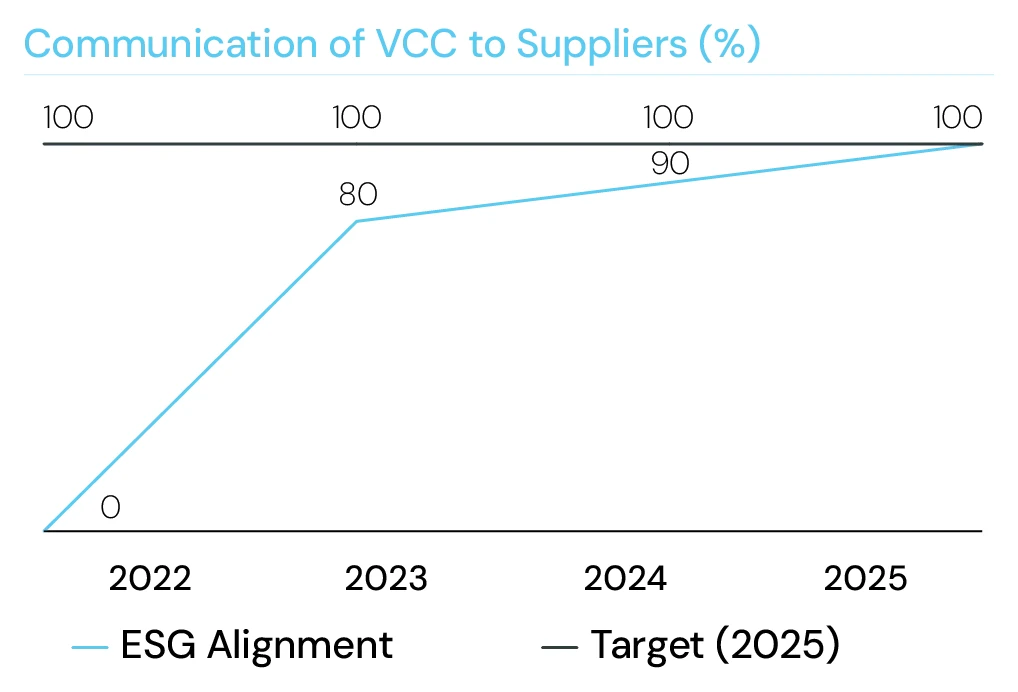
Our efforts to assess and engage with suppliers has enabled MAS to uphold an excellent record with regard to prohibiting underage or child labour and forced or compulsory labour. The MAS VCC upholds these essential elements of sustainable sourcing, through which 100% of our raw material vendor base is now engaged, reflecting the broader commitment of the MAS Supply Chain ESG strategy.
Capability Building and Supplier Engagement
We adopt a collaborative approach to supplier development, supporting continuous improvement across the supply base. This includes supplier onboarding to sustainability platforms, training and awareness programmes across regions, and digital traceability pilots with Tier 2 suppliers to strengthen data visibility and improve supplier capability over time.
53%
of suppliers by spend committed to Science-Based Targets (SBTi)
Screening, Risk Assessment and Onboarding
Structured due diligence is applied prior to supplier onboarding, ensuring alignment from the outset. This includes mandatory mill-evaluation visits, supplier compliance with VCC requirements prior to entry, and the use of an impact–influence matrix to prioritise suppliers based on risk and strategic importance.
100%
of all new suppliers undergo pre-onboarding screening (environmental & social)
What the Framework Enables
This integrated approach strengthens performance and alignment across the supply chain, enabling:
- 1Improved environmental and social outcomes
- 2Greater transparency and traceability
- 3Stronger alignment with regulatory and customer expectations
- 4Continued capability development to support sustainable product innovation
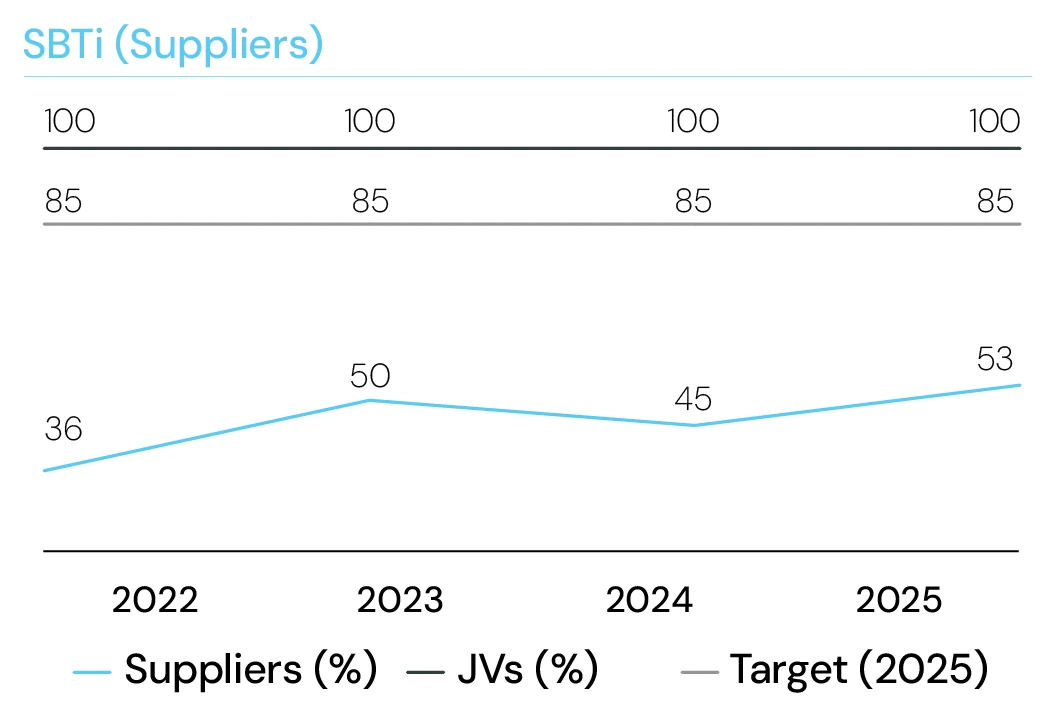
- of suppliers (by spend) committed to SBTi targets
0%
of suppliers (by spend) committed to SBTi targets
- alignment across joint ventures (SBTi)
0%
alignment across joint ventures (SBTi)
- of suppliers achieved MRSL compliance thresholds
0.0%
of suppliers achieved MRSL compliance thresholds
- compliance across subcontracted wet operations
0%
compliance across subcontracted wet operations
- of suppliers monitored under ZDHC Wastewater Guidelines
0.0%
of suppliers monitored under ZDHC Wastewater Guidelines
- of direct raw material vendor base aligned to MAS Supply Chain ESG strategy
0%
of direct raw material vendor base aligned to MAS Supply Chain ESG strategy
| Category | KPI | Metric | 2022 | 2023 | 2024 | 2025 | Target |
|---|---|---|---|---|---|---|---|
| Environmental | MAS SBTi KPI | % of suppliers (by spend) committing to SBTi targets for emission reduction | 36 | 50 | 45 | 53 | 85 |
| % of JVs in Scope 3 investments committing to SBTi targets for emission reduction | 100 | 100 | 100 | 100 | 100 | ||
| MAS (Chem) KPI Wastewater discharge / chemical compliance | % of subcontracting wet operations compliant with local discharge regulations and ZDHC WWG | 100 | 100 | 100 | 90 | 100 | |
| % of RM suppliers monitored against ZDHC WWG | – | 42 | 62 | 65.2 | 65 | ||
| % of RM suppliers monitored against ZDHC MRSL | – | 42 | 55 | 63.5 | 60 | ||
| Social | MAS Supply Chain ESG Strategy | % of direct RM vendor base to whom the Vendor Code of Conduct was communicated | – | 80 | 90 | 100 | Sustaining 100 |