
At MAS, water stewardship is approached as a balance between operational efficiency, environmental responsibility, and shared value creation. As a resource that is both critical to production and increasingly constrained, water is managed through continuous optimisation of processes, strengthened monitoring systems, and targeted investments across facilities.
Our ambition is to significantly reduce water intensity while advancing circular water practices and minimising environmental impact across operations and the value chain.
Key conservation measures include rigorous daily monitoring, proactive leak detection, rainwater harvesting, and a significant scale-up of wastewater recycling. Additionally, we prioritise community-focused initiatives to improve water accessibility and quality for local stakeholders.
Key Priorities Shaping how we Safeguard Water
Water risks are managed across all operations, with the aim of ensuring responsible use and minimised environmental impact.
Driving optimisation and reducing operational intensity
Enhancing monitoring systems and improving process efficiency to reduce consumption across textile and apparel operations.
Scaling recycling and reducing freshwater dependency
Expanding wastewater treatment and reuse, alongside initiatives such as rainwater harvesting and greywater recycling to increase circularity.
Ensuring compliance and minimising environmental impact
Maintaining strict wastewater treatment protocols and aligning with ZDHC wastewater guidelines to ensure responsible discharge across operations and the supply chain.
0%
Reduction in textile production water intensities based on 2011 baseline
0%
Reduction in textile production water intensities
0.0 ML
total water withdrawal
0% | 0%
textile vs apparel water use
0.00 ML
recycled water (↑60% YoY)
0 instances
of non-compliance with wastewater discharge limits
Our Water Footprint
Water use across MAS is largely driven by textile processing activities, where wet processing requires significant volumes for dyeing, washing, and finishing. Apparel manufacturing, while less water-intensive, contributes through domestic and auxiliary uses including sanitation, HVAC, and landscaping. MAS does not engage in water withdrawal from water-stressed areas.
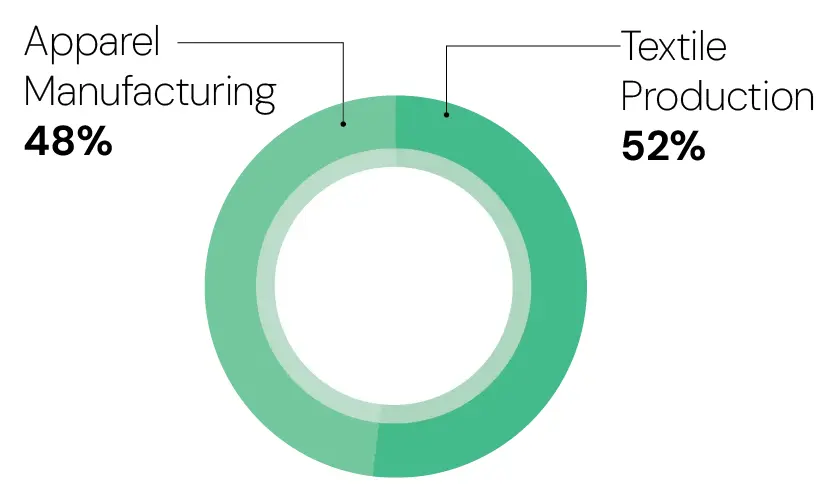
In 2025, total water withdrawal (equivalent to water consumption across operations) amounted to 2,707.1 ML, with 52% attributed to textile production and 48% to apparel manufacturing. As water withdrawn is fully utilised across operations, reported water consumption is equivalent to total water withdrawal during the reporting period. Water sourcing remains predominantly reliant on third-party supply, supplemented by groundwater, while recycled water continues to increase as circular practices scale across facilities. In addition to withdrawal, our gross water demand (water footprint) reached 2,710.5 ML in 2025 (2024: 2,590 ML) reflecting the total water required to support operations, including process needs and system losses. This increase is aligned with operational requirements, while continued improvements in monitoring and reuse help manage overall demand.
2,707.1 MT
Total Water Withdrawal (4.5% increase since 2024)
Water use is primarily driven by textile production processes, particularly wet processing activities such as dyeing and washing, which remain the most water-intensive operations.
*Includes reused water and operational losses
2,710.5 ML
Gross Water Demand*
(4.65% increase since 2024)
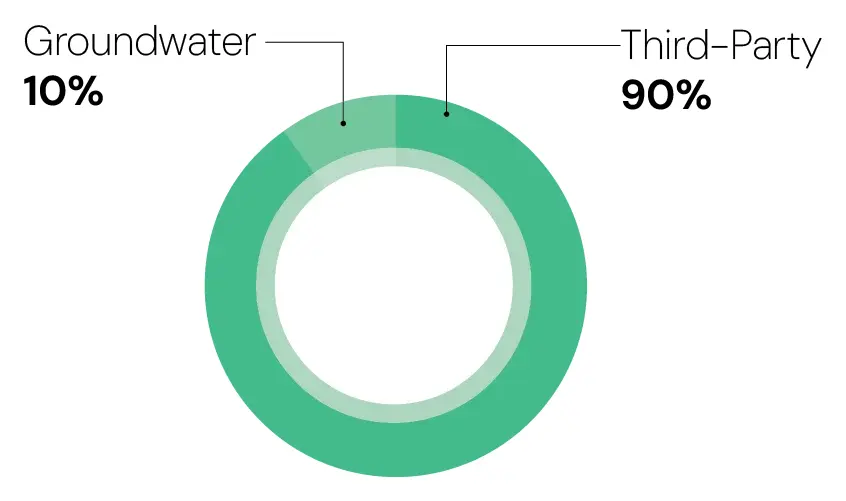
Water sourcing remains predominantly reliant on third-party supply, while increasing volumes of recycled water reflect continued progress in advancing circular water practices across operations.
In 2025, total water withdrawal amounted to 2,707.1 ML, with 52% attributed to textile production and 48% to apparel manufacturing. Water sourcing remained predominantly reliant on third-party supply, supplemented by groundwater.
During the year, total wastewater discharge, comprising both domestic and industrial wastewater, amounted to 2,072.99 ML. Of this, 426.81 ML was discharged directly, while 1,646.18 ML was discharged indirectly through Central Effluent Treatment Plants (CETPs).
Note: A portion of the wastewater reported under direct discharge was reused/recycled and has already been reported under recycled water volumes.
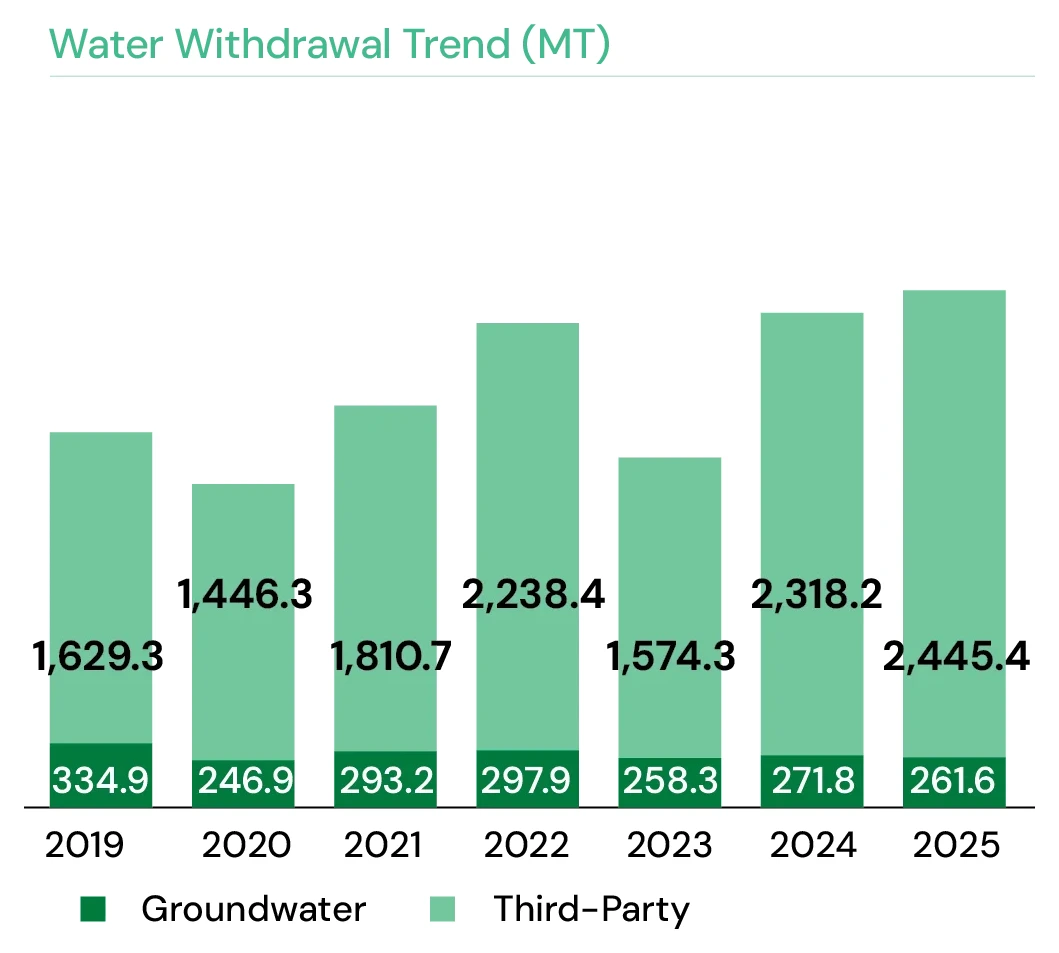
- Water withdrawal increased marginally in 2025 (+4.5%), reflecting stable operational demand
- Reliance on third-party supply remains high, accounting for the majority of water sourced across operations
- Groundwater usage continues to be managed conservatively, maintaining a relatively small share of total withdrawal
- Trend indicates improved control and predictability in water use, supporting efficiency initiatives
- Increased recycled water usage complements stable withdrawal levels, supporting reduced pressure on freshwater sources
Strengthening Water Efficiency
Reducing Intensity Across Operations
Enhancing process efficiency, strengthening daily monitoring and balancing, and deploying water-efficient technologies to reduce consumption across textile and apparel manufacturing.
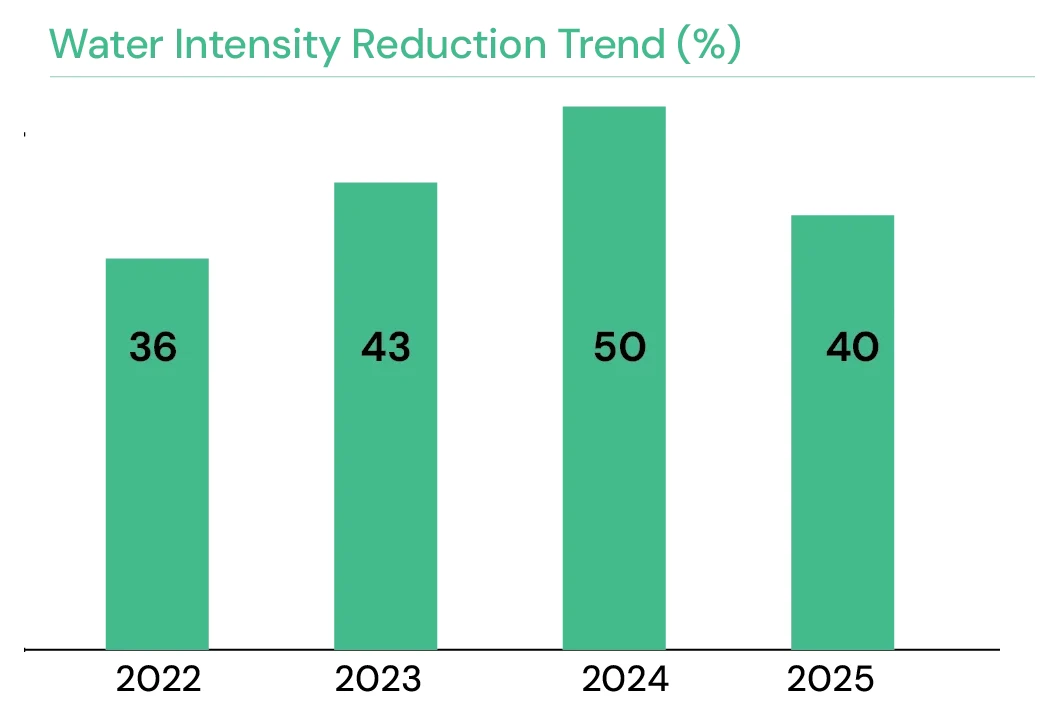
In 2025, overall water intensity reduction of the textile facilities moderated to 40% against the 2011 baseline, following peak performance in the previous year. Despite this, facilities continued to demonstrate incremental improvements supported by strengthened operational controls and targeted interventions.
In terms of water intensity, textile operations recorded a 1.53% reduction, while apparel manufacturing achieved a 5.53% reduction against 2024, reflecting steady progress across operational segments.
- Rearrangement of underground water lines to surface level, following identification of leakages and abnormal consumption through meter analysis
- Improved accessibility, monitoring, and maintenance efficiency
- Enabled faster leak detection and corrective action
- Resulted in a reduction in facility-level water intensity from 111.4 to 97.7 within the year
- Installation of automated dishwasher systems
- Delivered approx. 1,560 units of annual water savings
- Supported by structured awareness programmes to drive behavioural change
Advancing Circular Water Use
Reducing Dependence on Freshwater Sources
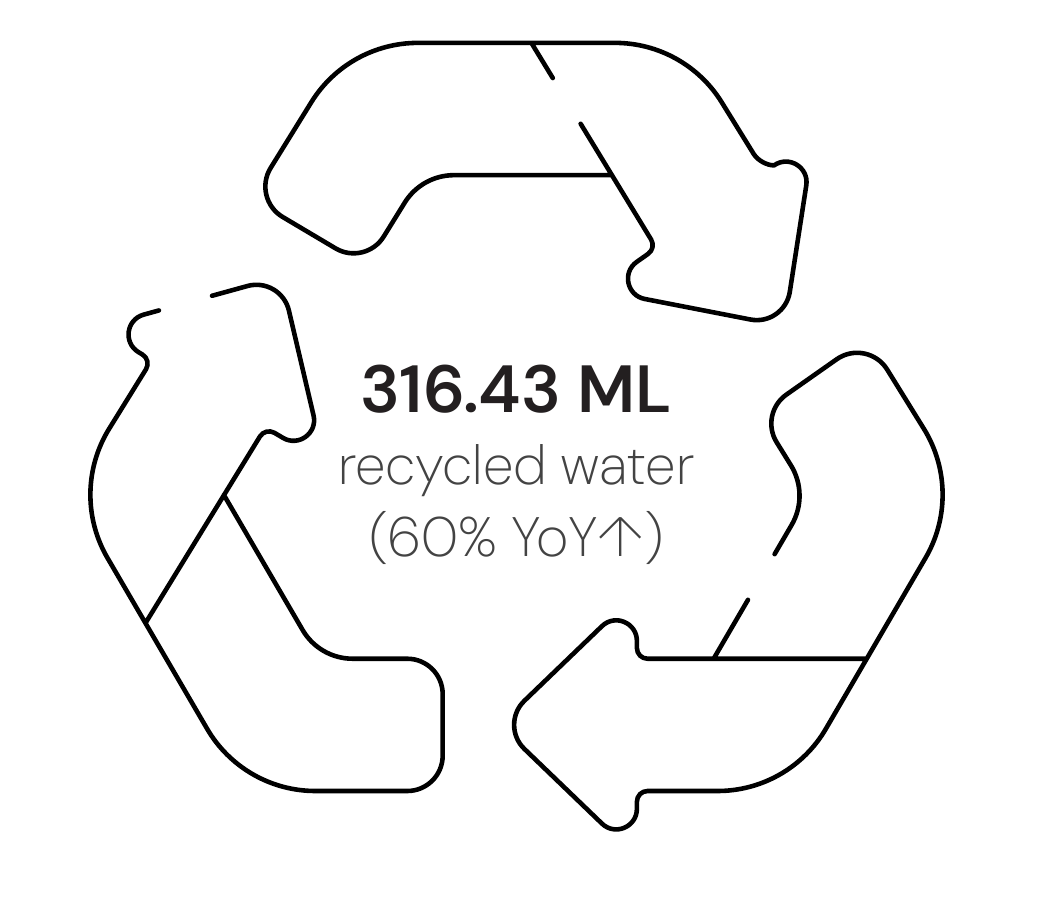
Scaling wastewater recycling, reuse, and rainwater harvesting initiatives to increase circularity and improve resource efficiency across facilities. In 2025, recycled water increased significantly to 316.43 ML, reflecting the continued expansion of reuse systems and infrastructure improvements across operations. Facilities also enhanced recycling for non-process applications, contributing to reduced freshwater demand.
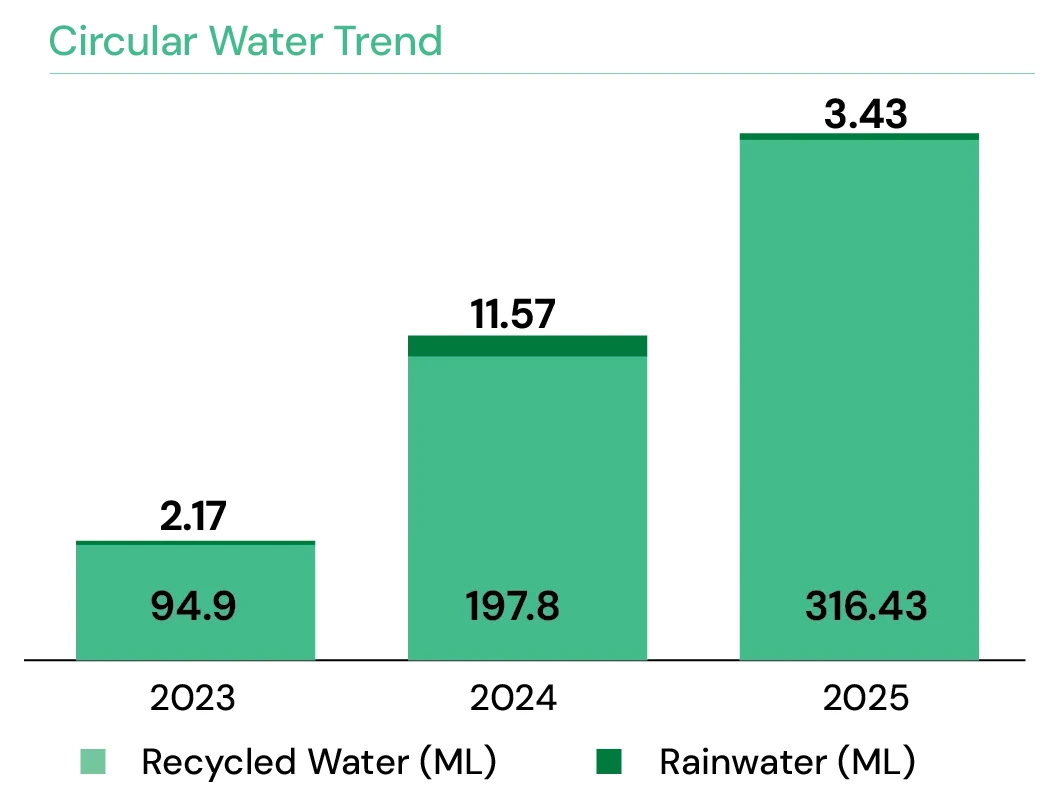
- Expansion of wastewater recycling and reuse systems
- Increased use of treated water for non-process applications (e.g., landscaping)
- Infrastructure improvements to enhance water recovery and reuse
Managing Water Quality and Discharge
Ensuring Compliance and Minimising Environmental Impact
We maintain robust wastewater treatment systems and aligning with ZDHC wastewater guidelines to prevent environmental impact and ensure consistent compliance. Strict controls are applied across wastewater treatment and discharge processes, supported by monitoring systems and standardised testing protocols to ensure consistent performance across operations and the supply chain.
- Wastewater testing aligned with ZDHC guidelines
- Expansion of supplier and subcontractor wastewater compliance coverage
0%
compliance with ZDHC wastewater discharge limits
0 instances
of non-compliance recorded
0.0%
Raw material suppliers aligned with ZDHC Wastewater guideline
Extending Impact Through Community Initiatives
We recognise that water stewardship extends beyond our operations. In many of the regions where we operate, access to safe and reliable water remains a critical challenge. As such, we continue to invest in community-based initiatives that improve access to clean water, strengthen infrastructure, and promote responsible usage—contributing to long-term resilience and shared value creation.
0+
daily users supported (Anuradhapura)
0+
students and teachers benefited (Aluthwewa)
0students
0staff
supported (Pingamuwa)
0 L/day
+0 L/day
RO capacity installed
Water Smart Project : Noyon and Linea Aqua
Pingamuwa Maha Vidyalaya
We implemented a comprehensive water infrastructure upgrade at Pingamuwa Maha Vidyalaya to improve groundwater management, reduce water wastage, and ensure reliable access to clean water throughout the year.
Key interventions included deepening the existing well, reinforcing its structure with concrete rings, repairing damaged sections, and increasing storage capacity from 500L to 1,500L. The pumping system was also optimised to improve efficiency and reduce energy consumption.
In addition, we conducted awareness programmes and hands-on training sessions on water conservation and basic plumbing, enabling students to identify and address leakages both at school and at home.
The project currently supports 150 students and 20 staff, while delivering long-term benefits through improved system efficiency, reduced water losses, and strengthened community awareness and resilience.
Water For All: Bodyline
Anuradhapura Pooja Bhoomiya
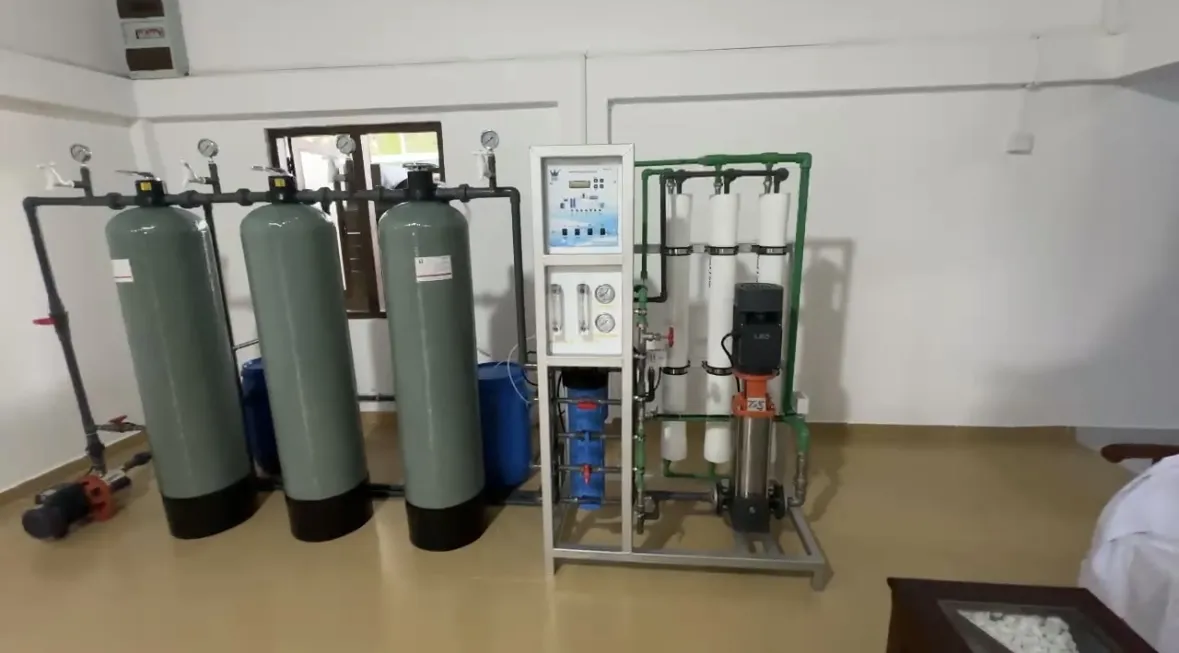
To address the high demand for safe drinking water at one of Sri Lanka's most significant religious sites, we installed an additional RO plant with a capacity of 15,000 litres per day, supplementing the existing system.
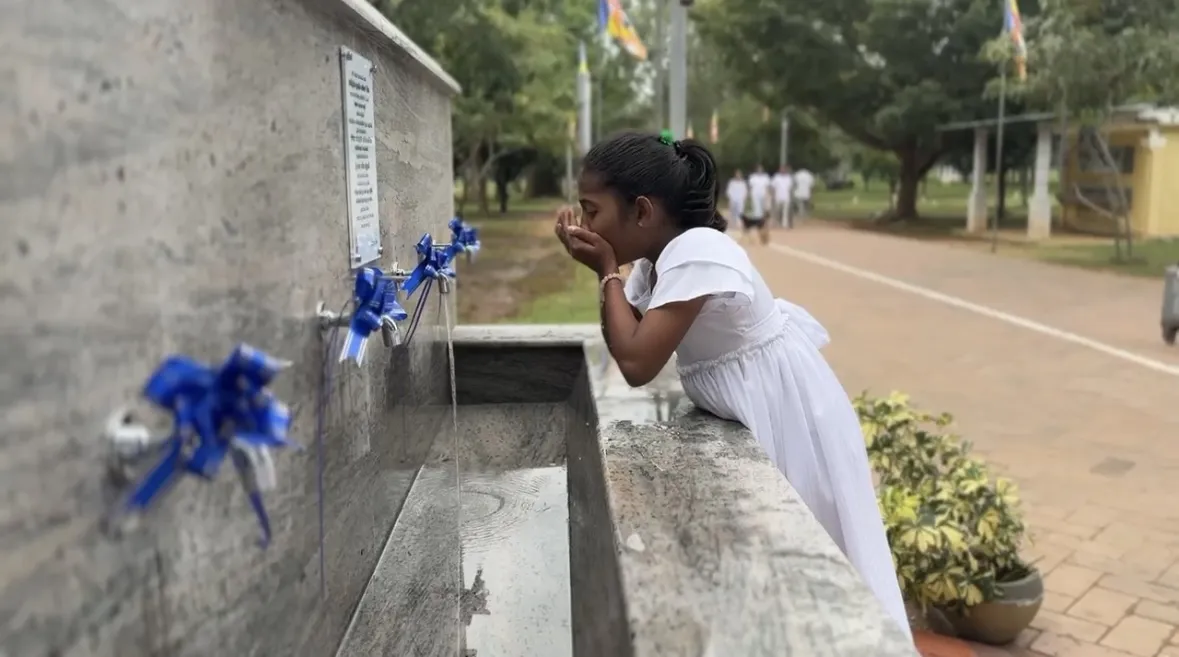
We also installed drinking water access points along key high-traffic routes, improving accessibility for pilgrims and visitors.
This initiative now provides safe drinking water to over 200,000 daily users, with numbers increasing during peak religious periods. Maintenance is supported through a partnership model, with MAS funding ongoing upkeep and the Sri Lanka Navy managing operations.
The project contributes to improved public health, visitor experience, and sustainable water access in a high-demand environment.
Aluthwewa Kumara Maha Vidyalaya
We extended our “Water for All” initiative to Aluthwewa Kumara Maha Vidyalaya through the installation of an RO water purification system with a capacity of 2,000 litres per day.
This initiative provides consistent access to safe drinking water for over 750 students and teachers, addressing a critical need in a water-scarce region. The system is maintained by the school, ensuring long-term sustainability and local ownership.
The project supports improved health outcomes, reduces exposure to water-related risks, and strengthens resilience within the school community.