
Driving Value Enhancement Across Waste Streams
Transform Waste
At MAS, waste management is centred on one core objective: ensuring that materials retain value for as long as possible within the value chain. This means moving beyond disposal, toward recovery pathways that prioritise reuse, textile-to-textile recycling, and down-cycling. As operations scale, we continue to strengthen how waste is managed across our ecosystem, focusing on improving segregation, recovery processes, and enabling circular solutions where feasible. Our efforts are guided by a clear ambition: to achieve zero landfill and energy recovery, while maximising value enhancement across all waste streams.
80%
value enhancement
76.9%
total non hazardous value enhancement
98.6%
waste diverted from landfill
1.4%
waste to landfill
Key Priorities Shaping how we Transform Waste
Our approach focuses on managing waste across all categories, while prioritising key levers that improve value enhancement and minimise reliance on disposal pathways across operations and the value chain.
Reuse, recycling, and conversion of waste to steam
Strengthening segregation, recovery systems, and circular pathways to maximise material value through innovative applications across operations and partnerships
Minimising disposal, managing residual waste, and preventing environmental leakage
Redirecting waste into productive and controlled pathways, including recovery and treatment systems, while reducing reliance on landfill and preventing leakage into natural environments
Our Waste Footprint
Understanding Waste Categories and Disposal Methods
We manage waste across categories and disposal methods to ensure that materials retain value within the system for as long as possible, while minimising environmental impact where recovery is not feasible. As operations expand, strengthening how waste is classified, recovered, and treated remains a key priority. In 2025, total waste generated across operations amounted to 25,096.70 MT (2024: 23,929.20 MT), reflecting an increase of 1,167.50 MT, largely driven by higher volumes of production-related waste.
25,096.70 MT
Total Waste Generated (approx. 4.9% increase since 2024)
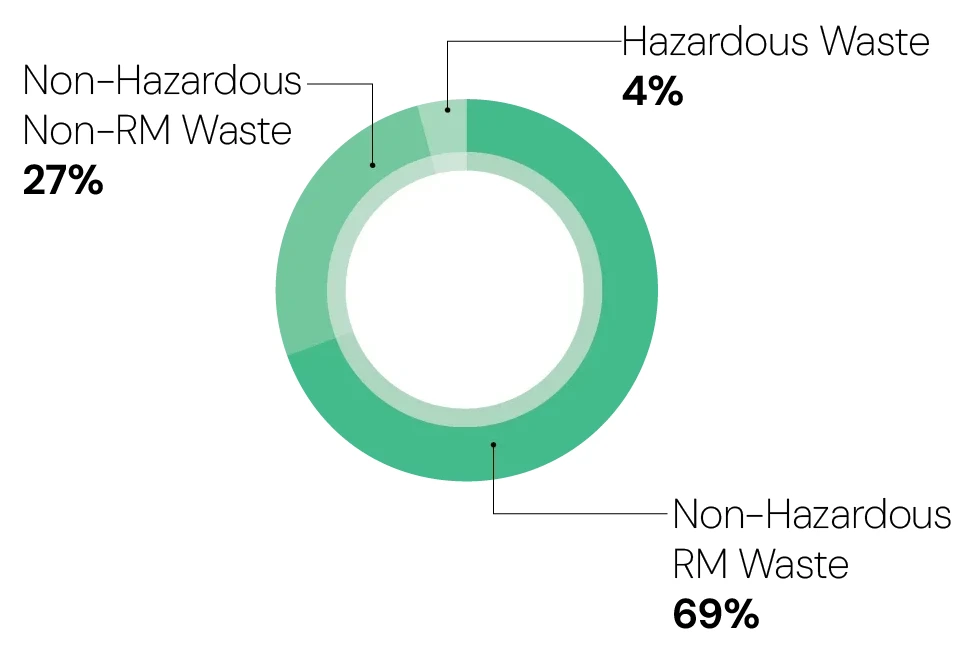
Non-hazardous RM waste remains the dominant waste category, highlighting the importance of improving material efficiency and circularity across production processes.
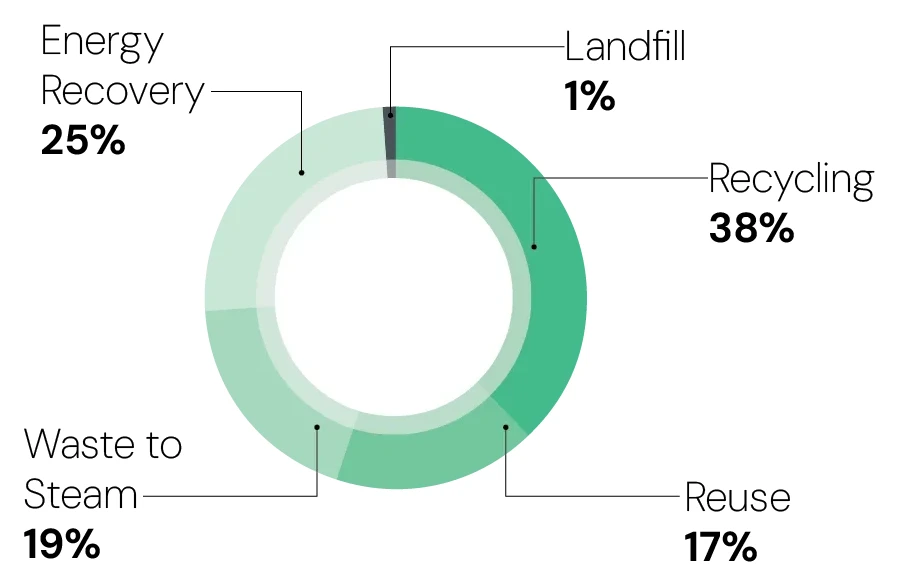
Over 55% of waste is recovered through reuse and recycling, while the remainder is managed through energy recovery pathways, including waste-to-steam for internal operations, with minimal reliance on landfill.
Non-Hazardous RM Waste
17,406.89 MT | +422.93 MT YoY
Production-related waste generated from raw materials during manufacturing, including fabric offcuts, foam, yarn, and leftover material from production processes.
Non-Hazardous Non-RM Waste
6,642.06 MT | +697.36 MT YoY
Operational waste not derived from raw materials, including paper, cardboard, plastics, polythene, metals, glass, and biodegradable waste.
Hazardous Waste
1,047.75 MT | +47.21 MT YoY
Waste requiring controlled handling due to hazardous properties, including materials that are flammable, corrosive, reactive, toxic, infectious, or otherwise harmful to human health or the environment.
Diverted from Disposal (Reuse and Recycle)
55.2% of total waste
Directed to Treatment and Disposal (Controlled Pathways)
44.8% of total waste
Energy Recovery
6,186.03 MT | +39.54 MT
Waste supplied to external industrial operations as an alternative fuel
Waste to Steam
4,733.85 MT | +1,145.64 MT
Waste processed through MAS Linea Intimo boilers to generate steam for internal operations
Sanitary Landfill
342.04 MT | +110.50 MT
Final disposal at regulated landfill facilities, limited to locations where recovery pathways are not available
Recycling
9,550.76 MT | +80.36 MT
Processing waste into secondary raw materials for reuse in production or other applications
Reuse
4,284.02 MT | -200.07 MT
Direct reuse of materials within operations or by external partners without further processing
While recovery methods remain the primary approach, increased volumes directed to treatment in 2025 reflect constraints in scaling recycling solutions, particularly for production-related waste streams.
Increasing Value Enhancement
Reuse, Recycling, and Conversion of Waste to Steam
We prioritise retaining material value within the system by strengthening recovery pathways across operations. This includes improving how waste is segregated, handled, and converted into reusable inputs, while developing new applications that extend the life of materials. In 2025, 55.2% of total waste generated was recovered through reuse and recycling pathways, while 19% was converted from waste to steam, reflecting our continued prioritisation of waste value enhancement.
Strengthening Recovery Systems
Efforts during the year focused on improving the quality and consistency of waste streams to enable higher-value recovery:
- Strengthened segregation at source, particularly across cutting and production processes
- Enhanced monitoring and tracking of waste streams across facilities
- Improved material handling practices to preserve recyclability
These improvements support the scalability of circular solutions, particularly for production-related waste.
In Action: Improving Value Recovery Across Operations
Innovation
Textile-to-Textile Recycling (Pilot Phase)
Context
Textile waste remains challenging to recycle due to mixed material compositions and limited recycling infrastructure, particularly for Nylon-based waste streams. Market constraints, including the exit of some recyclers, further impacted continuity of recycling pathways.
Objective
Develop scalable fibre-to-fibre recycling pathways
What We Did
- Conducted pilot trials on cutting table waste
- Engaged multiple recycling partners to explore textile-to-textile pathways, particularly for Nylon waste
- Strengthened segregation practices at cutting tables to maximise recoverability of textile waste
Results
- Identified material, infrastructure, and market-related constraints, including recycler availability
- Strengthened internal segregation practices to improve waste quality and recyclability
- Generated critical insights on operational processes, waste composition, and partnership requirements
- Established a foundation for scaling textile-to-textile recycling solutions in future phases
Recovery
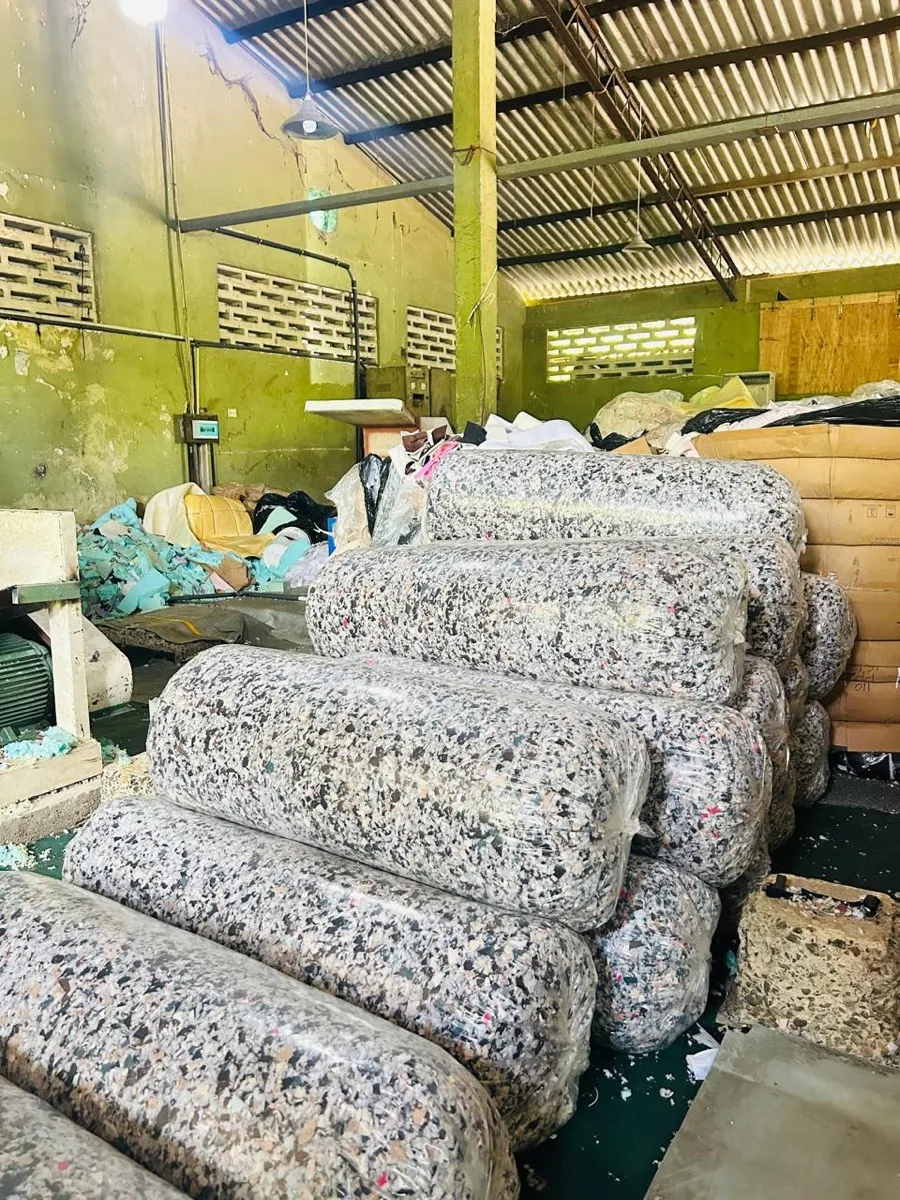
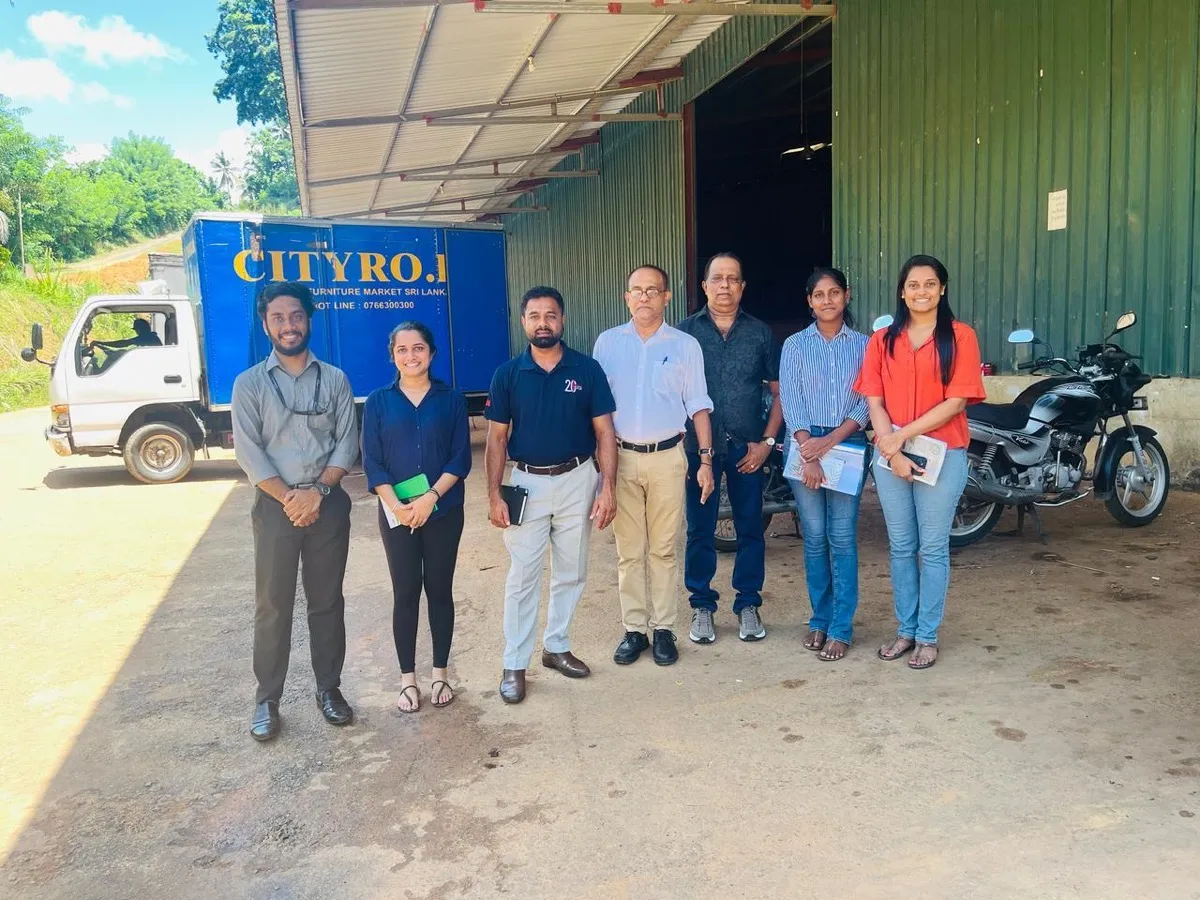
Foam Waste Repurposing – Laminated Offcuts (MAS Silueta – Biyagama)
Context
Foam offcuts were previously directed to energy recovery, limiting material value retention
Objective
Improve value recovery through higher-value reuse pathways
What We Did
- Segregated foam waste at source
- Partnered with a third-party entity for collection and processing
- Introduced crushing and baling to optimise transport
- Enabled use as a secondary raw material in mattress manufacturing
Results
- Reduced reliance on energy recovery
- Lowered disposal and transport costs
- Established a local circular value chain
Reusable Packaging System – Closed-Loop (MAS Kreeda – Methliya)
Context
Single-use cardboard packaging generated recurring waste across supply chains
Objective
Reduce waste generation at source
What We Did
- Introduced reusable crate systems
- Implemented return logistics with the support of a third-party entity
- Implemented closed-loop packaging cycle
Results
- 1,056 kg/year reduction in cardboard waste
- Eliminated approx. 20 boxes/month and approx. 50 cardboard cores/month
- Strengthened supply chain collaboration
Community
KREEDA Elevate – Phase 2: Extending Fabric Value Through Community Reuse
Context
Fabric recovery systems within operations have strengthened segregation, recycling, and reuse pathways. However, a portion of production offcuts remains underutilised or limited to lower-value applications, highlighting the opportunity to enhance value through alternative reuse pathways.
Objective
Enable community-based reuse of fabric offcuts by creating value-added product pathways that support livelihood development.
What We Did
- Channelled production fabric offcuts into structured community-based reuse initiatives
- Delivered upcycling and product development training through KREEDA Elevate
- Established pathways for communities to utilise fabric offcuts for product creation
Results
- Fabric offcuts diverted from low-value or underutilised pathways into community reuse
- Increased value realisation from fabric waste through value-added products
- Strengthened community livelihoods through income-generating opportunities
Reducing Environmental Impact and Residual Waste
Managing Waste and Preventing Environmental Leakage
Where waste cannot yet be recovered through reuse or recycling, our focus shifts to how it is managed. We prioritise controlled pathways that enable value extraction where possible, while ensuring that environmental impacts are minimised. The preceding pages (161-164) outline how waste was disposed and treated during the year. 144.55 MT of waste sent to sanitary landfill comprises mixed fabric and non-hazardous non-raw-material waste generated from MAS Kenya and MAS Silueta Indonesia operations, where recovery or co-processing solutions are currently unavailable. Efforts are underway to minimise this waste stream through the development of alternative recovery pathways, including co-processing solutions.
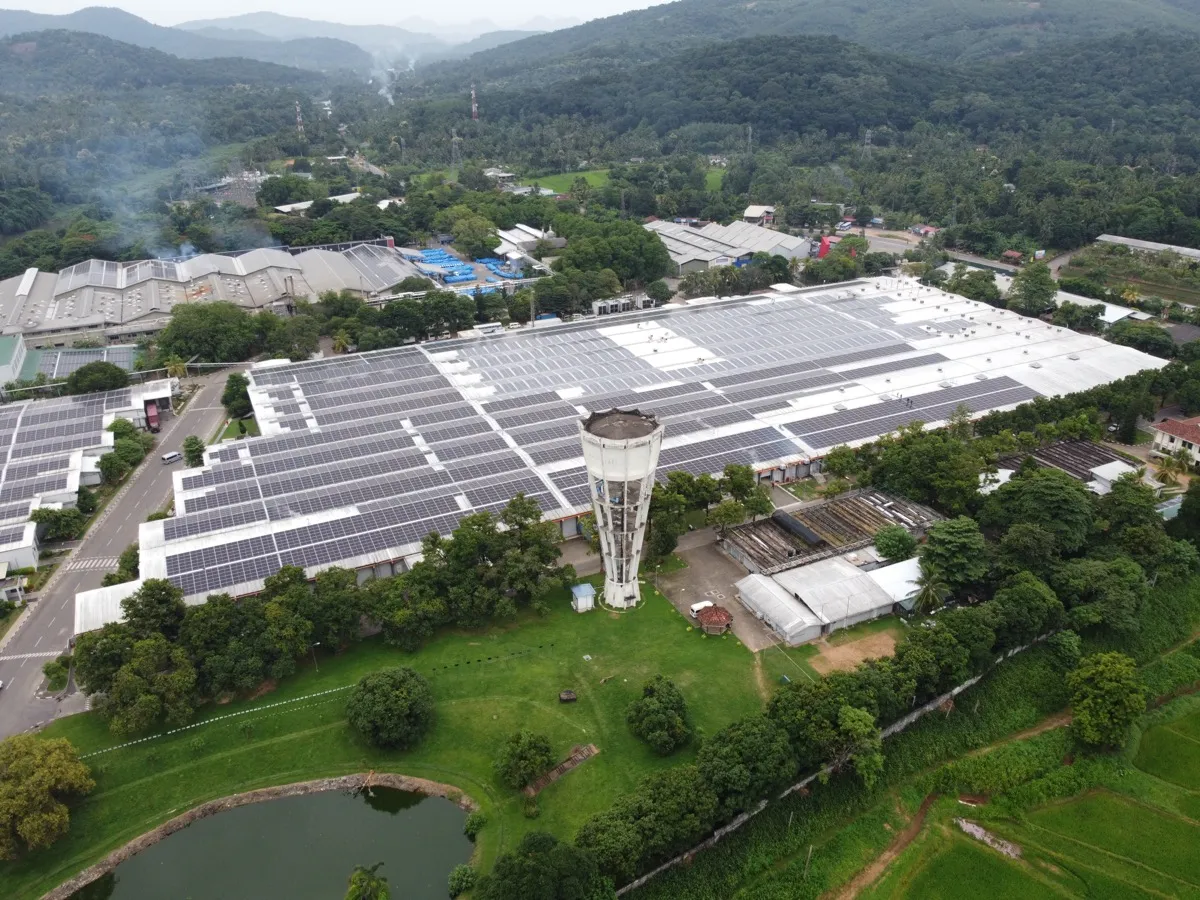
Infrastructure-Led Waste Minimisation–MAS Fabric Park (MFP)
From complex waste streams to productive use
Sludge | Organic Waste | Residual Waste
Managed centrally at MAS Fabric Park (MFP)
1. Stabilising and Preparing Waste
Nearly all textile sludge is processed through solar and biomass drying, reducing moisture content and preparing it for downstream recovery pathways. This enables high-volume, complex waste streams from wet processing to be handled effectively.
2. Co-Processing and Energy Recovery
Once treated, residual waste is directed into multi-fuel co-processing systems, where it undergoes controlled processing. This reduces waste volumes while enabling energy recovery within operations.
3. Extracting Value from Residuals
Where energy recovery is not feasible, value is recovered in other forms. Ash and slag are converted into ECO bricks, ensuring residual materials are redirected into productive use rather than disposal.
4. Organic Waste Conversion
In parallel, biodegradable waste is processed through an industrial-scale composting facility of 2,000 MT capacity, converting waste into compost and further reducing disposal volumes.
Water and Wastewater Systems
9,000 m³/day water 8,500 m³/day wastewater
Meets over 60% of Group requirements
Renewable Energy Integration
22.84 MW solar
Approx. 29 GWh annually
Monitoring & Control
ISO 17025 accredited laboratory
- Waste is stabilised, reduced, and redirected into productive pathways
- Reliance on final disposal is minimised
- Complex waste streams are managed in a controlled, scalable system
Innovation | Ocean Strainer – Turning Waste into Environmental Infrastructure
Partnership: MAS Foundation for Change
Facility: MAS Silueta – Biyagama
Context
At MAS Silueta, laminated foam offcuts generated through production were primarily directed to energy recovery. While this ensured controlled disposal, it limited material value recovery and increased reliance on downstream processing.
At the same time, plastic and textile waste leakage into waterways continues to be a growing environmental challenge in Sri Lanka, highlighting the need for solutions that address both waste management and environmental protection.
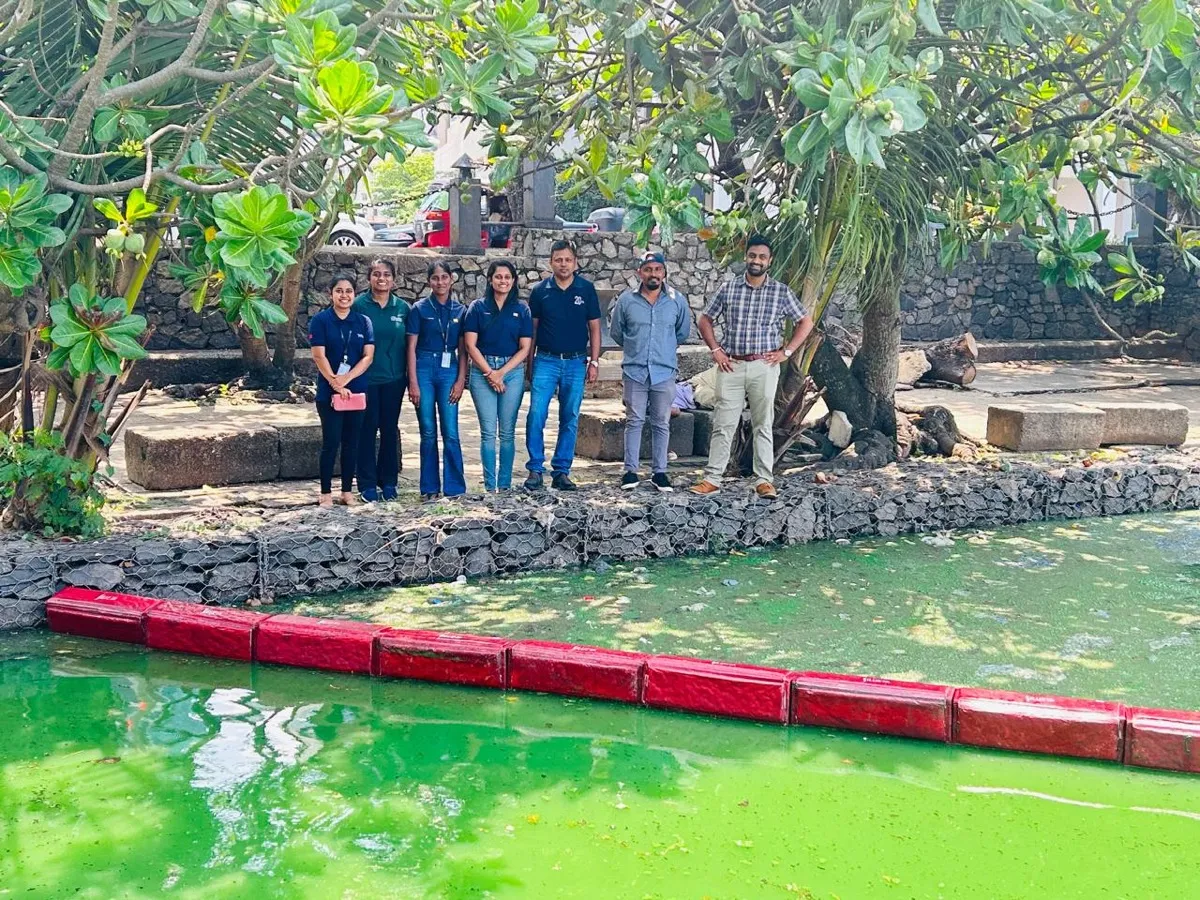
In 2025, we reassessed how internal waste could be used differently. Rather than manage it, we sought to repurpose it into a solution. Building on the Ocean Strainer Project initiated by the MAS Foundation for Change in 2021, MAS Silueta developed an alternative main building material for the strainer using foam waste generated from its operations, replacing the previously used rigifoam. This innovation reflects a shift from waste management to waste repurposing, transforming internal production waste into a functional component of a system designed to prevent environmental leakage.
For the first time within MAS and in Sri Lanka an Ocean Strainer was:
- designed and engineered entirely in-house
- built using 100% upcycled internal waste, including foam, polythene, and fabric
- developed with a focus on durability, buoyancy, and structural stability
- deployed to intercept floating waste in inland water bodies before it reaches the ocean
The project combined engineering capability with circular thinking, demonstrating how waste can be repurposed into environmental infrastructure.
This initiative reflects a shift from managing waste within operations to extending its impact beyond operational boundaries:
- Addresses waste leakage at source
- Converts low-value waste into a long-term environmental solution
- Strengthens circularity through practical, applied innovation
- Supports MAS' broader ambition towards value enhancement of all waste
- Prevents approximately 1–1.5 MT of waste per week from entering waterways
- Diverts internal waste from conventional disposal into functional infrastructure
- Enables recovery and recycling of intercepted waste through authorised partners
- Strengthens circularity through practical, applied innovation