 Add to My Report
 Download PDF
 Our Approach to Our Planet Changed for Good
 Our Approach to Our Planet Changed for Good
Disclosure of Management of
Material Topics (DMMT)
Our Approach to Our Planet Changed for Good
Material Topics
1. Energy and Emissions Management
2. Waste Management
3. Chemicals Management
4. Product Stewardship
5. Water Stewardship
6. Biodiversity Conservation
Aligned GRI Topical Disclosures
1. GRI 302: Energy
2. GRI 305: Emissions
3. GRI 306: Waste
4. GRI 303: Water and Effluents
5. GRI 416: Customer Health and Safety
6. GRI 303: Water and Effluents
7. GRI 304: Biodiversity
We consider environmental sustainability a non-negotiable mandate integrated in how we do business, and deeply ingrained our organisational DNA and strategy. A core pillar of the MAS Plan for Change – Our Planet Changed for Good – sets ambitious targets for our business: to manage and minimise the environmental footprint of our operations, extend our influence to the apparel supply chain, and champion positive and transformative change at a local, national, and global scale.
Our projects and programmes are proactive, collaborative, target-driven, science-based, and aligned with national priorities and international standards. They prioritise compliance and across our own operations, and wherever possible – leverage our influence to catalyse better environmental practices across the supply chain and community.
MAS also integrates environmental considerations into the Company’s approach to sustainable products; by prioritising and incorporating sustainable raw materials in products, designing for longevity and recyclability, and working with partners to address environmental impacts of apparels across their lifecycle.
Complementary to these initiatives, the MAS Foundation for Change focuses on scalable projects, partnerships, and community-initiatives that are working toward cleaner oceans; protecting and restoring ecosystems that are critical to life on our planet; and improving access to water.
Limit Emissions
Climate change stands as a defining challenge of our era, and MAS is committed to being part of the solution. Our actions to address emissions in manufacturing, and across the supply chain, include adopting cleaner energy and driving decarbonisation through a variety of means.
We have aligned our climate ambitions with the Science Based Targets initiative (SBTi) as part of the Group’s environmental strategy and Plan for Change. This commitment translates to ambitious emission-reduction goals of our own operations: aiming for a total 25.2% absolute emission reduction, against our 2019 baseline. And an inspirational target for our suppliers – 85% of our suppliers by spend and 100% of joint ventures in Scope 3 investments, having science-based targets by 2025.
Energy, Emissions, and the Apparel Sector
Energy and emission intensity of production: Manufacturing of apparels – from raw material cultivation or extraction and processing; to fabric manufacture, and ultimately garment production and finishing – involves multiple stages of energy-intensive processes. While apparel manufacturers are seeking out sustainable sources of energy, many regions involved in material production and apparel manufacture are still heavily reliant on fossil fuels to power their industries. This reliance directly translates to an additionally large emission-footprint associated with energy generation for apparel production.
Complexity in materials, supply chains, and lifecycle: A significant portion of the apparel industry’s carbon footprint falls under Scope 3 emissions – indirect emissions occurring throughout the value chain; from raw material extraction to the end-of-life of apparels. This includes emissions from transportation of goods across the globe, and the energy-cost or emissions that result from disposal of apparel waste.
Even fabric-types can have a significant influence on net energy consumption and emission. While natural farmed-fibres may contribute to emissions through land-use change and ecosystem destruction, synthetic fibres derived from fossil fuels can have an even higher carbon footprint than some natural fibers. In addition, the issue is complicated by the changes in customer-demand and the advent of fast-fashion, which has exacerbated the issue through rapid production of large volumes of apparels with shorter lifespans – demanding more energy and resources.
Our Emissions in Context
Managing emissions in the textile and apparel value chain is complex; with factors like product design and composition, sourcing strategies, intrinsic energy-needs of processes, structural and technological limitations in production, and systemic challenges associated with energy sources of different countries and geographies; all affecting emissions and emission-intensity.
|
Scope 1 |
Scope 2 |
Scope 3 |
|
|
What it entails |
Direct emissions from use of biomass and on-site fossil fuels in our equipment, machinery, and fleet. |
Indirect emissions as a result of purchased electricity, heat, and steam that power manufacturing operations and ancillary functions. |
Emissions across the value chain: Primarily as a result of extraction, processing, and transport of purchased raw materials upstream; waste generation in operations; and downstream distribution, use, and end-of-life treatment/disposal of apparel we manufacture. |
|
The challenge |
Cleaner sources like bioenergy come from a largely unregulated and informal biomass industry, which poses sustainability risks surrounding feedstock production and availability. |
Energy-intensive processes, and systemic/structural limitations of energy-providers who rely on fossil fuels for energy-generation. |
Quantifying emissions and identifying hotspots across a broad supply chain, remains challenging. This is compounded by varying and evolving methods for assessment, data collection, and verification. Achieving concrete emission reductions requires concerted, collaborative efforts from both upstream and downstream entities, and relies heavily on market forces, global regulation, and technological advancement. |
|
Our response |
Responsible sourcing and use of biomass is ensured through the Group’s Sustainable Biomass Standard; developed in line with international best-practices and local adaptations Prioritising fast-growing, sustainable fuelwood – such as Gliricidia, presents an innovative solution to GHG reduction. |
MAS continues to scale-up renewable energy generation and consumption – through investments in solar, initiation of PPAs, and purchase of RECs and iRECs. We are in the process of claiming iRECs for the Group’s large solar generation footprint in Sri Lanka, which would unlock further reductions. Stringent energy management and ongoing energy efficiency gains are also driving emission reduction. |
Our Plan for Change includes an ongoing commitment to waste transformation, innovation, circularity, and sustainable sourcing. These hold great potential for decarbonisation across a range of areas, including elimination of waste; innovation and design for product longevity and closed-loop solutions at end-of-life; and groundbreaking partnerships sourcing alternatives to fossil-fuel based or virgin raw materials. |
Holistic Approach to Decarbonisation
The MAS decarbonisation programme, in line with SBTi commitments, involves systemic and structural change across the Group’s entire operational footprint. Guided by Our Plan for Change, which functions as a forward-looking blueprint, we employ a holistic approach that amplifies synergies and maximises the impact of our environmental initiatives.
|
Energy transition |
Transforming waste |
Innovation (product and process)
|
Circular thinking
|
Sustainable sourcing
|
||
|
Sustainable sourcing and utilisation of biomass. Scaling up renewable energy generation. Practicing sound energy management: maximising energy efficiency and saving. |
Valourisation of non-hazardous waste (recycling and resource-recovery, and energy recovery). Responsible and proactive hazardous waste management (treatment, pre-treatment, repurposing, and energy recovery). |
Product innovations unlocking increased resource efficiency; utilising climate-positive raw materials; and reducing waste. Process innovation that contributes to resource and energy optimisation. |
Partnering across the value chain to support closed-loop solutions that address end-of-life impact of apparels. Incorporating circular design for apparel longevity, durability, and recyclability. |
Collaborating with suppliers to reduce emissions. Sourcing renewable materials and alternatives to fossil fuel based inputs. Implementing traceability that is supporting recycling. |
At a facility-level, we monitor energy and carbon intensity by division and activity. This empowers Senior Management, engineering, and sustainability teams to make informed, timely, and strategic decisions that keep our decarbonisation efforts on track. We calculate the carbon footprint of our operations monthly, and verify our emissions annually with an independent third-party – the Sri Lanka Climate Fund, operating under the ambit of Sri Lanka’s Ministry of Environment.
Energy Transition
Industries across the globe are adopting a critical shift towards cleaner energy sources, and addressing dependence on fossil fuels. Our ethos of striving for change, and long-standing climate and sustainability initiatives tackle this head-on.
Green energy projects such as MAS Project Photon, the Group’s Solar PV footprint, generate clean energy, enhance energy security, and reduce overall energy costs. Similarly, Power Purchase Agreements (PPAs) with energy-providers and purchase of International Renewable Energy Certificates (iRECs) enable our facilities to source renewable energy at scale while we continue to invest toward building in-house renewable energy generation capacity.
Certified Biomass
Bioenergy, obtained from biomass, comprises a renewable and clean energy source that powers a significant portion of our operations.
While combustion of biomass does contribute to emissions, the feedstock (source plants) for biomass can sequester almost as much CO2 during their growth-phase, as they emit when combusted; making biomass a potentially carbon-neutral source.
Despite the massive clean-energy potential of biomass, and associated increasing demand, there continues to be lack of awareness and reluctance of suppliers to align with the Sri Lanka Standard for sustainable fuelwood (SLS 1551:2016). This leads to persistent challenges with availability, sustainability, and pricing.
We take a proactive and responsible approach to sourcing and utilising biomass in our operations, with stringent measures in place to record purchases and ensure traceability. In regions where the biomass industry lacks regulation, MAS has been at the forefront of promoting sustainable practices in the sector.
In Sri Lanka, we have consistently engaged with regulators and suppliers to drive sustainability in the industry. We support development of a sustainable fuel-wood standard for the country, which includes criteria for sustainably produced fuel-wood that prioritises environmental and social factors.
Our innovative approaches, including use of invasive plants as biomass, have resulted in lower energy intensity, while contributing to conservation of vulnerable ecosystems. The MAS Sustainable Biomass Standard specifies suitable climate-neutral feedstock, incorporates systems for sustainable sourcing, and ensures certification and verification that prevents deforestation and biodiversity loss.
Scaling up Renewables: Project Photon
Phase 1
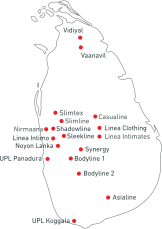
- Total Capacity – 16 MW
- Investment – USD 12.7 Mn.
- Grid Connection Scheme – Net-plus
- Estimated Annual Generation – 20 GWh
- Annual Carbon Footprint Reduction – 12.200 Tons of CO2
| MAS SBUs | Capacity (MW) |
| Nirmaana | 0.3 |
| Asialine | 0.39 |
| UPL Panadura | 1.56 |
| Vidiyal | 0.94 |
| Synergy | 0.69 |
| Slimline | 1.1 |
| Slimtex | 0.57 |
| UPL Koggala | 0.99 |
| Bodyline 1 | 1.96 |
| Vaanavil | 1.85 |
| Bodyline 2 | 0.35 |
| Linea Clothing | 0.51 |
| Linea Intimates | 0.37 |
| Sleekline | 0.35 |
| Noyon Lanka | 0.99 |
| Shadowline | 0.82 |
| Casualine | 1.07 |
| Linea Intimo | 0.93 |
| Total | 15.84 |
Phase 2
- Total Capacity – 7 MW
- Investment – USD 3.3 Mn.
- Grid Connection Scheme – Net Accounting
- Estimated Annual Generation – 9 GWh
- Annual Carbon Footprint Reduction – 5,600 Tons of CO₂
- Contribution to MFP Electricity Demand – 20%
- Sri Lanka’s largest roof mounted solar installation on a single roof – 4.3 MW (Matrix)
- Sri Lanka’s largest mounted solar installation in a single location – 7 MW
Phase 1 and Phase 2
- Total Capacity – 23 MW
- Estimated Annual Generation – 29 GWh
- Number of Locations – 19
- Annual Carbon Footprint Reduction – 17,800 tons of CO2
- Contribution to MAS Group Electricity Demand – 12%
MAS Project Photon, a multi-roof solar installation initiative, is the evolution of the Group’s long-term commitment to invest in renewable energy generation. From our initial solar installation in 2008, at MAS Intimates Thurulie – the world’s first purpose-built LEED Platinum Certified Apparel Factory, to South Asia’s largest solar installation in 2015 – 1MW at MAS Matrix; we have been at the forefront of pursuing renewable energy with a legacy of early-adoption.
Today we have an installed capacity of 23 MW across 25 rooftops – in Sri Lanka. Project Photon comprises Sri Lanka’s largest solar roof area, generating clean energy exported to the National Grid and providing additional supplementary income. Project Photon also serves as the first and largest comprehensive network of weather monitors providing real-time and historical data on solar irradiance (sunlight intensity). Contributing to research and informing future investments in renewable energy.
The Project contributes to reducing our annual carbon footprint, and together with other sources of renewable energy such as sustainable biomass, iRECs, RECs, and PPAs; results in a significant share of the Group’s energy consumption coming from renewable sources.
Partnering for Renewable Power
Partnering with energy providers through Power Purchase Agreements (PPAs) and procuring clean energy through partners possessing verified Renewable Energy Certificates (RECs), helps mitigate our reliance on fossil fuels.
MAS Indonesia is an exemplar in this regard. A partnership in place with the state-owned electricity provider – PT Perusahaan Listrik Negara (PLN), sources 100% of the energy needs of our facilities from renewable sources such as the Kamojang Geothermal Power Plant. This agreement covers multiple MAS facilities in Indonesia: MAS Arya 1 and MAS Arya 2, and PT Silueta Indonesia.
Energy Management
Facility-level energy management is made possible through energy monitoring systems in place at our operational locations. These systems provide real-time data on electricity-use across our operations, and have been integrated to also measure water usage at some of our facilities.
Energy monitoring systems empower MAS energy managers and engineering teams to analyse historical data and monitor trends, identify areas for improvement, and make informed decisions about capacity utilisation, maintenance, and other elements essential to production. These system optimise energy use, improve process controls, and facilitate predictive maintenance – thereby reducing downtime and operational costs.

Transform Waste
The global apparel industry grapples with a significant waste footprint, bearing far-reaching environmental impacts across the supply chain and product lifecycle. From pre-consumer waste generated at the factory floor, to post-consumer waste and resulting disposal; waste management at every stage of the value chain is critical to sustainable management of environmental impacts. As a responsible apparel manufacturer, we work to minimise our own waste footprint, partner with customers and innovators, and collaborate across the value chain to promote circularity in the apparel industry.
Responding to the Waste Challenge
Pre-consumer waste
Waste created throughout the apparel manufacturing process, before a garment is completed and shipped, is the extent of pre-consumer waste. This includes waste created during yarn and fabric production, offcuts at cutting during the manufacturing process, defective materials, and more. While these waste streams contribute a significant volume of the fashion industry’s footprint, they also present easier-to-address opportunities for waste-reduction, through concerted efforts employed by raw material producers and apparel manufacturers alike.
OUR RESPONSE
Practices: Addressing the waste challenge from the ground-up, we employ the 7R principles; actively working to prevent and reduce waste at source. This begins with our plants, and the practices of our people. We have adopted innovative waste management practices across our operational footprint, through the Pirisidu Lanka (Clean Lanka) initiative that was piloted across our Sri Lankan operations in 2020. The waste management process employed at our facilities, informed by this initiative, sets out a series of guiding principles for our facilities; promotes innovative solutions to reduce, reuse, and recycle non-manufacturing waste; develops staff capabilities on waste value enhancement; improves waste management infrastructure at our facilities; and creates model plants that uphold zero landfilling. The programme, now rolled out across our global operations, directly addresses MSW generation by reducing generation at source. However, inevitably, a small portion of MSW ends up in landfills because of limitations to further segregation or value enhancement.
Group-wide and facility-level waste policies provide contextualised guidance while stipulating strict standards to be met. KPIs for SBUs and Divisions, which promote recycling, reuse, and value enhancement of waste, serve to instill best-practices and support operationalisation of policies.
Processes: Addressing waste directly related to our primary production processes, textile production/fabric processing and apparel operations (cutting, sewing, and finishing), we incorporate practices and processes for both waste reduction and waste value enhancement. From incorporating strategic lean manufacturing principles and maintaining oversight through the MAS Operating System (MOS) and ERP system; to Group-wide initiatives such as paperless processes, and optimisations rolled-out on the shop-floor; we keep waste to a minimum.
While maintaining a commitment to zero-landfilling, all hazardous waste is suitably treated and disposed responsibly – primarily through energy recovery. With regard to process chemicals with potential waste-related impacts, our waste management processes include co-processing and safe measures for disposal or return.
At the same time, guided by the philosophy of waste transformation, MAS is constantly innovating and looking for new avenues to value enhance the waste that is generated. A significant portion of non-hazardous, non-RM waste, is either reused on the factory floor itself, or recycled. In line with customer guidelines and local regulations, suitable fabric waste is recycled, upcycled or downcycled. Where current technological and cost factors limit recycling at scale, such as with 95/5 polyester-spandex, we leverage MAS’ robust community engagement programmes to repurpose, reuse, and recycle non-hazardous fabric waste. Many of these initiatives are creating jobs and strengthening the livelihoods of communities in the areas we operate. Where intellectual property, confidentiality, and brand protection guidelines dictate; fabric waste is directed to energy recovery through incineration.
As a Group, we uphold a commitment to reduce and eliminate landfilling across our operations. Success of our multi-layered strategy has ensured that 100% of our RM waste is diverted from landfills. Similarly, non-manufacturing waste, including Municipal Solid Waste (MSW) generated at our facilities is also introduced to value enhancement wherever possible. We work to minimise, manage, and recycle or repurpose MSW; which primarily comes from canteen operations and other employee activities.
These waste enhancement initiatives are built around a rigorous process for monitoring and managing waste across all facilities. This system begins with point-of-origin segregation, where different waste types are separated at source. All waste is then stored in designated areas, with specific locations for both hazardous and non-hazardous materials.
To ensure accurate tracking, waste-handlers ensure weighing and documentation at each waste stream. Data is fed into an internal monitoring system, allowing for group-level waste analysis on a monthly basis. Finally, to guarantee integrity of the process, annual plant audits are conducted to verify standards for waste management and data collection are upheld.
Partnerships: Apart from Waste to Steam (W2S) initiatives for energy recovery, that are carried out on-site, all waste generated through manufacturing and other processes, once segregated and recorded, is collected and managed by third-party waste management suppliers. Therefore, exercising due diligence, ensuring close monitoring, and developing enduring partnerships with our suppliers, are key to the success of waste enhancement initiatives. Suppliers are selected based on annual evaluations, which account for environmental and waste management licenses, disposal methods, and best-practices. At all times, we strive to work with waste management partners who are innovative, responsible, and compliant with local and international regulatory requirements.
Post-consumer waste
Post-consumer waste refers to apparels discarded by consumers at end-of-life. The duration a product can be in use, before it is discarded, is significantly influenced raw material composition, product quality and design, and consumer and fashion trends. In addition, consumer awareness and access to alternatives such as repair for wear-and-tear, upcycling, or re-use, can also influence the period before a garment is considered waste. Thereafter, segregation, collection, and recycling options also impact the volume of apparel waste that actually ends up earmarked for disposal. Despite developments in technology and trends, the volume of post-consumer textile waste is staggering, with a significant percentage still being disposed.
Our Response
We employ life cycle thinking and Life cycle Assessments (LCAs) in order to identify potential impacts of post-consumer waste, and map our role in driving solutions to the same. Taking a cradle-to-grave perspective, our analysis goes beyond manufacturing to study the use-phase and end-of-life waste-related impact of products we produce. With then devise and roll out strategies that ensure we are well placed to partner across the value chain and deliver innovative solutions that mitigate these impacts.
Over the last few years, we have invested in training key
personnel on conducting LCAs; allowing us to design and
merchandise products in a far more sustainable manner, with
consideration for end-of-life of manufactured products.
Guided by our
 Approach to Sustainable Products, and
Sustainable Product Criteria
and Rating System, we deploy an innovative multi-modal
strategy to address post-consumer waste.
Approach to Sustainable Products, and
Sustainable Product Criteria
and Rating System, we deploy an innovative multi-modal
strategy to address post-consumer waste.
Assessing potential downstream waste-related impacts of our product outputs, we emphasise circular thinking and Priority Raw Material (PRM) management strategies that consider waste-related risks. Our systems for waste reduction, value enhancement of difficult-to-manage materials, innovations to substitute hazardous chemicals, and ethical sourcing of sustainable materials; all contribute to mitigating potential downstream impacts, while creating novel opportunities for closing the loop and promoting circularity in the industry.
Our new and long-standing partnerships with leading
customers, raw material producers, collectors and
segregators, recyclers, and logistics providers, are
explored in the discussion on how we
Pioneer Circularity at Scale, as defined by our Products Changed for Good commitments.
Our Waste Footprint
We carry out waste-flow analyses to categorise and analyse waste streams based on their origin (production activity/function in the value chain), composition, and classification. All percentages represented below are approximate values based on the latest figures. They are largely unchanged year-on-year, and representative of waste streams structurally inherent to our operations.
Origin |
Composition |
Classification |
Waste management measures |
|
Apparel manufacturing (cut and sew operations) |
Stream 1: Categorised as Raw Material (RM) waste, makes up approximately 69% of non-hazardous total of total waste from our operations. Primarily consisting of (47%) raw material reuse and recycle of raw material total. Stream 2: Non-RM waste, makes up around 27% of non-raw material non-hazardous total of total waste from our operations. Composed primarily of reusable or recyclable packaging components and materials and Municipal Solid Waste (MSW), which includes food waste. |
Non-hazardous (96% of waste that falls within our operational boundary) |
Majority of non-hazardous waste is value enhanced through a variety of means, including recycling; upcycling/downcycling; repurposing and reuse on the factory floor or via community engagement; and waste to steam (W2S) generation on-site – which constitutes a cleaner source of energy, compared to conventional incineration.
|
Textile production |
Largely consists of process chemicals and effluent sludge generated at facility level, and fabric and other materials contaminated by contact with chemicals. |
Hazardous (4% of waste that falls within our operational boundary) |
Almost all hazardous waste generated, is directed to disposal for incineration with energy recovery. This is in line with industry best-practices and environmental regulations in our areas of operation. Energy recovery through incineration (93%) Preparation for reuse or recycling (7%) |
Inspiring Better Waste Management beyond our Walls
Wherever possible, we work with communities to implement or support division-led community-based waste management initiatives that are cleaning up community spaces, public areas, and vital ecosystems. Programmes implemented by the MAS Foundation, in partnership with government and other corporations, are pursuing similar outcomes for better waste management practices in the wider community.
Responsible Chemical Use
GRI 416-1
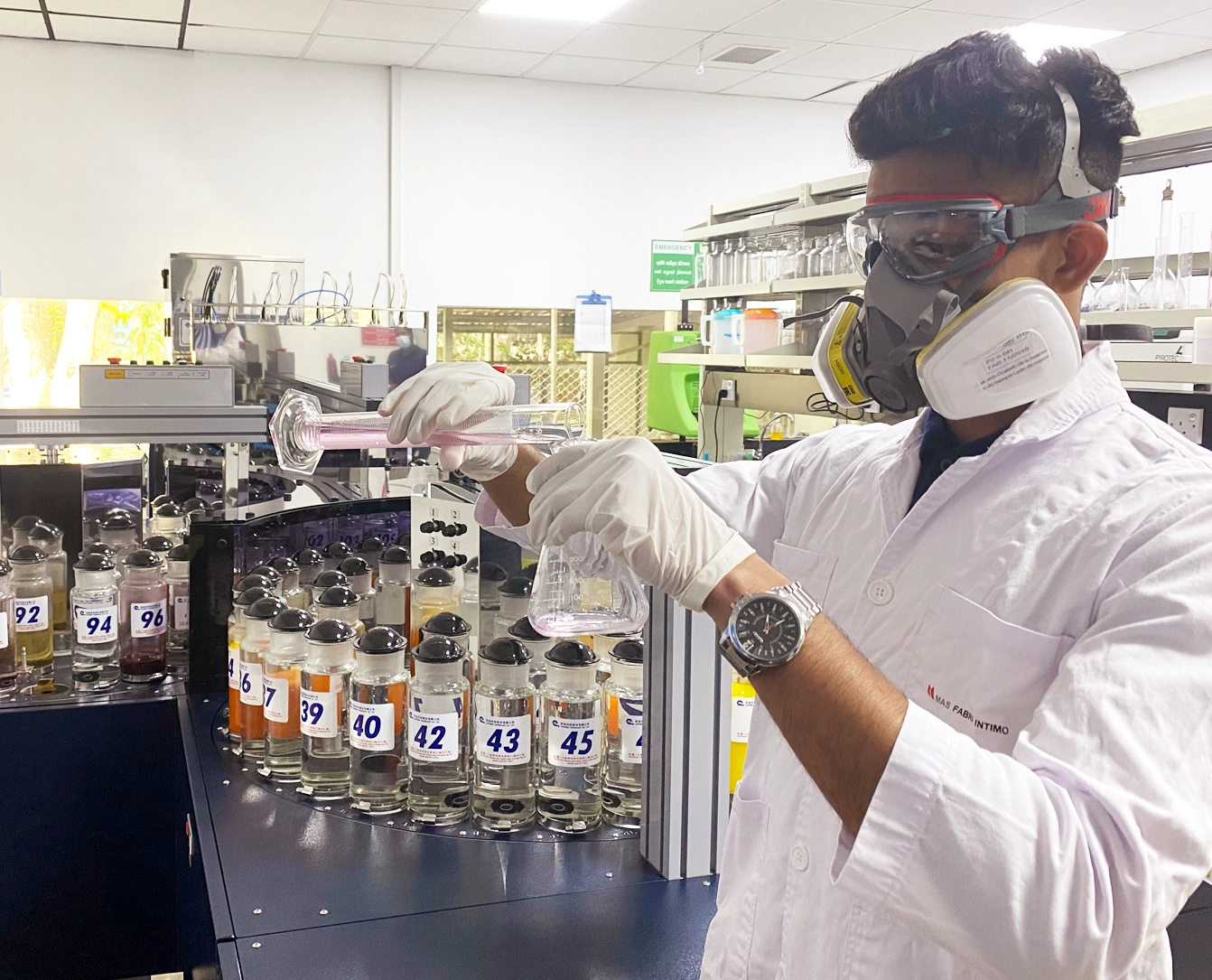
Responsible chemical management and use involves conscious monitoring and stringent compliance not only within our operations, but also from our suppliers. and worker safety. Our begins with the procurement of raw materials, many of which require chemical inputs during production. Additionally, chemical-use is an essential component in the manufacturing processes, from dyeing and finishing to fabric treatment. Therefore, our actions for responsible chemical use safeguard our workers, and the end-consumers of our products. Our due-diligence and supplier compliance processes, coupled with continuing engagement with chemical and raw material suppliers are vital for effective management of any and all chemicals used in the production process.
Risk-Reduction and Chemical Management
Environmental Impacts: The apparel industry utilises a wide range of chemicals throughout its supply chain, from raw material production to the finishing of garments. While these chemicals can enhance product quality, durability, and aesthetics, their use also poses significant risks to the environment. Aside from elimination of harmful chemicals, effluent from industrial processes requires suitable treatment and continuous monitoring to prevent pollution risks to water and soil.
Social Impacts: Stringent health and safety practices can ensure safety of employees involved in the handling, transport, storage, and use of potentially hazardous chemicals. Effective chemical management and wastewater treatment are essential processes that ecosystems and the communities that rely on them. Similarly, standardised testing for finished products assess and mitigate potential consumer safety risks associated with residual chemicals in finished products.
Our Chemical Management Process
Supply Chain

Collaborating with RM suppliers and subcontracting partners, to ensure the chemically value added raw materials we source will comply with safe chemistry standards
Monitoring of input chemical compliance and ZDHC wastewater compliance for 55% of our spend base.
All embellishment subcontractors achieved minimum 81% compliance with ZDHC Chemical Gateway against MRSL Version 3.1.
All applicable embellishment subcontractors fully complied with the ZDHC WWG.
Product Stewardship and Consumer Safety

Testing, verifying, and certifying that our products conform to international standards, national/regional regulations in our consumer markets, and brand defined requirements.
|
Input 
|
Process
|
Output |
| Ensuring we purchase and use safer chemicals in our operations, with the end goal of creating safer products and mitigating negative environmental impacts. | Practices and processes within our facilities that identify hazards, guarantee safety of our teams, and ensure that chemicals are used in a correct way. | Infrastructure and systems in place to treat and monitor effluent, reduce and mitigate potential risks, and validate our chemical management practices. |
|
96% ZDHC MRSL compliance for chemicals used in Textile
Production facilities. 95.4% Bluesign approved chemicals utilised in Textile dyeing operations. |
Compliance with local and national regulations for
wastewater treatment (such as CEA limits, and BOI
norms) Alignment with international effluent treatment standards (such as ZDHC WWG and parameters), where applicable. |
Commitment to Safer Chemicals
We strive to maintain compliance with the latest ZDHC MRSL version, which is also addressed in our internally developed MAS Chemical Management (CM) Manual and MAS RSL Manual – for chemicals used in our facilities and products. This ongoing process to continually prioritise greener chemistry ensures our procurement and manufacturing processes are informed by the latest science and regulations and compliant with any restrictions as they are introduced.
Facilities utilising chemicals follow a stringent chemical management process with ZDHC/Bluesign compliant chemicals, prioritising Bluesign approved chemicals. The chemical management process at wet operations, is aligned with the ZDHC Chemical Management System, while dye houses focus on obtaining Bluesign System Partnerships – one of the most stringent global sustainable chemical certifications.
By maintaining compliance with ZDHC MRSL guidelines and
achieving Bluesign certification for our articles, we seek
to minimise potential environmental impacts associated with
chemical-use in manufacturing, and attempt to offer
customers and consumers with safer, more environmentally
conscious choices.
International certifications, accreditations, and audits carried out for our facilities, including
those covering the area of chemical-use and management, are
listed in the Plan for Change section.
Input
We strive not only to comply with current regulations for safe chemical use but also to proactively assess and anticipate upcoming restrictions. This involves ongoing engagement with customers and suppliers, diligent monitoring of the regulatory landscape, benchmarking against international standards, and strict procurement controls.
Identification and elimination of restricted materials is guided by hazard-based assessments and standardised benchmarks, including industry, brand, or product-specific Restricted Substance Lists (RSLs), the Zero Discharge of Hazardous Chemicals (ZDHC) Manufacturing Restricted Substance List (MRSL), and the Bluesign System Substances List (BSSL).
Sourcing safer alternatives is a continuous process requiring collaboration with customers and chemical suppliers to identify, study, and assign alternatives for Chemicals of Concern that are likely to be replaced. To anticipate future restrictions, We scan international and regional regulations like California Proposition 65and REACH SVHC.
Controls and restrictions at the procurement stage ensure that only Bluesign-approved chemicals are newly introduced for dyeing, and only ZDHC Level 1 or higher chemicals are introduced for printing. Wherever possible, in line with our sustainable product criteria, Bluesign-certified chemicals are encouraged.
Process
We employ a hazard and risk-based approach to managing chemicals across all processes that involve chemicals; with a focus on safety of our teams and compliance of facilities.
Benchmarking our in-plant chemical management against international standards like ZDHC, and use of tools such as Higg FEM for continuous tracking, informs our safety processes and mitigation plans. Based on the composition details and hazard codes in Safety Data Sheets (SDSs), we identify and track the toxic properties of chemicals to facilitate mitigation plans. To maximise worker safety, we conduct standardised, activity-based risk assessments, considering both hazard and exposure. High-risk chemicals are managed with clear risk-mitigation action plans, and we prioritise the sourcing of lower-risk Bluesign alternatives whenever feasible. We also utilise the SAC’s Higg Facility Environmental Module (FEM), and our own MAS SCalE (Sustainability Calibration for Environment) Tool, to monitor and verify the effectiveness of work stream implementations.
Controls and Standard Operating Procedures (SOPs) for all chemical-related activities are in force within our facilities. These provide clear guidance and instructions for teams working with chemicals. This includes the use of appropriate Personal Protective Equipment (PPE) practices and process controls for chemical dosages, which are continuously monitored.
Capability development, through training and awareness programmes, ensures that our teams, including direct handlers and relevant management, are up-to-date on SOPs, emergency response protocols, and any updates to guidelines or regulations. This supports adherence to our chemical management requirements.
Output
Our commitment to responsible chemical use extends to the treatment and discharge of wastewater from our wet-processing facilities. We employ Effluent Treatment Systems to ensure effective removal of contaminants, and rigorously monitor effluent quality against national regulations and international benchmarks including ZDHC wastewater guidelines.
In Sri Lanka, all facilities within the MAS Fabric Park (MFP) discharge their wastewater to the MFP wastewater treatment plant. The wastewater undergoes secondary and tertiary treatment at MFP before being discharged into a surface water body. All treated wastewater is discharged in strict adherence to the standard parameters set by the Central Environmental Authority (CEA) and complies with the norms set by the Board of Investment (BOI) or other applicable country standards. We conduct quarterly tests and submit reports to local authorities and other regulatory bodies. Where applicable, our practices align with international effluent treatment standards, such as the ZDHC WWG.
Product Stewardship and Consumer Safety
Product safety is a fundamental component of our approach to product stewardship. This approach enables MAS to deliver on its commitment to responsible chemical use and our vision for sustainable products that are safe for the wearer.
We take a long-term, strategic, and multifaceted approach to assessing and managing the health and safety impacts of our products and services. This includes the governance structures, management systems, policies and standards, and strategies in place to integrate technical, chemical, and raw material-related compliance factors into our sourcing and production processes.
We verify the safety of our products through routine monitoring and output testing that adheres to brand and product-specific RSL requirements. These standards are cascaded to Tier 1 supply chain partners where applicable. Rigorous finished-product testing is carried out through third-party laboratories, based on brand recommendations for sample selection, running bulks, and shades/styles.
In recognition of their commitment to responsible chemical management, Noyon Lanka (Pvt) Ltd was awarded the Chemical Management Excellence Award, for the third consecutive year, at the Victoria’s Secret and Co. Partner Summit 2024.
Responsible Chemical Use across the Supply Chain
We engage and work with all major raw material suppliers and monitor input chemicals compliance against the ZDHC MRSL for a significant portion of our spend-base; which includes suppliers of fabrics, apparel embellishments, and chemicals.
We also carry out further RSL testing for products and materials, if mandated by customers. Wherever appropriate, such brand-specific RSL requirements are cascaded to vendors and supply chain partners, and their confirmations, acknowledgements, and self-assessments enable compliance with the same. Similarly, we ensure subcontractors are monitored against ZDHC MRSL in their production process, which serves to restrict most chemicals of concern and meet brand-specific requirements.
Annual subcontractor forums are a key tool in raising awareness, communicating expectations, and ensuring compliance; while interim meetings serve as a monitoring tool to evaluate compliance and progress toward targets. When failures are found, or chemicals of concern likely to be regulated are identified, we work collaboratively with subcontractors to find safer alternatives.
Our approach to sustainable sourcing, and the success of our
supplier compliance programme is detailed in how we
Source Sustainably, as part of our commitment to Products Changed for Good.
Champion Biodiversity
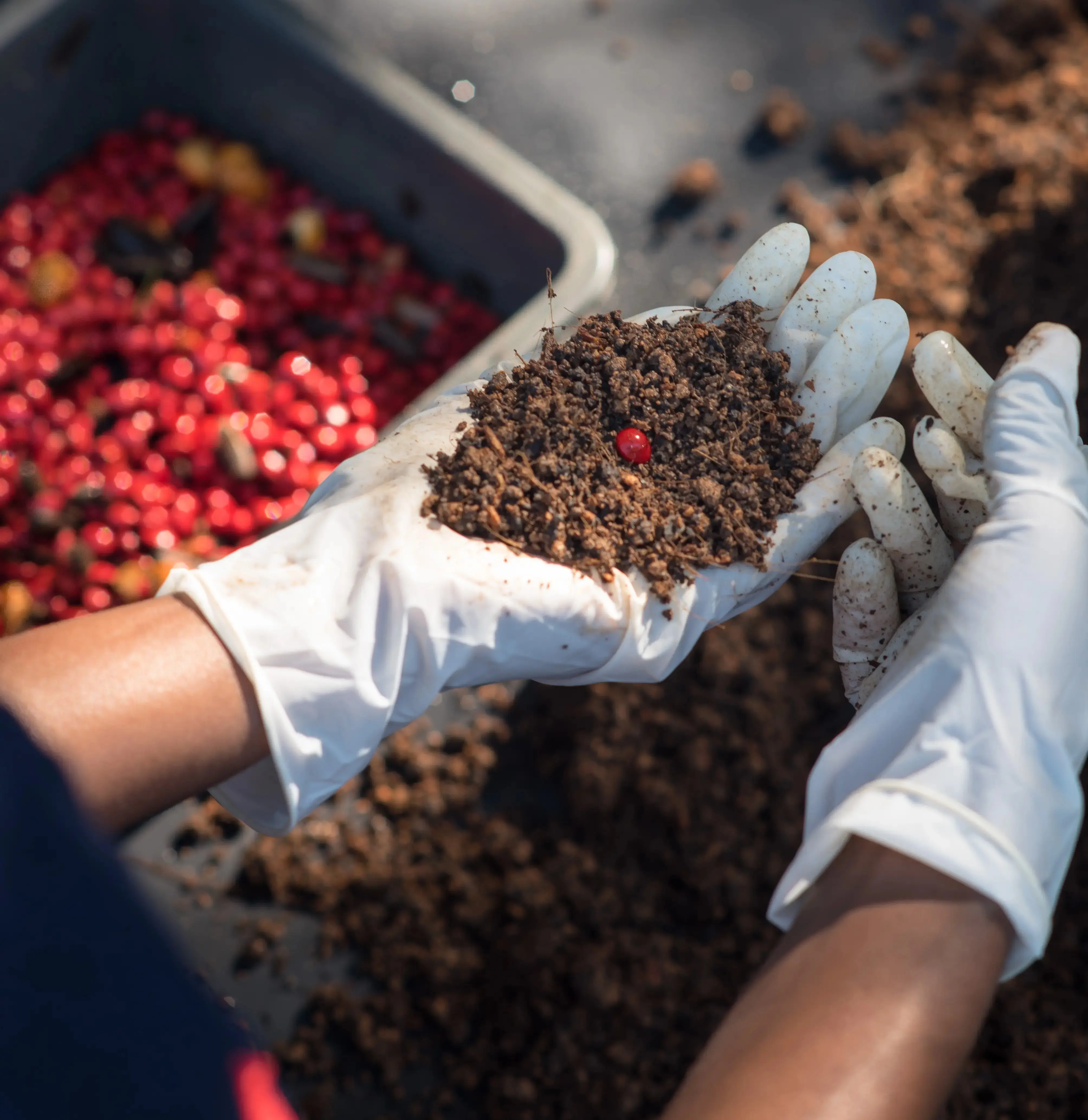
From the smallest building blocks of life, to the largest ecosystems that sustain life, biodiversity is crucial for our planet, and our own survival. Rich biodiversity protects and promotes the essential ecosystem services upon which our industry depends. Conversely, biodiversity loss can disrupt supply chains, increase operational costs, and pose significant risks to business continuity.
Our Approach to Biodiversity Conservation
Our commitment to biodiversity conservation is founded on the mandate of sustainability, which involved addressing the physical impact of our facilities and built-spaces.
While none of our facilities are located in or adjacent to protected areas or areas of high biodiversity value, we set ourselves a proactive goal – to restore and rehabilitate an area 100 times the extent of our footprint, totaling 25,000 acres. To achieve this, we employ six primary models for habitat creation and conservation.
1. Restoration
2. Afforestation
3. Invasive Removal and Habitat Enrichment
4. Analog Forestry/Social Forestry
5. Forest Gardens
6. Conservation
Selection of projects aligns with three key objectives.
1. Restore and enrich habitats to support a diverse range of species.
2. Conserve habitats and species within their natural environments.
3. Protect and monitor existing biodiverse landscapes.
We prioritise partnerships and projects in areas of high biodiversity value; particularly those that are home to endemic, endangered, vulnerable, or threatened species. Given that our largest operational footprint is in Sri Lanka, much of our work has focused on the Island’s biodiversity hotspots. However, as our enterprise has expanded, so have our opportunities for positive impact.
Collaborating for Impact and Scale
Since 2017, MAS has engaged in and supported 41 restoration projects, and 71 partnered projects in total, resulting in the restoration of more than 19,927.47 acres.
Key long-term partners for ongoing projects, include the Department of Forest Conservation and the Department of Wildlife Conservation – apex national bodies in Sri Lankan tasked with conserving forests, preserving ecosystems, and protecting local flora and fauna; and the Sri Lanka Air Force – a pioneering partner that has supported the successful implementation of multiple aerial reforestation projects.
As of 2024, we have also forged strong new partnerships for ongoing projects in Kenya and Indonesia; with The Wildlife Foundation (TWF) and the Naretunoi Community Conservancy, in Nairobi – Kenya; and Pesona Indonesia Tours and Universitas Gadjah Mada in Indonesia.
MAS also engages with a wide variety of other partners, either at Group-level, or facility-level. These include not-for-profit societies, foundations, and institutions, private-sector corporations, academic institutions, and other local authorities, community-based organisations, or grassroots initiatives working on the ground.
Governmental institutions

University of Sri Jayawardenepura, Sri Lanka

Sri Lanka Department of Forest Conservation

Sri Lanka Department of Wildlife Conservation

Sri Lanka Airforce

Universitas Gadjah Mada, Indonesia
Nonprofit organisations

Rainforest Protectors Sri Lanka
Thuruliya Arana Monastery, Koggala Sri Lanka
Centre for Sustainability, University of Sri Jayawardenepura, Sri Lanka
Centre for Integrated Indigenous Knowledge System, Sri Lanka
Community Development Centre (CDC), Sri Lanka
The Wildlife and Nature Protection Society, Sri Lanka

The Wildlife and Nature Protection Society, Sri Lanka
Wild Life Conservation Society-Galle, Sri Lanka
PT. Pesona Indonesia Tours, Indonesia
The Wildlife Foundation, Kenya
Wildlife and Ocean Resource Conservation, Sri Lanka
Federation of Environmental Organisations, Sri Lanka
Our conservation initiatives are implemented through strong partnerships with local experts and organisations, ensuring the long-term sustainability of any interventions carried out.
We emphasise collaboration, innovative techniques, and the use of modern technologies and tools to enhance the scale, impact, efficiency, and reliability of our projects. We also place a high value on thorough monitoring and impact assessment, with our teams and partners continuously tracking progress and conducting evaluations to inform ongoing efforts.
Safeguard Water
Water is an indispensable resource in any industry, but particularly so in the apparel sector; which is dependent on irrigation water for cultivation of raw materials, and process-water for production of textiles. However, this heavy reliance on water, coupled with industrial processes that produce wastewater, poses significant risks to the environment and human populations.
The Importance of Water for our Operations, Communities, and Environment
Raw Material Production: Some of the most common raw materials used in everyday apparels are produced by agricultural production. As such, the industry relies on raw materials that require substantial water resources for cultivation. Beyond land-use change, unsustainable agricultural practices can exacerbate water scarcity and contribute to desertification or ecosystem degradation; especially in regions where water resources are already limited or facing increased pressure from anthropological shifts and resultant climate-change induced complexities.
Textile Production and Processing: Water is an essential element in various textile processing stages, including pre-treatment, dyeing, and finishing. These large-scale industrial processes can consume large volumes of water, and require dedicated wastewater treatment to remove excess dyes and chemicals that were introduced as part of the production process. Discharge of untreated wastewater, or unplanned discharge of effluent can result in dramatic consequences for the receiving waterbody, surrounding ecosystems, and the communities that depend on the same.
Our Water Footprint
To better understand our
specific impact
and dependency on this vital resource, we monitor water
withdrawal across our operations and develop targeted
strategies to improve water-efficiency, minimise waste, and
ensure the long-term sustainability of our business,
communities, and environment.
Sustainable Water Management at MAS
At the group level, we establish annual normalised water targets, which are then implemented across our strategic business units (SBUs) and divisions.
We believe that employee engagement is crucial to achieving these targets and successfully implementing our water stewardship strategies, which include water reuse and recycling. We monitor our progress against operational water-intensity targets: litres per kg for textile production and litres per-head per-shift (SAH) for apparel manufacturing.
Our efforts to reduce our reliance on freshwater involve increasing our use of harvested rainwater (wastewater) and scaling up utilisation through advanced treatment, recycling, and reuse technologies. Some of our apparel facilities have on-site Sewage Treatment Plants (STPs) that treat wastewater for reuse in landscaping, sanitation systems, and other non-potable applications.
Recognising our responsibility to the communities in which we operate, particularly in water-stressed areas, we undertake various projects to improve water accessibility and quality. These community engagement initiatives strengthen relationships between our facilities and local stakeholders, contributing to broader sustainable water management efforts.