


 Add to My Report
 Download PDF
 Our Approach to Our Planet Changed for Good
 Our Approach to Our Planet Changed for Good
Impact Review
Products Changed
for Good
We believe that sustainable products are those that are good for the wearer, good for the planet and good for business. This is the guiding principle that propels our actions toward Products Changed for Good.
Transformative change, at this scale, demands collaboration; which is why we forge strategic partnerships with leading brands, pioneering manufacturers, and responsible producers across the apparel value chain. Together, we are visioning and realising innovations that are industry disruptors, sourcing sustainably to reduce environmental impact, and championing new ideas that are pioneering circularity at scale – proving that the business of fashion can be both responsible and revolutionary.
Our Target for 2025:
Revenue
generated
through sustainable
products
50%



Progress Snapshot –
Products changed for good
Our commitment: 50% revenue
generated through sustainable
products by 2025
Upholding our Commitment to Sustainable Products
GRI 301-1, 301-2, 414
Our continuing work with partner brands, industry innovators, and raw material suppliers bore fruit as the percentage of our revenue generated through sustainable products increased to 40% in 2024, up from 34% the previous year.
In 2024, we continued to promote and encourage the use of sustainable materials in our products especially recycled raw materials in PET & Nylon. Based on the MAS product sustainability criteria, recycled input materials constituted around 22% of our primary products for the year.
MAS KPI
Percentage revenue generated through sustainable products
2024
MAS target for 2025
22%
of primary products in 2024 included recycled input materials.
Our  Strategic Approach to sustainable products and the carefully defined MAS Sustainable Product Criteria, are instrumental in working toward transformative change in the apparel sector. We continue to advocate for circular and sustainable material choices, in line with our ethos of setting ambitious goals that push the industry forward.
In 2024, we see continued interest and improvements in the concept of sustainable alternatives to conventional fibres; recognising the rise in material innovation from other renewable feedstock sources such as microorganisms, food waste, agricultural waste etc. Looking to deepen considerations for circular thinking within our product criteria, we also have aspects of durability and repairability in products to make them last longer; new unlocks in this space compared to 2023 promise to not only increase the lifespan of apparels, but also reduce the volume of resources we use.
With regard to dyeing and finishing, we continue to champion Bluesign considerations in our criteria and grow our bluesign factory onboarding. This in line with our strategic drive to integrate Bluesign principles within our processes and further promote our supply chain to be Bluesign-enabled. We also recognised the value of completely undyed products, which remove the need to use synthetic colourants in dyeing.
Regenerative cotton is a material we feel very strongly about because of its potential to be introduced as a base for large core segments of the industry. We also saw an incremental increase in the usage of Bio-based materials with fabric/yarn made with renewable sources such as cornstarch.
During the course of 2024, we broke new ground in expanding our work with Tier-3 suppliers; setting up networks to improve access to sustainable yarn solutions that could also enhance the overall features of our product offering.


Innovate and Disrupt
If driving transformative change is our ethos, innovation is the engine propelling MAS towards our sustainable product commitments. From sourcing, to design, merchandising, and manufacturing; our innovations and innovative partnerships are pioneering sustainable products and contributing to circularity in the apparel industry.
Planatones which is our Certified natural color dyeing solution saw continued development and applications in the year 2024 , similarly to Lable which is our vertical on Adaptive apparel , 2024 was a pivotal year as we established a platform with a suite of solutions for any requirement involving People with disabilities. Finally Infini continues to continue as a solve for monomaterial functional bra cups
2024 saw the European Union (EU) rolling out new legislation aimed at improving circular thinking, mainstreaming considerations for the lifecycle impact of apparels, and driving transparency and accountability in the apparel value chain.
The new Ecodesign for Sustainable Products Regulation (ESPR) come into force in July 2024, and the concept of a Digital Product Passport (DPP) was debuted as a key instrument under the ESPR; with studies carried out for application of the DPP in the textile sector.
The apparel industry has seen these regulations accelerate the shift towards products that are more durable, reusable, repairable, and recyclable – in line with the dynamics of circularity and sustainability.
Alongside preparation for these changes, our teams have been in discussion with a number of partner-brands as they carried out the groundwork to facilitate the large-scale transitions necessary to achieve their own 2030 sustainability targets.
Source Sustainably
GRI 308-1, 414-1, 414-2
Our promise of Products Changed for Good relies on sustainable sourcing. Our work in this space involves ongoing efforts to adopt environmentally preferred, responsibly manufactured, and greener materials; while actively engaging partners and suppliers to source, verify, and support a responsible supply chain.
Raw Materials (RM) sourcing
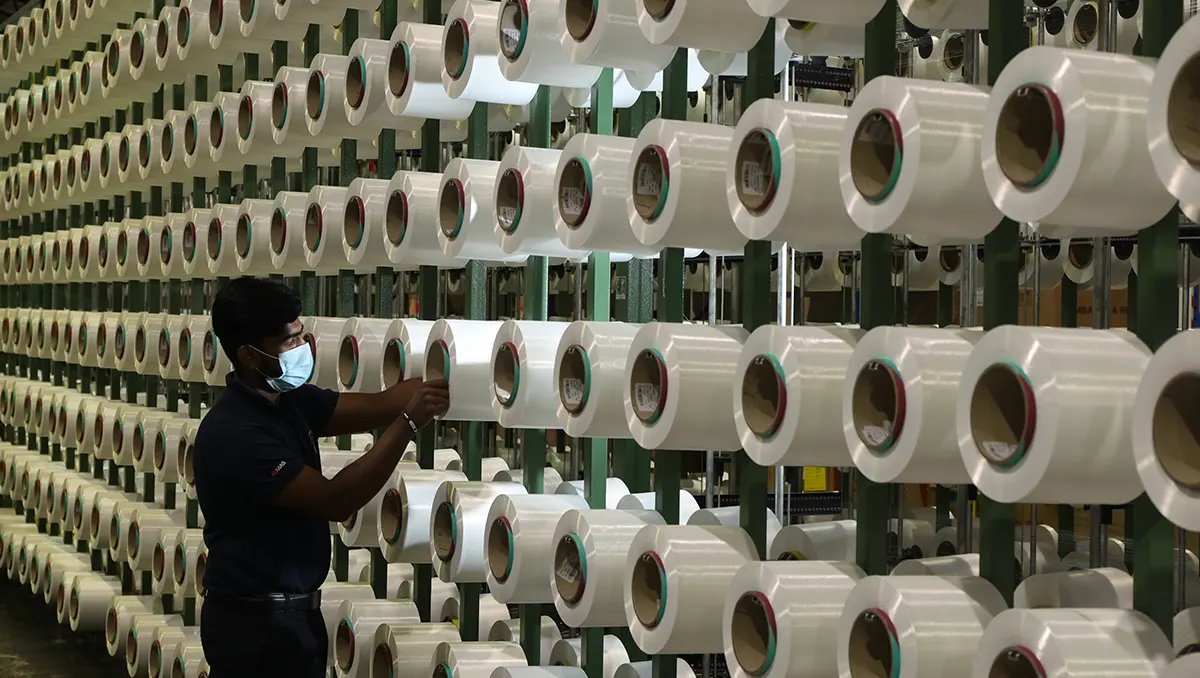
While a portion of Raw Materials (RM) utilised in 2024 came from subsidiaries and JV partners, external suppliers remained our primary source for the majority of our RM-spend. This included the majority of our fabric and lace, nearly all downstream packaging and labeling, as well as essential production chemicals and dyes.
Throughout the year we maintained priority for traceable, sustainably produced, raw materials like Cotton, Polyester, and Nylon. We also continued to explore eco-friendly alternatives such as bio-based or man-made cellulosic fibres, biodegradable fabrics, and closed-loop solutions that reintroduced recycled materials into the production process.
Read about our long-standing innovations for recycled polyester and nylon and new partnerships with industry disruptors pioneering new regenerative material.

Our supply chain commitment
The performance of our supply chain is a fundamental driver for achievement of the ambitions set out in the MAS Plan for Change. Accordingly, realisation of our sustainable product strategy involves a commitment not only to our end-users and clients, but also our vast network of suppliers and business partners.
The expression of our commitment involves active engagement with our suppliers to prioritise sustainable sourcing of raw materials, ensure stringent environmental compliance – including the critical phase-out of hazardous chemicals and restricted substances, promote energy efficiency and emissions reduction, and uphold social compliance and ethical business practices.
Digital Traceability for Sustainability
In 2024, MAS piloted a cutting-edge digital traceability platform to enable end-to-end visibility of raw materials by capturing and validating critical sourcing data while maintaining the confidentiality of sensitive supplier information.
A key engagement during the year was our engagement with Tier 1 Fabric Suppliers; to implement a digital traceability solution that provides end-to-end tracking of raw materials from source to finished goods. Following completion of the pilot phase, we expect to expand the rollout of the digital traceability platform across our entire supply chain.
Traceability in a Vast Global Supply Chain
The global apparel supply chain involves numerous geographies, materials, and suppliers; spanning intricate processes from raw material cultivation to finished garment production. This complexity often creates a lack of visibility, making it challenging to verify ethical practices, ensure compliance, and mitigate risks. At the same time, consumers, regulators, and investors are increasingly demanding greater transparency, driven by concerns over human rights, environmental impact, and product authenticity. New and upcoming global regulations, such as UFLPA and upcoming EU due-diligence laws, are placing significant onus on companies to invest in the sustainability and transparency of their supply chains.
Leveraging Technology for Traceability
- End-to-End Visibility: A digital platform enables comprehensive tracking of raw materials from their original source all the way to the finished goods, providing a level of granular visibility that is crucial for understanding the journey of a product’s various components.
- Supplier Collaboration: The success of any traceability initiative hinges on strong partnerships, which is why we are working closely with key Tier 1 fabric suppliers to implement this digital solution – ensuring their active participation and data contribution. While ensuring transparency, we are also committed to maintaining the confidentiality of sensitive supplier information.
- Robust Data Capture and Validation: The platform captures and validates critical sourcing data, ensuring accuracy and reliability. It allows for uploading of Chain of Custody documents from all supply chain tiers. Each document undergoes rigorous review for authenticity and alignment with regulatory requirements and our internal sustainability standards. Once verified, data is seamlessly integrated into the traceability system, allowing for continuous, real-time tracking from fibre to finished product.
In 2024, we include a new section appended to the MAS Vendor Code of Conduct  (MAS VCC), which provides onboarded suppliers with a set of non-exhaustive guidelines related to material traceability and compliance with laws pertaining to prohibition of child and forced labour. As of year-end 2024, the MAS VCC covered 90% of new supplier spend, reflecting our commitment to onboarding partners aligned with
our values.
(MAS VCC), which provides onboarded suppliers with a set of non-exhaustive guidelines related to material traceability and compliance with laws pertaining to prohibition of child and forced labour. As of year-end 2024, the MAS VCC covered 90% of new supplier spend, reflecting our commitment to onboarding partners aligned with
our values.
- Chemical Compliance: In 2024, 55% of RM suppliers by spend were monitored against ZDHC MRSL compliance, and 62% were monitored against the ZDHC Wastewater Guideline. This is an increase from 42% spend coverage in 2023.
- Environmental Compliance: The percentage of RM suppliers by spend carrying out Higg FEM self-assessments increased to 82% in 2024, up from 75% in 2023.
- Environmental Performance: By the end of 2024, approximately 45% of our suppliers by spend had set their own science-based targets for emission reduction, down from 50% in 2023.
Our efforts to assess and engage with suppliers has enabled MAS to uphold an excellent record with regard to prohibiting underage or child labour and forced or compulsory labour. The MAS VCC upholds these essential elements of sustainable sourcing, through which over 90% of our raw material vendor base is now engaged, reflecting the broader commitment of the MAS Supply Chain ESG strategy.
| 2022 % |
2023 % |
2024 % |
MAS target for 2025 |
|||
| ENVIRONMENTAL | ||||||
| MAS (SBTi) KPI | GHG emissions | % of suppliers (by spend) committing to SBTi targets for emission reduction | 36 | 50 | 45 | 85 |
| % of JVs in Scope 3 investments committing to SBTi targets for emission reduction | 100 | 100 | 100 | 100 | ||
MAS (Chem) KPI |
Wastewater discharge/chemical compliance | % of subcontracting wet operations that are compliant with local discharge regulations and ZDHC Wastewater Guidelines (WWG) | 100 | 100 | 100 | 100 |
| % of RM suppliers (by spend) that are monitored against ZDHC Wastewater Guidelines | – | 42 | 62 | 65 | ||
| % of RM suppliers (by spend) that are monitored against ZDHC MRSL | – | 42 | 55 | 60 | ||
Pioneer Circularity at Scale
Our Commitment:
We feel Circularity is the future as we can use renewable
In 2024, we saw success in reintroducing post-industrial raw material waste back into the production cycle through pilots for Textile-to-Textile (T2T) Recycling of high-cotton-content material waste. By the end of the year, we recorded a verified 10.64% diversion rate for fabric waste to T2T recycling within the Group.
Waste valorisation targets included in the Environmental Pillar of our Plan for Change, circular models prioritised by our Sustainable Product Criteria, engagements from the Central MAS Circularity Team, and new partnerships with industry pioneers, were instrumental in driving forward circular thinking and practices across the organisation.
MAS Partnership with Ambercycle
In 2024, MAS joined forces with Los Angeles-based materials science company Ambercycle; signing a three-year offtake agreement for a circular polyester material – cycora®. The partnership will expedite Ambercycle’s efforts to reach commercial-scale production for this premium new fabric made from end-of-life textile waste.
Ambercycle’s proprietary molecular regeneration technology represents a cutting-edge solution to textile waste. We are proud to integrate this advanced sustainable material into our products, offer novel new materials and solutions for adoption by our partner brands, and actively foster the industry’s transition towards circularity.
The Challenge for Circularity in Fashion
The global apparel industry operates largely on a linear take-make-dispose model. Each year, an estimated 92 million tonnes of textile waste end up in landfills or incinerators, with this figure expected to rise in the years ahead. A major component of this waste is polyester, a synthetic fiber derived from petroleum, which constitutes almost 60% of all clothing materials today.
The production of virgin polyester is resource-intensive, generates significant emissions, and contributes to plastic pollution through its non-biodegradable nature and potential for shedding of microfibres.
Textile-to-Textile Regeneration: The MAS-Ambercycle Partnership
The landmark partnership between MAS and Ambercycle, with a three-year offtake agreement, promises to scale up textile-to-textile regeneration through cycora® – Ambercycle’s revolutionary circular polyester material, created through proprietary molecular regeneration technology.
- Virgin-Grade Quality from Waste: cycora® offers the same high quality and performance as virgin-grade polyester, giving fashion brands and retailers the option of including recycled materials without compromising the integrity or aesthetic of finished apparels.
- Reducing Environmental Impact: Choosing cycora® is a net positive for the environment: reducing emissions from virgin raw-material extraction and diverting waste from landfills or incineration.
- Bridging the Gap and Accelerating Change: Establishing an offtake agreement ensures that global brands have access to regenerated next-gen materials to meet rising consumer demand for sustainable solutions; and suppliers like Ambercycle have the impetus to reach commercial-scale production for their industry-changing innovations.
Looking ahead, the potential impact of this partnership is immense. Ambercycle plans to establish a state-of-the-art textile regeneration facility by the end of 2025, which will significantly increase the production of cycora®. Our partnership supports the scaling of this new technology and serves as a strong collaborative model for interdependent engagement in the apparel value chain; to nurture novel technologies, unlock commercial scale for production, and deliver high-quality circular solutions to end-consumers.