



 Add to My Report
 Download PDF
 Our Approach to Our Planet Changed for Good
 Our Approach to Our Planet Changed for Good
Impact Review
MAS Foundation
for Change
Our Unique Strength: The MAS Foundation for Change (MAS FFC) dedicates 100% of donor funds to field projects, with MAS Holdings covering all operational costs
Committed to sustainability since inception, MAS Holdings furthered this dedication with the establishment of the MAS Foundation for Change in 2022. As an independent non-profit organisation, MAS FFC is dedicated to innovating and accelerating solutions to pressing environmental and social challenges .
To focus our efforts, we have identified three key pillars: Cleaner Oceans, Life on Our Planet and Access to Water. Through these pillars, we strive to create a lasting impact in our communities. Our aim is to lead by example, creating a ripple effect of positive change in the face of these global challenges.
Our Collaborative Approach: Connecting Changemakers
The MAS Foundation for Change operates on the principle of collaboration, connecting a powerful ecosystem of changemakers innovators, implementers, and investors to address both global and local challenges.
Innovators, the architects of groundbreaking technologies and practices, gain access to communities in need and secure funding to pilot or scale their solutions through our partnership network.
Implementers, the on-the-ground experts with deep local knowledge, understand the challenges faced by communities and possess the expertise to implement and maintain solutions. Through our partnerships, they gain access to innovative tools and resources.
Investors, the drivers of positive change, can be from the private or public sector, or non-profits seeking to fund proven, scalable solutions. Partnering with MAS FFC allows them to directly target impactful projects and maximise the reach of their contributions.
We actively engage with international organisations like USAID, Parley for the Oceans, SACEP, UNOPS, and IUCN; local authorities such as the CEA, SLLDC, WMA, the Forest Department, and the Irrigation Department; and local corporations and non-governmental institutions working on the ground. These partnerships directly support SDG 17: Partnerships for the Goals, enabling us to amplify our impact and accelerate systemic change.

CLEANER OCEANS
Eradicating the ongoing pollution of oceans and inland waterways

LIFE ON OUR PLANET
Protecting and restoring terrestrial and marine ecosystems

ACCESS TO WATER
Improving access to fresh water in disadvantaged communities


Cleaner Oceans
Our Aim: Reducing the ongoing pollution of oceans and inland waterways
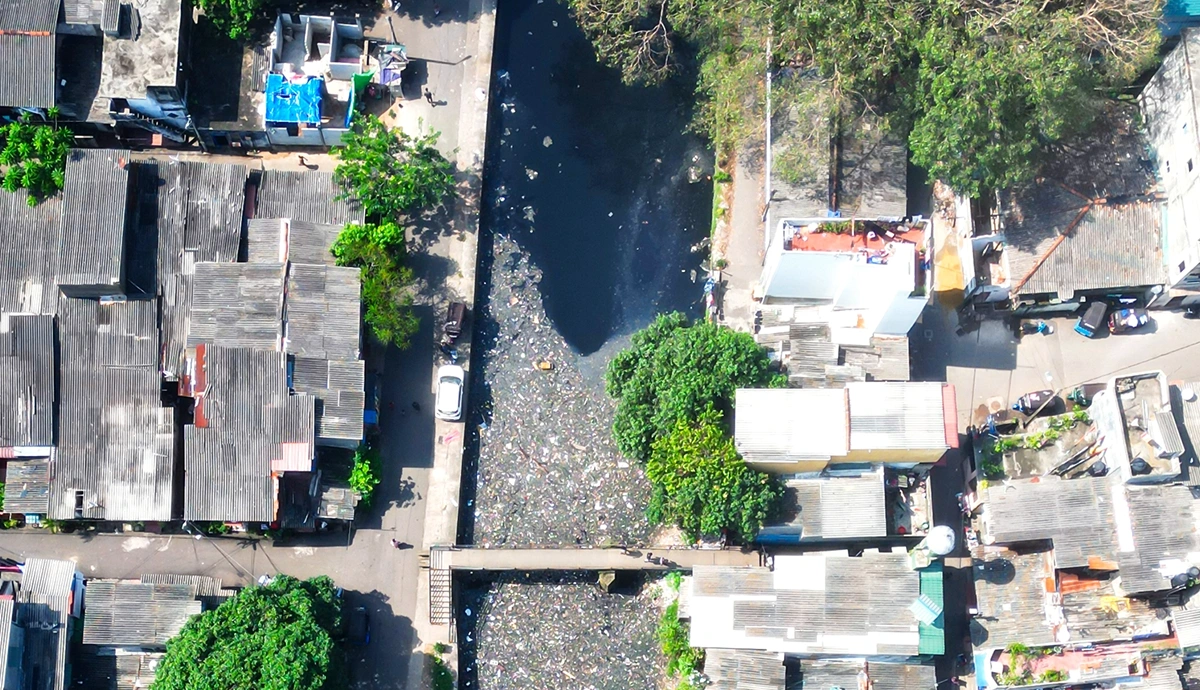
The waters surrounding Sri Lanka, rich in biodiversity, face a significant threat from plastic pollution. To safeguard these vital marine ecosystems, immediate action is crucial. MAS FFC, through innovative initiatives and enduring partnerships, is at the forefront of combatting floating waste including plastics, directly aligning with UN SDG 14: Life Below Water.
The Ocean Strainers Initiative
Launched in 2020, our flagship project, employs a technology owned and developed by the MAS Holdings. These “Ocean Strainers” are large-scale floating waste traps that span the width of canals, intercepting floating waste before it reaches the ocean.
Building on the success of our canal deployments, the ocean strainers have been adapted for use in highland and sensitive upstream ecosystems. Our location selection strategy prioritises both highly populated areas, especially in the Western and Southern provinces, and these vulnerable ecosystems.
Our efforts extend beyond waste capture. Collected waste is diverted to sustainable, non-landfill solutions, including resource recovery and recycling by community groups and authorities, and energy recovery from non-recyclable waste. Additionally, we are developing a standardised monitoring and evaluation system to create a comprehensive database on floating waste in waterways.
Impact to Date (31 December 2024)
68 – Ocean strainers installed
45 – Colombo District
8 – Gampaha District
8 – Galle District
6 – Kalutara District
1 – Nuwara Eliya District
We have nine ongoing targeted interventions for restoring sensitive ecosystems: encompassing 8,000 square metres of mangroves, 5,500 square metres of lake ecosystems, and 10,000 square metres of lagoon habitats.
Current data indicates, our 68 Ocean Strainers capture approximately 2.6 million kilogrammes of floating waste annually. Of this, roughly 40% consists of PET and other plastics. This intervention intercepts nearly 11% of the estimated 9 million kilogrammes of plastic emissions that enter the Indian Ocean from Sri Lankan waterways each year. In 2024, our ecosystem restoration and community awareness initiatives benefited from the contribution of 150 volunteers, who dedicated a total of 570 hours.
Our 2026 goal involves expanding our network to 150 units by installing an additional 84 strainers within the next 24 months. This expansion requires LKR 85 Mn. in funding (approximately 285,000 USD). By achieving our target, we will increase our interception rate to approximately 20% to 30% of the total 9 million kilogrammes of plastic emissions.
Life on Our Planet
Our Aim: Protecting and restoring terrestrial and marine ecosystems
To further the Group’s work in enhancing biodiversity and ecosystem services across 25,000 acres a footprint 100 times larger than our facilities the MAS Foundation for Change takes the lead on large-scale conservation projects that restore habitats and champion biodiversity.
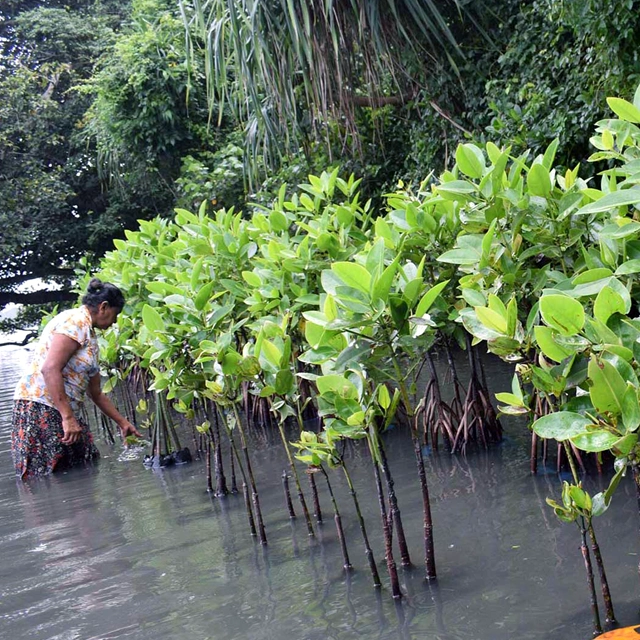
In alignment with SDGs 13: Climate Action and 15: Life on Land, we collaborate with partners to conserve ecosystems. Our Foundation’s flagship reforestation project in Trincomalee, which successfully restored six acres of endangered mangroves, represents a significant initial step in this vital undertaking.
Access to Water
Our Aim: Improving access to fresh water in disadvantaged communities
Recognising clean water as a fundamental human right essential for public health, community development, and economic prosperity, our pilot project in the Anuradhapura District directly aims to supports UN SDG 6: Clean Water and Sanitation.
Community-Driven Sustainability
Community engagement is central to our sustainability philosophy. Through five recycling community centres and a government resource recovery centre, we actively promote resource recovery using innovative “waste to wealth” models. These centres serve as more than waste management hubs; they are dynamic community spaces. By generating additional revenue from recycling, we empower local communities economically, fostering ownership and pride in building a cleaner future. This aligns with UN SDG 12: Responsible Consumption and Production, as we encourage our stakeholder communities to embrace the circular economy.
Additionally, we partnered with the Waste Management Authority, Western Province, to train 26 preschool teachers on programmes promoting early childhood behavioural change in waste management. This initiative directly supports UN SDGs 4: Quality Education and 11: Sustainable Cities and Communities.