



 Add to My Report
 Download PDF
 Our Approach to Our Planet Changed for Good
 Our Approach to Our Planet Changed for Good
Introduction
Our Plan for Change
The Plan for Change is a bold commitment to drive sustainable change across our business, amongst our customers, people, and communities, and for our planet. Launched in 2020, with a five-year horizon leading to 2025, the Plan outlines clear goals and commitments for our Group.
shaping our sustainability strategy and plan for

GRI 2-23, 2-24

PRODUCTS
CHANGED
FOR GOOD
50% revenue generated through sustainable products by 2025
Innovate and Disrupt
- Innovate the way products are made so that they can last longer, be good for the wearer, use less resources. and be recycled after use
Source Sustainably
- Partner with supply chain to responsibly source and develop organic, natural, and recycled raw materials
Pioneer Circularity at Scale
- Close the loop by using post-consumer waste to make new products

LIVES
CHANGED
FOR GOOD
Empowering Women
- Empower 100% of women at the factory floor
- 30% women in management
Meaningful Employment
- Accelerate employee wellbeing and work-life balance
- Ensure and elevate sustainable compensation for all employees
- Foster diversity and inclusion with freedom of expression and identity for all
World-class Workplaces
- Be first-in-class for working conditions in our industry
Thriving Communities
- Be an enabler for positive impact in all communities we work in

OUR PLANET
CHANGED
FOR GOOD
Limit Emission
- Reduce our emissions footprint to achieve 25.2% absolute reduction
Transform Waste
- Value enhance 100% of non-hazardous waste
Responsible Chemical Use
- Be zero toxic in all products and processes
Safeguard Water
- Achieve zero impact to MAS’ operations and mitigate negative impact to the environment and community
Champion Biodiversity
- Restore biodiversity by 100x in the space we occupy
Planning for 2025 and Beyond
As we move closer to our
 Plan for Change
2025 targets, we have already begun shaping our sustainability strategy and plan for 2030; building on progress made towards our
current Plan for Change goals.
Plan for Change
2025 targets, we have already begun shaping our sustainability strategy and plan for 2030; building on progress made towards our
current Plan for Change goals.
We have seen real progress during the five-year period of the current Plan for Change cycle: from increasing adoption of renewable energy generation, to groundbreaking innovations in sustainable products, and the championing of diversity, equity and gender inclusion in a way that reflects the contextual needs of our operations and communities. However, the world is shifting rapidly and it is not just our Organisation that has advanced. The global landscape has changed significantly with new economic models and regulatory forces, and increased awareness among stakeholders on the urgency of global challenges.
To stay ahead, we are creating an updated strategy that is not just reactive – but future-shaping. One that is built through a process that involves a broad range of stakeholders, and based on the latest knowledge and science on sustainability and systems-change.
Starting in December 2023, we brought together a cross-functional team representing key SBUs; with the collective goal of setting up a 2030-strategy. We started with a comprehensive reflection on the current Plan for Change, and a deep-dive into industry trends, challenges, and opportunities – to glean insights for a forward-looking plan aligned with the global outlook, and ensure lessons-learned from past efforts will inform our future actions.
Our next steps in 2025 will include ongoing engagements with stakeholders to understand their expectations and priorities, identification and prioritisation of critical issues, and development of strategic options with clear success-metrics. Finally, we will be benchmarking the strategy against industry best-practices and validating it with stakeholders; to ensure that our strategy is not only ambitious, but also feasible, relevant, and truly impactful.
Areas of Focus
GRI 3-1, 3-2
These priority topics – concerning Products, People, and Planet – represent the areas of greatest opportunity for positive impact; where our actions have the potential to create the most meaningful change. Our sustainability commitments are mapped against industry-specific and broadly-accepted topical areas for responsible business, which address the issues, opportunities, and challenges that are shaping our future and the future of the apparel industry.
In 2024, approaching the penultimate year in our Plan for Change cycle, we began the process of re-evaluating our focus areas and identifying new matters that are material to our business and stakeholders.

PRODUCTS CHANGED FOR GOOD
Innovate and Disrupt
- Product and Process Innovation
Source Sustainably
- Responsible and Ethical Sourcing
- Supply Chain Management
- Sustainable Materials
- GRI 308:
Supplier Environmental Assessment - GRI 414:
Supplier Social Assessment - SASB CG-AA-430:
Environmental Impacts in the Supply Chain, Labour Conditions
in the Supply Chain - SASB CG-AA-440:
Raw Materials Sourcing - GRI 301:
Materials - GRI 408:
Child Labour - GRI 409:
Forced or Compulsory Labour
Pioneer Circularity at Scale
- Circularity

LIVES CHANGED FOR GOOD
Empowering Women
- Empowering Women
- GRI 405:
Diversity and Equal Opportunity
Meaningful Employment
- Sustainable Compensation
- Diversity, Equity, and Inclusion
- Learning and Development
- GRI 401:
Employment - GRI 404:
Training and Education - GRI 406:
Non-Discrimination
World-class Workplaces
- Health, Safety, and Wellbeing
- Engaging and Purposeful Culture
- GRI 402:
Labour Management Relations - GRI 403:
Occupational Health and Safety - GRI 407:
Freedom of Association and Collective Bargaining
Thriving Communities
- Community Development
- GRI 413:
Local Communities

OUR PLANET CHANGED FOR GOOD
Limit Emissions
- Energy and Emissions Management
- GRI 302: Energy
- GRI 305: Emissions
Transform Waste
- Waste Management
- GRI 306: Waste
Responsible Chemical Use
- Chemicals Management
- Product Stewardship
- GRI 303: Water and Effluents
- GRI 416: Customer Health and Safety
- SASB CG-AA-250: Management of Chemicals in Products
Safeguard Water
- Water Stewardship
- GRI 303: Water and Effluents
Champion Biodiversity
- Biodiversity Conservation
- GRI 304: Biodiversity
Propelling our Plan for Change
GRI 2-12, 2-13, 2-14, 2-16, 2-17, 2-24, 2-27, 408, 409
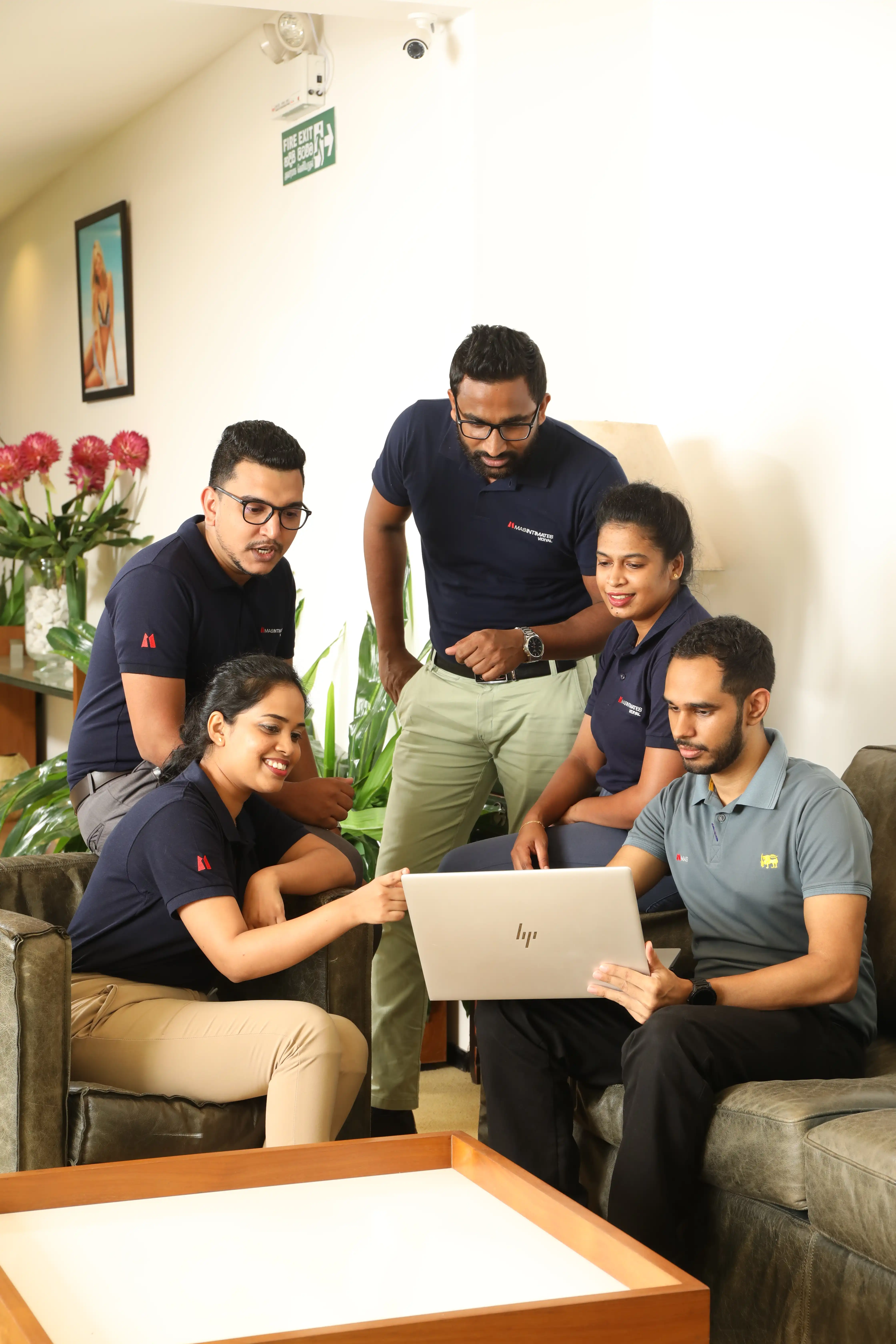
The highest governing bodies at MAS, alongside senior executives, played an active role in shaping our Plan for Change. They are also involved in developing, approving, and updating the Group’s policies, goals, and the overall sustainability purpose.
Guided by ongoing materiality assessments, strategic leadership of governing boards, and consultancy from our Sustainability Advisory Council (SAC), we prioritise sustainability initiatives that address the most critical environmental and social issues. The effectiveness of these processes is also reviewed regularly, to deliver measurable results.
Clear goals are communicated across the Company, and cascaded down from our CEOs. These goals encompass Hoshin KPIs (strategic objectives) and Foundational KPIs (core performance metrics), covering sustainability in relation to the three Plan for Change pillars focused on Product, Lives, and Planet. Sustainability KPIs are reviewed periodically alongside the Company’s broader KPIs.
KPIs are monitored and reviewed monthly by each pillar and the respective divisional leads, who track achievement against KPIs each month, and compiled to assess performance against the year-end goal. This continuous monitoring process allows teams to bring up concerns or roadblocks that they see in achieving goals. Any such roadblocks are discussed, and identified solutions are recorded and put into practice. Discussions take place at a Group level, enabling learnings from other SBUs to also be channelled into the process, allowing for decision-makers to develop holistic and viable solutions.
Concerns that require leadership-level intervention or direction are initially addressed by the Group Business Director. If further direction or approval is required (especially for decisions that impact the entire Group, or require a large investment), these are raised at the SAC.
The Group’s Sustainability Advisory Council (SAC) is made up of members of the MAS Capital Board, including the CEO. The SAC advises the Director – Group Sustainable Business and plays a pivotal role in the implementation of our sustainability strategy. Mandatory council meetings are held quarterly, outside of which, members are contactable for consultation when the need for guidance on sustainability topics arises. Quarterly SAC meetings bring together the Group CEO, Group Legal Director, Group HR Director, Business Director and a Non-Executive Director. The meeting agenda includes key risks that would affect achievement of Plan for Change KPIs. The SAC prioritises topics based on their scale and impact, which then guides execution plans.
CEOs personally review key reports, including MAS’ Communication on Progress (CoP) to the UN Global Compact (UNGC), and the annual sustainability report that provides stakeholders with a comprehensive picture of how the Group is managing impacts, responding to sustainability-related risks and opportunities, and progressing against sustainability commitments.
Ongoing formal training conducted by experts, as well as the Centre for Creative Leadership, ensures our Directors and Senior Leadership are equipped with up-to-date information and requisite knowledge to make informed decisions regarding sustainability.
In 2024, key members of our sustainability-related teams attended training programmes on implementation of the SLFRS S1 and S2 standards published by The Institute of Chartered Accountants of Sri Lanka (CA Sri Lanka). The guidelines are aligned with the International Sustainability Standards Board (ISSB) inaugural standards for sustainability-related disclosures – IFRS S1 and S2.
Internal and external stakeholder concerns, queries, and feedback are also escalated to Senior Leadership through designated channels and code officers – such as the Director – Group Human Resources, who sits on both the Sustainability Advisory Council (SAC) and the Apparel Board. In fulfilling their role, the Director – Group Human Resources has the authority to inform our CEOs of any critical issues. Additionally, an independent Audit Committee with direct access to the chairman and shareholders, provides an additional layer of oversight, and ensures transparency and accountability throughout our enterprise.
These systems constitute a robust framework, wherein we gain knowledge and awareness of applicable laws and regulations impacting MAS, globally. We periodically review applicable legal requirements, and ensure internal monitoring processes are in place to evaluate compliance against the same; with outcomes of compliance evaluations being presented to the Board.
Moreover, the Group’s governance process is empowered with adequate resources, robust policies, standardised procedures, and integrated KPIs that are cascaded across operations.
We have an established formal escalation mechanism for labour-related compliance issues and violations, where plant or SBU-level Compliance Teams identify violations, if any, through either self-audits, government and regulatory audits, or customer audits. Such violations are escalated to the respective Divisional Compliance Team who, together, would design a corrective action plan to address the same. These issues would also be reported to the Director – Group HR; either on a quarterly basis or immediately, where seriousness of the issue required timely attention and action. As such, there have been no significant cases of labour compliance violations reported; and no incidents of child labour or forced or compulsory labour within company operations during the reporting year.
Stakeholders as Partners
GRI 2-29, 408-1, 409-1
At MAS, we believe that sustainable systemic change requires concerted collaboration across our entire ecosystem. Many of our stakeholders, from employees to customers, play a key role in the MAS Plan for Change and our strategies to create collective impact. In turn, MAS has long been a critical stakeholder in the industry and supply chain, and amongst our communities. Our engagement, support, and collaboration help them to thrive and flourish. Engagement with stakeholders begin with comprehensive mapping that helps us identify priority groups. We consider our specific business model and the stakeholders who play a crucial role in our operations and value chain; then we assess the operating landscape we occupy; and benchmark ourselves against industry standards and regulatory requirements. Thereafter, we utilise an Impact-Influence Matrix to ascertain our sphere of impact: identifying significant stakeholders who are affected by the business, and those who can influence our operations.
This analysis guides our actions, interventions, channels, and frequency of engagement with stakeholders. Which in turn leads to strategising and structuring of proactive, formal, and informal interactions and engagements, which are implemented at various levels within the Group. We consider our primary stakeholders – customers, employees, suppliers, and communities, as critical enablers in driving our plan for change. As such, our engagements take an approach of partnership that incorporates continuous communication, collaboration, learning, and sharing. We strive to maintain strong relationships with regulatory authorities, civil society organisations, and other institutions who share our commitment to transforming systems, communities, society, and the planet, for good. Where required, we provide timely and accurate information on our initiatives, business developments, compliance, risks, and financial position, and work to strengthen the systems and institutions around us. We also advocate for positive transformation to champion change in areas and spaces where collective effort is essential. Since incorporation almost four decades ago, MAS has grown to encompass an innovative and vertically integrated ecosystem beyond needlepoint. While we have minimal engagement with end-consumers of the products we manufacture, we work with leading brands who are closely aligned with the needs and aspirations of a wide-ranging consumer base. When partnering with our customer brands, from concept-to-delivery, we exercise a duty of care and incorporate the precautionary principle in all our dealings; maintaining stringent standards for product quality that ensure consumer safety.

| Stakeholder category | Principal mechanisms to engage stakeholders | Topics of discussion and engagement | Frequency of engagement |
Customers

|
|
|
Based on need/special projects: Monthly Quarterly, Biannually, Annually |
Employees

|
|
|
Ongoing/Routine, Monthly, Biannually, Annually |
Suppliers

|
|
|
Ongoing/Routine, Monthly, Biannually Annually |
Communities

|
|
|
Ongoing/Routine, Monthly, Biannually, Annually |
Banks and Financial Institutions

|
|
|
Ongoing, Biannually, Annually |
International and Local Media

|
|
|
Regularly, Quarterly, Annually |
Regulatory Authorities

|
|
|
Ongoing, based on needs/projects |
NGOs 
|
|
|
Ongoing, based on requests/projects |
Consumers

|
|
|
Based on projects |
Our Commitments, Partnerships, and Advocacy
Our Plan for Change is the culmination of MAS' comprehensive approach to sustainability. It is aligned with commitments and initiatives that are inspiring and aligning action toward achieving change at a global scale.
As a partner in the manufacturing-side of the apparel value chain, these are also important nexuses of collaboration where we share learnings, amplify the voice of our stakeholders, and add to discourse that is shaping the industry; ultimately advocating for systemic change that can only be achieved, together.
Commitments
GRI 2-23
United Nations Global Compact (UNGC) Principles
From strategies, to policies and procedures, we uphold ethical business practices, respect human rights, labor standards, environmental protection, and anti-corruption measures; in line with the 10 principles of the UN Global Compact (UNGC). MAS has maintained alignment with these principles since 2003.
Women’s Empowerment Principles
Since 2011, we endorse and incorporate the Principles in our Group-wide efforts to drive women’s empowerment and gender equality. MAS’ exemplary Women Go Beyond programme, which is enshrined in the Plan for Change and closely aligned with the seven principles, serves as our roadmap to fostering a diverse and inclusive workforce where women can thrive.
Business for Peace (B4P) Platform
MAS endorsed the B4P initiative in 2013, as one of its founding participants, recognising Sri Lanka’s unique context and the opportunity for our initiatives to advance peace – in the workplace and the wider community.
Better Work Programme
We actively participate in, and comply with, the Better Work Programme; as part of MAS’ broader commitment to employees that is outlined in our Plan for Change – working toward empowering women, providing meaningful employment, and creating world-class workplaces.
Caring for Climate (C4C) Initiative
Since engaging with the Caring for Climate (C4C) initiative in 2008, we began implementing systematic changes at strategy, policy, and activity-level; to ensure MAS is positioned to address the challenges presented by climate change. These foundational steps have informed our Plan for Change and culminated in MAS setting ambitious Science Based Targets for emissions reduction.
Science-Based Targets Initiative (SBTi)
In 2020, we signed up to SBTi; setting and validating ambitious targets for absolute emission reduction within our operations, and committing to drive climate response across MAS’ supply chain.
Products Changed for Good
Industry, Innovation and Infrastructure
Responsible Consumption and Production
Lives Changed for Good
Good Health and Wellbeing
Quality Education
Gender Equality
Decent Work and Economic Growth
Reduced Inequalities
Sustainable Cities and Communities
Peace, Justice, and Strong Institutions
Partnerships for the Goals
Our Planet Changed for Good
Affordable and Clean Energy
Climate Action

Life Below Water
Life on Land
MAS Foundation for Change
Clean Water and Sanitation
Life Below Water
Life on Land
Memberships
GRI 2-28
CASCALE
An industry-wide non-profit alliance representing the global value chain; including brand retailers, manufacturers, supply chain partners, and others.
Joint Apparel Association Forum Sri Lanka (JAAFSL)
The apex body presenting a common front for Sri Lanka’s apparel industry, its representative associations, and businesses.
Global Compact Network SL: Board, Steering Committee, and Working Groups (Human Rights, Climate Action)
Local Network contact point for the United Nations Global Compact (UNGC), which is working to mainstream sustainable business practices in Sri Lanka.
Advocacy
Achieving our Plan for Change targets and realising transformational change at scale require collective action. This necessitates a proactive voice in shaping industry standards, policies, and practices.
Throughout the year, we actively engaged in various high-level forums and collaborative initiatives, championing best practices and advocating for impactful interventions across critical environmental and social domains. Our commitment extends beyond our operations, as we strive to drive systemic change within the apparel sector and beyond.
Key Advocacy Activities and Engagements in 2024
- International Engagement:
Participation in prominent global platforms including the Global Fashion Summit and the Business of Fashion roundtable in London. Panelist participation at Forward Faster Now: Accelerating Sustainable Business on the Asia and Oceania Region in Kuala Lumpur, Malaysia; facilitated by the United Nations Global Compact Network (UNGC). - We co-authored and launched a White Paper on Financing Decarbonisation. This supplier-led initiative, developed in collaboration with Deutsche Gesellschaft für Internationale Zusammenarbeit (GIZ) GmbH and industry leaders like NITEX Pte Ltd, Pactics Trading International Limited, Artistic Milliners Pvt Ltd, Epic Group, and TAL Apparel; provides a vital roadmap for accelerating decarbonisation efforts across the supply chain.
- Shaping National Dialogue:
Participation in the 6th SL Association of Young Scientists Open Forum on INDUSTRY 5.0 – highlighting MAS’s Vision for a Greener Future, addressing policy requirements, research gaps, and opportunities. - Sharing insights on “Top Techniques to Scale Sustainability Measurement and Management”, moderated by Worldly’s VP of Customer Success, Loretta Tam.
- Panelist attendance at the Environment session of the ESG Summit 2024, organised by the MBA Alumni Association of the University of Colombo. And, panelist engagement at the National HR Conference 2024.
- Active advocacy for a more inclusive work environment by participating as a panelist at two events – Inclusive Threads: Creating opportunities for Persons with Disabilities (PWDs) within Sri Lankan Apparel Industry, organised by IFC, ILO, and Better Work Sri Lanka; and Towards a more inclusive work environment for PWDs, organised by GIZ and Bconnected.
In addition, our ongoing representation at key industry bodies ensures continuous advocacy:
- United Nations Global Compact:
As a participant, we align with the Ten Principles, advocating for human rights, labor standards, environmental responsibility, and anti-corruption through public reporting and collaborative projects. - Cascale (formerly Sustainable Apparel Coalition): Through Cascale, we support industry-wide sustainability standards, share best practices, and contribute to the evolution of the Higg Index for supply chain impact measurement.
- ZDHC: We are actively involved in ZDHC’s efforts to promote sustainable chemical management across the supply chain.
- PUCSL: We contribute to national discussions on energy regulation, renewable energy integration, and sustainable utilities policies.
Tools for Transparency
We believe that achieving real change requires not only ambitious targets, but also a commitment to rigorous standards, verifiable measurements, and transparent disclosure.
We leverage a range of internationally recognised standards, certifications, accreditations, and tools to uphold accountability across our interactions with regulators, customers, suppliers, and employees. They also provide clarity and credibility as we track progress against the ambitious goals of our Plan for Change, and strive for real sustainability across the industry.
Many of these standards and commitments extend to our
 Suppliers
in the apparel value chain.
Suppliers
in the apparel value chain.
SLCP Gateway and Converged Assessment Framework (CAF)
Sedex Members Ethical Trade Audit (SMETA)
Carbon Disclosure Project
Overall climate action rating - C
Supply chain engagement rating - C
Higg Index
As a founding member of the Sustainable Apparel Coalition – SAC (now Cascale), since 2011, MAS has actively participated in developing and utilising the Higg Index – a standardised set of tools for measuring environmental and social impact at facility-level.
Our Design and Merchandising teams also utilise the Higg Materials Sustainability Index (Higg MSI) and Higg Product Module (Higg PM) for a data-driven approach to evaluating impacts of the products we manufacture; thereby enabling teams, customers, and end-consumers to make more sustainable choices.
HIGG FEM PERFORMANCE - 2019 TO 2024
| 2024 | 2023 | 2021 | 2020 | 2019 | |
| No. of facilities with verified assessments | 41 | 43 | 41 | 32 | 18 |
| No. of facilities with self-assessments | 41 | 4 | 1 | 9 | 22 |
| Average FEM score | 79.2 | 85 | 78 | 78 | 71 |
International Certifications and Accreditations
| Certification List | Intimates | Kreeda | Active | Bodyline | Matrix | Noyon | Texo | Linea Aqua | Total* |
| BSCI | 1 | – | 1 | – | – | – | – | – | 2 |
| C-TPAT | – | – | – | – | – | – | – | 1 | 1 |
| ISO 45001 | 1 | 10 | 7 | – | – | 1 | – | 1 | 20 |
| ISO 14001 | 14 | 10 | 7 | 4 | 1 | 1 | – | 3 | 40 |
| ISO 50001 | – | 1 | 1 | – | – | – | – | – | 2 |
| SCOPE – GOTS | 7 | – | – | 3 | – | 1 | – | – | 11 |
| FSLM (SLCP) | 14 | 7 | 3 | 3 | 1 | 1 | – | 2 | 31 |
| HIGG FEM | 14 | 10 | 6 | 4 | 1 | 1 | 1 | 3 | 41 |
| Oeko-tex 100 | 15 | – | 1 | 3 | – | 1 | 1 | 1 | 22 |
| GRS and RCS | 13 | 1 | 6 | 4 | 1 | 1 | – | 3 | 29 |
| ISO 14064 | 16 | 10 | 8 | 4 | 1 | 1 | – | 3 | 50 |
| OSH Transformational Leadership – IOSH, UK | – | 1 | – | – | – | – | – | – | 1 |
| ILO Better Work Program | – | 3 | – | – | – | – | – | 1 | 4 |
| OCS | 1 | – | – | – | – | – | – | – | 1 |
| Fair Trade | – | 1 | – | – | – | – | – | 1 | 2 |
| GSV – Global Security Verification | – | – | – | – | – | – | – | 2 | 2 |
*Number of Facilities (SBUs) that have received the certification or passed the audit in 2024 (if they have a continuing certification, this counts as well).
Awards and Recognition
MAS Femography wins 03 Excellence Awards for functional apparel, inclusive workforce, and sustainable apparel
JustStyle Excellence Awards 2025, presented by JustStyle and Global Data PLC.
The Excellence Awards celebrate the greatest achievements and innovations in the apparel industry.
MAS Supported Employment Process recognised as a Zero Project Awardee 2025
The Zero Project Awards contributions that advance the United Nations Convention on the Rights of Persons with Disabilities (CRPD), standing out for their innovation, impact, and scalability.
Shortlisted for a Parity Award
I&D Impact Awards 2025, presented by the World 50 Group
Recognising the Group’s contributions to advancing equality, challenge and break down barriers, promote equal opportunities, and foster a dynamic work environment.
MAS adjudged Overall Exporter of The Year for 2023/24 at Sri Lanka’s Presidential Export Awards.
MAS wins 6 additional awards recognising sustainable development contribution, regional supply chain development, product diversification, foreign exchange earnings, and performance in emerging markets.
1 Excellence Award (MAS KREEDA Vaanavil), and 1 Appreciation Award (MAS KREEDA Shadeline)
LRCC Awards 2024, presented by the Lanka Responsible Care Council (LRCC) and the International Council of Chemical Associations (ICCA) – Celebrating excellence in Environmental, Health, and Safety (EHS) practices.
1 Gold Award from ICQCC 2024 (MAS Nirmaana)
International Convention on Quality Control Circles 2024, Organised by the Sri Lanka Association for the Advancement of Quality and Productivity (SLAAQP) – celebrating milestones in quality excellence.
4 Gold and 1 Silver (MAS KREEDA Vaanavil), and 1 Best-Kaizen Award (MAS Active Linea Intimo)
National Quality Circle Project Awards 2024, presented by the Sri Lanka Association for the Advancement of Quality and Productivity (SLAAQP) – Celebrating quality and productivity achievements
5 Gold, 1 Silver, 1 Bronze, and 1 Merit
Green Productivity Awards 2024, presented by the Sri Lanka Association for the Advancement of Quality and Productivity (SLAAQP) – Evaluating and honouring organisations with the best Green Productivity (GP) practices.
Gold – MAS KREEDA Vaanavil, MAS KREEDA Balangoda, MAS KREEDA Methliya, MAS KREEDA Synergy, and Matrix
Silver – Linea Aqua
Bronze – Bodyline
Merit – MAS KREEDA Campus
1 Gold, 2 Silver, 1 Bronze, and 2 Merit
Presidential Environment Awards 2024, presented by the Central Environment Authority (CEA) – recognising significant contributions to environmental conservation.
Gold – MAS Fabric Park, recognised as the Best Private institution that contributes to the environment
Silver – MAS KREEDA Shadeline, MAS Active Linea Intimo
Bronze – MAS Active Contourline
Merit – MAS KREEDA Synergy, MAS Fabrics Intimo
1 Overall Award, 2 Category Awards and 4 Project Awards
Best Corporate Citizen Award, presented by the Ceylon Chamber of Commerce – recognising companies that demonstrate a commitment to sustainability and corporate social responsibility.
Triple Bottom Line Social Sustainability: Winner – MAS KREEDA
Category Award Winner: MAS KREEDA (Customer Relations, Employee Relations)
Best Sustainability Projects: Winner – BODYLINE (Releaf Knuckles)
Best Sustainability Projects: Merit – BODYLINE (Touch of Hope and Water for All);
MAS CAPITAL x TWINERY (Girls in STEM)
10 Gold
RoSPA Health and Safety Awards 2024, presented by the Royal Society for the Prevention of Accidents (RoSPA) – the benchmark for excellence, recognising outstanding achievements and dedication to workplace safety across the globe.
Gold – MAS KREEDA Synergy, MAS KREEDA Methliya, MAS KREEDA Balangoda, MAS KREEDA Campus, MAS KREEDA Vaanavil, MAS KREEDA Shadeline, MAS KREEDA Madaba, MAS KREEDA Dulayl, MAS KREEDA Sahab, MAS KREEDA Arya 2